Croatian Kingdom ( 925. ) and the rise to a medieval power
The first century of the Croatian Kingdom was a period of military strength, political consolidation, and growing international prestige. Beginning with the coronation of King Tomislav around 925, Croatia emerged as one of the most powerful states in Southeast Europe. During the 10th century, Croatian rulers defended their independence, expanded their influence along the Adriatic coast, and established a monarchy that was respected by both the Byzantine Empire and the Papacy.
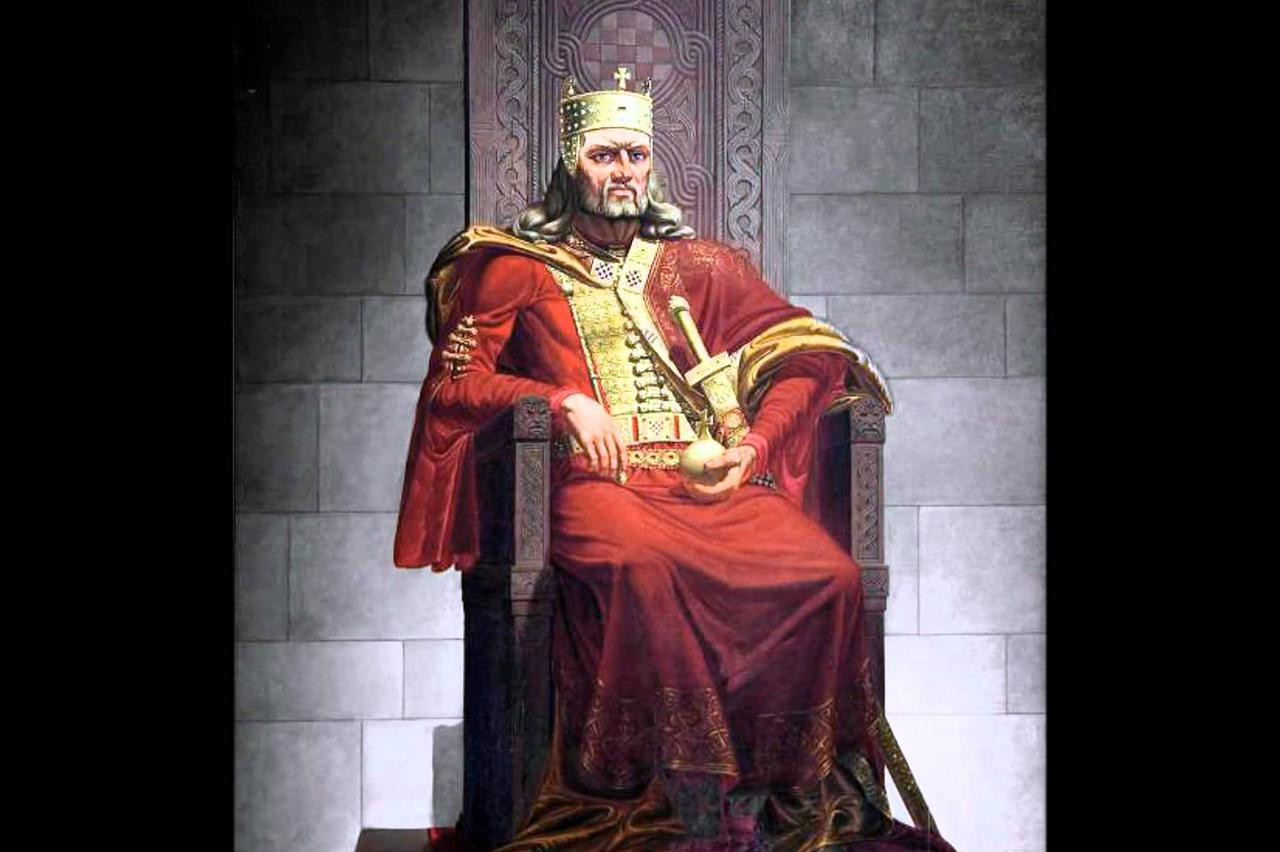
Tomislav Rex Croatorum
The Coronation of King Tomislav
Around 925 AD, Duke Tomislav of the Trpimirović dynasty became the first King of Croatia. Although no surviving coronation charter exists, contemporary church records from the First Council of Split refer to him as "King of the Croats" (Rex Croatorum), confirming his royal status.
Tomislav united the Croatian lands of Dalmatia and Pannonia under one crown, creating the Kingdom of Croatia. His reign marked the transition from a duchy to a fully recognized medieval kingdom.
King Tomislav (c. 910–928)
King Tomislav is considered the founder of the Croatian Kingdom and one of the greatest rulers in Croatian history.
He organized a strong army and a capable fleet to defend the kingdom against powerful neighbors. His most important military achievement came during the wars against the First Bulgarian Empire, ruled by Tsar Simeon I. Around 926, Croatian forces defeated a Bulgarian army, preventing Bulgarian expansion toward the Adriatic.
Tomislav also cooperated with the Byzantine Empire, which entrusted Croatia with the administration of several Dalmatian coastal cities. This strengthened Croatia's position on the eastern Adriatic and increased its influence in regional affairs.
By the end of Tomislav's reign, Croatia stretched from the Drava River in the north to much of the Adriatic coast and had become one of the strongest kingdoms in the Balkans.
King Trpimir II (c. 928–935)
Following Tomislav's death, King Trpimir II inherited the throne. Although little is known about his reign, historical sources suggest that he successfully preserved the unity and stability established by his predecessor.
Croatia maintained peaceful relations with both the Byzantine Empire and the Papacy, allowing the kingdom to continue developing without major external conflicts.
King Krešimir I (c. 935–945)
King Krešimir I continued the work of strengthening royal authority. During his reign, the kingdom remained politically stable despite increasing competition among neighboring powers, including Hungary and Bulgaria.
The Church continued to expand its influence, and Christianity became firmly rooted throughout the kingdom.
King Miroslav (c. 945–949)
King Miroslav inherited the throne after Krešimir I. His reign was marked by internal unrest and conflicts among the Croatian nobility.
According to later sources, Miroslav was killed by Ban Pribina during a period of political instability. His death weakened royal authority and created divisions within the kingdom.
King Michael Krešimir II (949–969)
Michael Krešimir II restored order after the instability of the previous reign. He reunited much of the kingdom under central authority and rebuilt the monarchy's prestige.
Together with his wife, Queen Jelena, he supported the construction of churches and monasteries. Queen Jelena later became famous for her charitable works and for promoting Christianity throughout Croatia.
King Stephen Držislav (969–997)
Stephen Držislav became king during a period of changing relations with the Byzantine Empire.
The Byzantine Emperor recognized his authority and granted him royal insignia and the honorary title of Eparch and Patrician, strengthening Croatia's international prestige. Under Držislav, Croatia maintained control over much of Dalmatia while balancing relations between Byzantium and Venice.
His reign was characterized by peace, stable government, and continued economic development.
Croatia in the Year 1000
At the dawn of the new millennium, the Kingdom of Croatia possessed:
- A hereditary monarchy under the Trpimirović dynasty.
- A Christian society closely connected to the Papacy.
- Strong political traditions centered on the king, the Croatian nobility, and local bans.
- Strategic control over much of the eastern Adriatic coastline.
- Recognition by both the Byzantine Empire and Western Europe.
Although new challenges were emerging from Venice and neighboring powers, Croatia entered the 11th century as a respected and independent medieval kingdom.
This period was one of the most important chapters in Croatian medieval history. Beginning with King Tomislav's unification of the Croatian lands, the kingdom developed into a powerful regional state. Successive rulers—including Trpimir II, Krešimir I, Michael Krešimir II, and Stephen Držislav—preserved Croatia's independence, strengthened royal authority, and expanded its political and religious institutions. By the year 1000, the Croatian Kingdom had secured its place among the established kingdoms of medieval Europe, providing the foundation for its continued development in the centuries that followed.
.jpg)
Regnum Croatorum