Diogenes and Lysias
A bitter, drunken shoemaker named Lysias mocked Diogenes at the market for going barefoot and being dressed in a ton: "A philosopher who can’t afford sandals? Pathetic!" The next day, still nursing his hangover, Lysias spread rumors that Diogenes was a fraud, hoping to drag him down to his own level of misery.
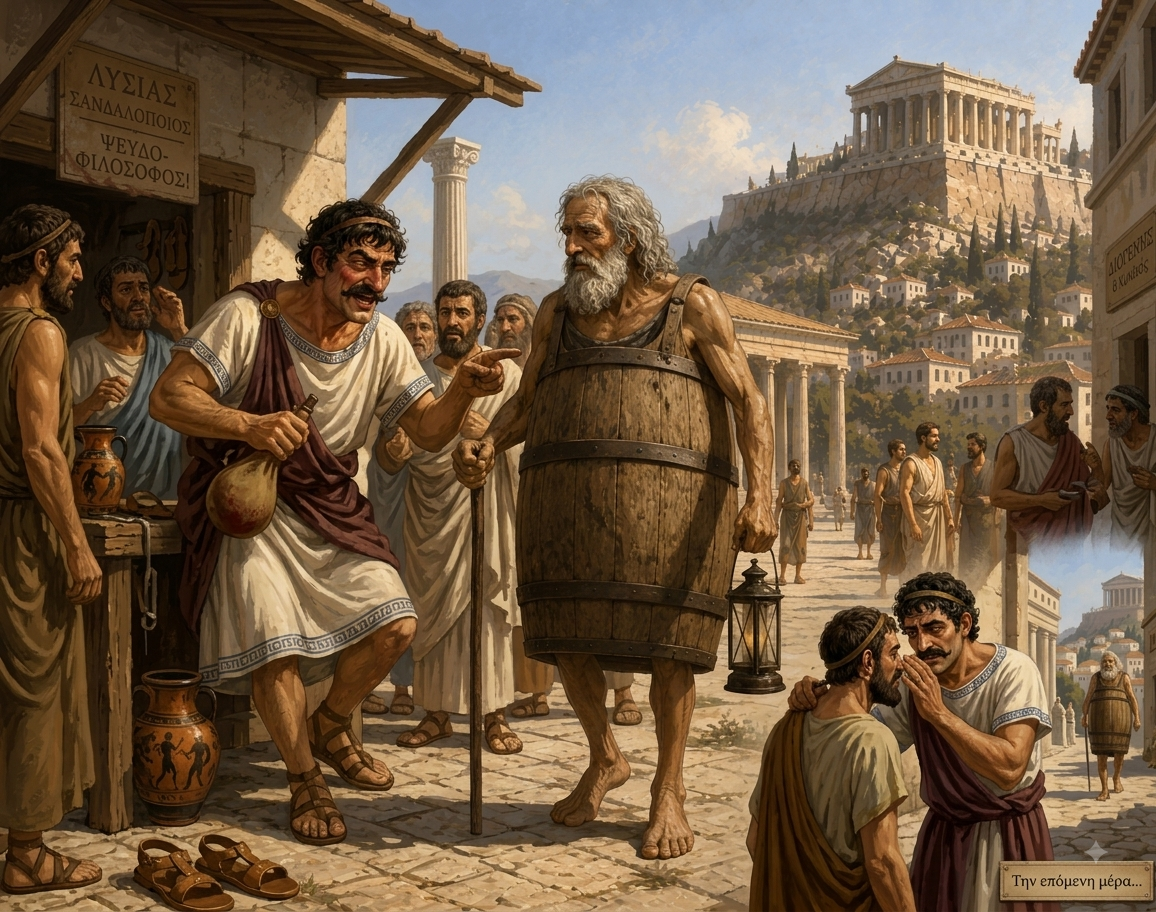
Diogenes strolled past Lysias’ stall, barefoot as ever, and said: "I still need no sandals, Lysias. But you? Still just a drunk shoemaker, drowning in pettiness."
The crowd laughed. Lysias, small and spiteful, clutched his wine jug and seethed. His face twisted with resentment, for he could not bear the thought that others might see Diogenes as wise while he himself was nothing more than a man consumed by his own bitterness.
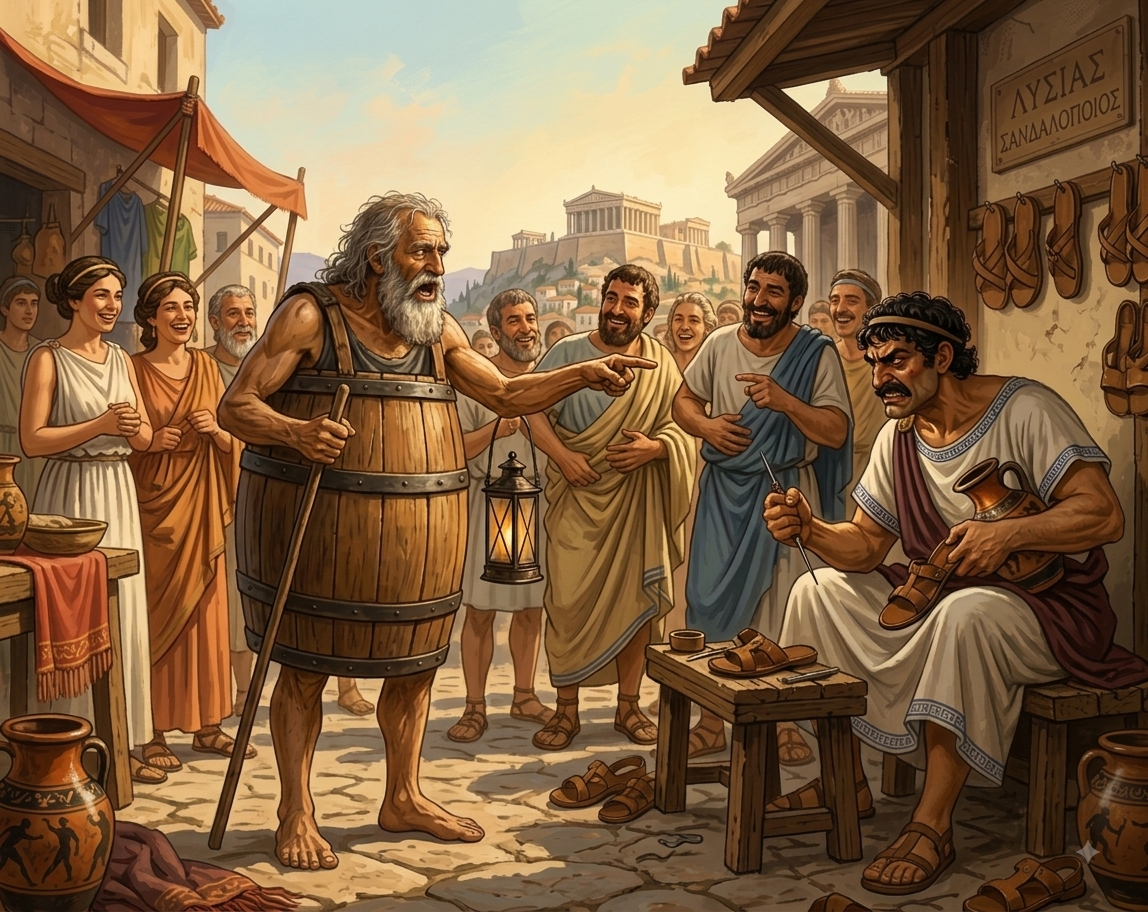
In the eyes of the people, Lysias was not just a drunk, he was a fool, whose life was so empty that he had to tear others down to feel tall. His pettiness was not just his flaw, it was his entire identity.
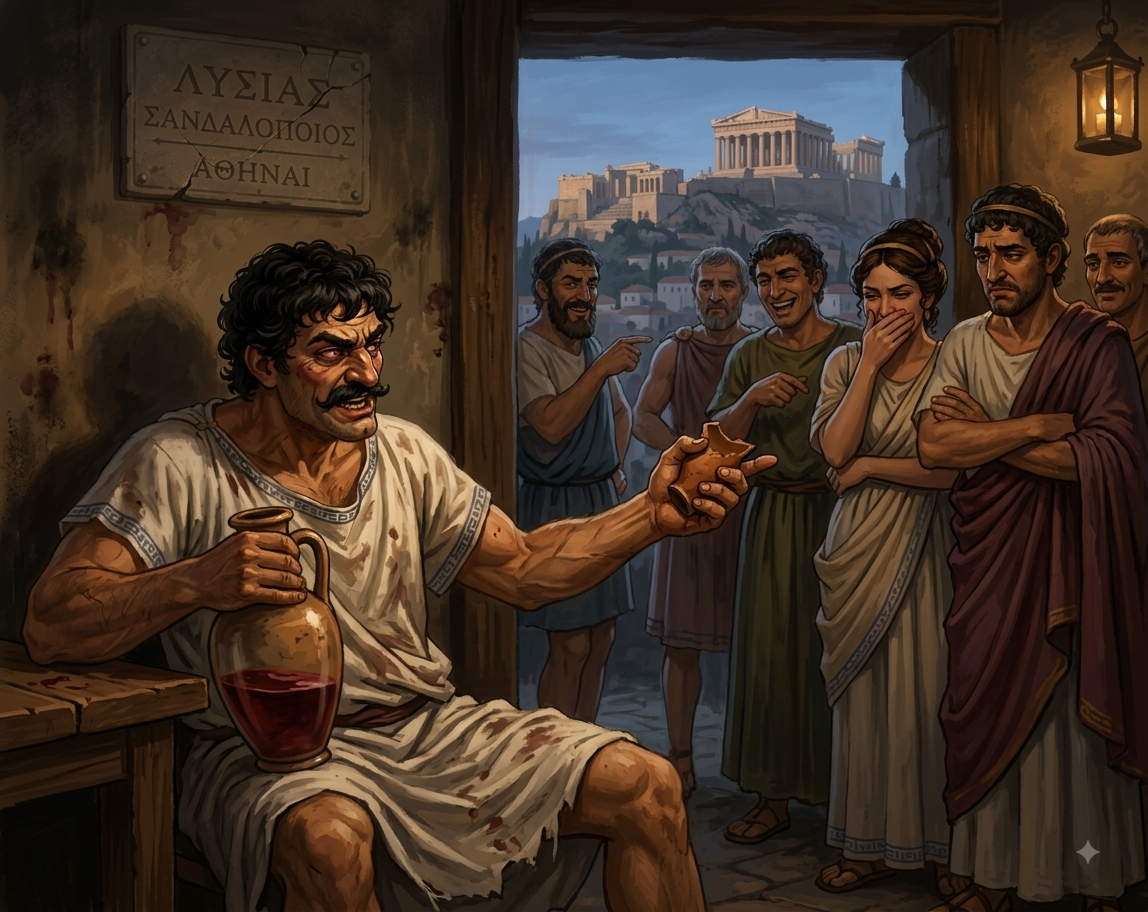
Moral: A petty man’s revenge only reveals his own emptiness.