Early Croatian states and rulers
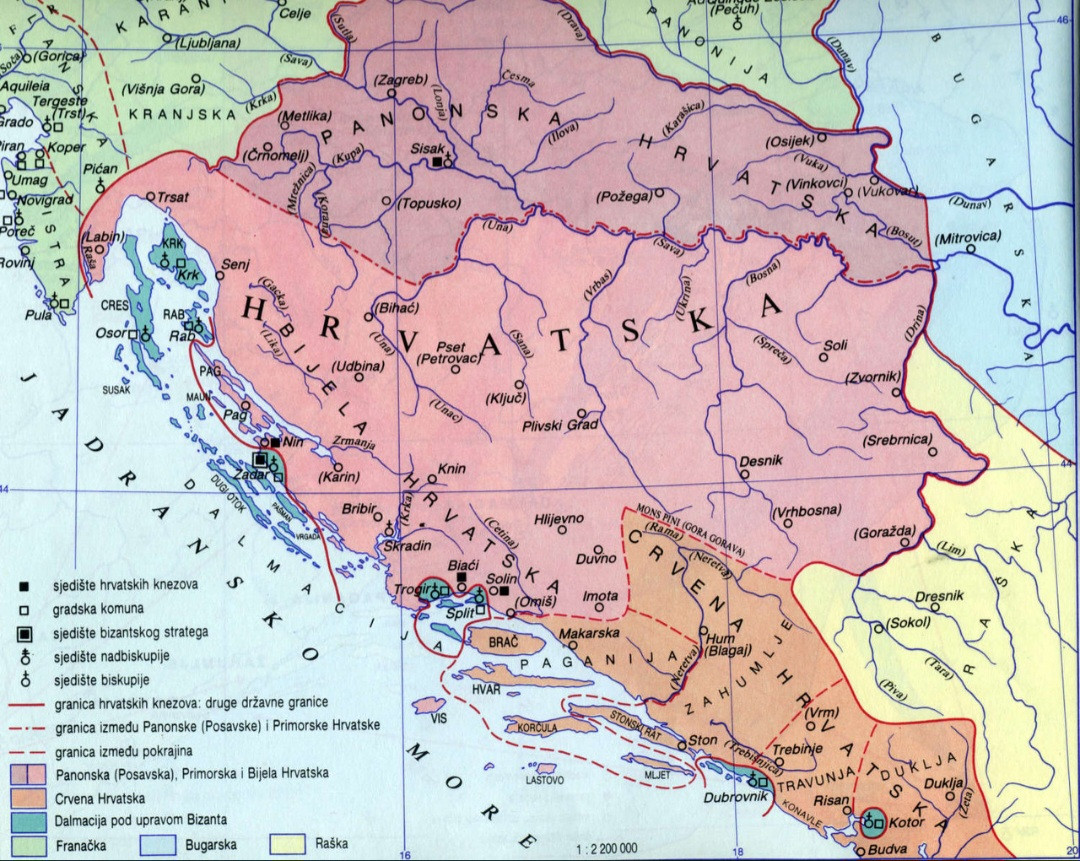
The early Croatian state began to emerge during the 7th century, when the Croats settled in the region between the Adriatic Sea, the Sava River, and the Dinaric Mountains. Over the next three centuries, they transformed from a collection of Slavic tribes into a well-organized principality recognized by the major powers of Europe. By the end of the 9th century, Croatia had established stable institutions, embraced Christianity, and gained international recognition, laying the foundations for the future Croatian Kingdom.
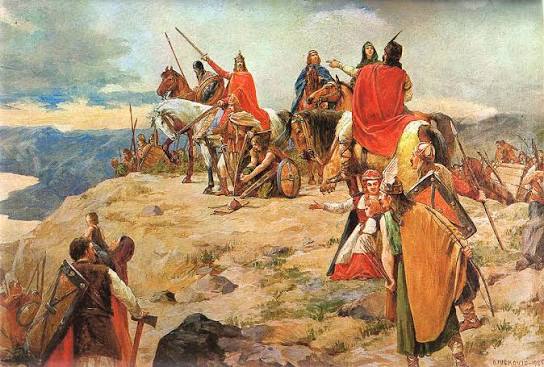
The Croats' arrival at the Adriatic Sea
The Arrival of the Croats
According to historical and archaeological evidence, the Croats arrived in the western Balkans during the 6th and 7th centuries. They settled in the former Roman provinces of Dalmatia and Pannonia after the collapse of Roman authority and during the period of Avar domination.
In the beginning, Croatian society was organized into tribes led by local chiefs (župani). As the need for defense and political unity increased, stronger leaders emerged and united several tribes under their authority. This marked the beginning of the Croatian principality.
Early Croatian Dukes
The earliest Croatian rulers are known mainly from later historical sources, making it difficult to establish exact dates for their reigns. Nevertheless, several figures stand out as important in the formation of the Croatian state.
Porga
Porga is traditionally considered one of the earliest Croatian rulers. The Byzantine Emperor Constantine VII, writing in the 10th century, states that Porga ruled during the period when the Croats accepted Christianity. Although many details remain uncertain, his reign symbolizes the first contacts between the Croats and the Christian world.
Višeslav
Duke Višeslav is one of the earliest historically attested Croatian rulers, probably governing in the late 8th century. His name is associated with the famous Baptismal Font of Višeslav, an important monument of early Croatian Christianity. The inscription on the font demonstrates that Christianity had become firmly established among the Croatian elite.
The adoption of Christianity strengthened Croatia's ties with the Papacy and the Frankish Empire while also contributing to greater political unity.
Borna (c. 810–821)
Borna ruled Dalmatian Croatia during the expansion of the Frankish Empire under Charlemagne. He is first mentioned in Frankish chronicles as "Duke of Dalmatia and Liburnia."
As a Frankish ally, Borna fought against the rebellion of Ljudevit Posavski, the ruler of Pannonian Croatia. Despite suffering setbacks in battle, Borna remained loyal to the Franks and helped secure their influence along the Adriatic coast. His reign marked the growing importance of Croatia in regional politics.
Vladislav (821–835)
Following Borna's death, his nephew Vladislav became duke. His reign appears to have been relatively peaceful and helped preserve political stability after years of conflict with neighboring rulers.
Although little is known about his government, Vladislav continued the policies established by his predecessor and maintained relations with the Frankish Empire.
Mislav (c. 835–845)
Duke Mislav strengthened Croatian independence while maintaining diplomatic relations with both the Franks and the Republic of Venice. During his reign, the Croatian navy became increasingly active in the Adriatic Sea.
A peace agreement concluded with Venice demonstrated Croatia's growing political importance and its ability to negotiate as an equal with maritime powers.
Trpimir I (c. 845–864)
Trpimir I is regarded as one of the founders of the medieval Croatian state and the founder of the Trpimirović dynasty, which ruled Croatia for more than two centuries.
His charter of 852 is one of the oldest preserved Croatian historical documents. In it, Trpimir describes his realm as the regnum Croatorum ("Kingdom of the Croats"), although he officially held the title of duke.
During his reign, monasteries were founded, Christianity expanded further, and state administration became more organized. Trpimir also successfully defended Croatian territory against external threats and strengthened the country's autonomy despite Frankish influence.
Domagoj (c. 864–876)
After Trpimir's death, Duke Domagoj came to power. Medieval Venetian sources described him as the "worst duke of the Slavs" because Croatian ships frequently attacked Venetian commerce in the Adriatic.
From the Croatian perspective, however, Domagoj built a powerful fleet and defended Croatian independence. His naval forces played an important role in regional conflicts, demonstrating Croatia's growing maritime strength.
Zdeslav (878–879)
Zdeslav briefly ruled Croatia with the support of the Byzantine Empire. His reign lasted only a few months before he was overthrown by Branimir.
Although short, his rule illustrates the competition between the Byzantine Empire and the Papacy for influence over Croatia.
Branimir (879–892)
Branimir is among the most significant rulers of early Croatian history. In 879, Pope John VIII addressed letters to Branimir recognizing his authority and blessing the Croatian people.
This event is widely regarded as the first international recognition of Croatian political independence by the Papacy.
Branimir successfully reduced foreign control while maintaining strong relations with Rome. Numerous churches and inscriptions from his reign testify to the increasing strength of Christianity and royal authority throughout Croatia.
Muncimir (892–c. 910)
Muncimir, a member of the Trpimirović dynasty, succeeded Branimir near the end of the 9th century. He restored the dynasty established by Trpimir and continued strengthening Croatian independence.
His charters emphasize that he ruled "with the help of God over the Croatian people," reflecting both the growing prestige of the ruler and the influence of Christianity on Croatian government.
Croatia Around the Year 900
By the year 900, Croatia had become a stable and well-organized principality. It possessed a hereditary ruling dynasty, an established Christian Church, diplomatic relations with both Rome and Constantinople, and an increasingly effective military on land and sea.
These developments created the political and institutional foundations upon which King Tomislav would later unite the Croatian lands and establish the Kingdom of Croatia in the early 10th century.
Croatia during Duke Trpimir I.