[EN/ESP] Which contract should you choose? A basic guide
English guide at the bottom.
Se supone que todos somos adultos y tenemos suficiente capacidad de atención y comprensión lectora como para no tener que estar secando ríos y poniendo fotitos para no despistarnos. Así que allá vamos.
¿Cómo se plantea el día? Qué batallas hay:
Revisar que haya batallas de grandes potencias, importantes o que esperen grandes daños y contratos. Las batallas importantes suelen escalar mucho, se ponen contratos importantes y son largas porque se pelean todos los ticks.
Preguntar en la UM o el Gobierno si hay alguna batalla programada o un contrato pactado. En ese caso, todo el mundo debe guardar su daño para ese momento y gastar las regeneraciones en subir revuelta (milestones) o en una batalla secundaria.
Si hay una batalla pactada, no hay más: se pregunta cuánto daño hay pactado, la hora y sus condiciones. Si podemos adaptarnos, nos adaptamos. Si no podremos estar en esa batalla, buscamos contratos menores o bounty libre. Lo importante es que una vez el contrato pactado tenga que empezar, no haya impedimentos y tu UM tenga que esperar que acabe otro.
No hay batallas importantes, no se esperan y no hay nada pactado. Hora de buscar contratos. Vamos a ver qué batallas hay (siempre hay) y analizarlas un poco:
¿Cuántas rondas tiene? Ten en cuenta que buscamos rentabilidad y de ello depende poder acabar el contrato a tiempo y que el botín de batalla (objetos incluidos) cubra nuestros costes, como mínimo.
Una batalla recién empezada ofrece más posibilidades de contratos y hacer daño durante las 8h de pastilla, que una batalla a la que falten 2h para terminar. Tendremos que analizar si es viable entrar a luchar y sacar provecho.
¿Qué tipo de país es? Ya que no es lo mismo un país sin dinero, que uno con 30k€ en el banco; al igual que tampoco es lo mismo un país proxy o con alianza fuerte (que pueden soltar dinero) a un país pequeño o con 300 jugadores. Todo eso influirá en su capacidad de daño y de poner contratos.
¿Conocemos a ese país? Generalmente tu UM o Gobierno tendrá afinidades con unos, pero horrible relación con otro. Pregunta siempre si existe la posibilidad de ir a la embajada a pedir contratos. Nunca debes tener miedo de ofrecer tus condiciones.
Vinculado con lo segundo, es importante saber que hay países como Alemania o Portugal (con cariño, de verdad) que no ponen un contrato a más de 0,05€ ni aunque le pongas una navaja en el cuello, mientras que otros países entienden que buenos contratos significa ganar una batalla y no tener mercenarios en contra.
OK, bien. Ya tengo claro que la batalla más importante del día será la del Sagrado Mandato de Andorra contra España para recuperar Cataluña y que Orriols mantenga SUS MOTIVACIONES. Vamos a preparar una lista de cosas antes de empezar a colocar órdenes de batalla, no vaya a ser que nos quedemos sin papel y nos tiren una moción de censura.
¿Cuánto daño podemos ofrecer y cómo?
TODOS los soldados de una UM deberían saber a diario el daño que pueden ofrecer, al menos, para una recompensa de 0,1€. Así que nosotros no vamos a ser menos y lo calculamos (luego entramos a eso).
Bien, ya sabemos que podemos ofrecer 3M en total (1,7M de burst y 1,3M durante las 8h) y que nuestra UM tiene capacidad de 20M diarios.
Sobre eso ya tenemos capacidad de conocer cuántos contratos podemos asumir. Podemos ir cogiendo contratos que cuadren de precio y daño, podemos ofrecer nuestras condiciones para algo más ventajoso a un país ó preguntar si prevén poner contratos mejores.
¿Contrato de 10M a 0,15€? Okey, let's go! (OK, no)
Vemos un jugoso contrato de 10M a 0,15€ y comenzamos a tener una erección, pero no es oro todo lo que reluce. Ten en cuenta que el botín de objetos de batalla es muy importante para calcular la rentabilidad, así que no todo el mundo en tu UM debe pegar en ese contrato…
Por regla general, en determinados niveles vas a necesitar al menos 3 objetos legendarios (amarillos) para sacar rentabilidad e incluso asegurar un mítico (rojo) en una ronda o batalla. Eso requiere que en la batalla y/o ronda puedas quedar en el top 5 (al menos), cosa que va a requerir que puedas dedicar en torno a 3M de daño.
Vamos a verlo con un ejemplo:
R1
R2
BATALLA
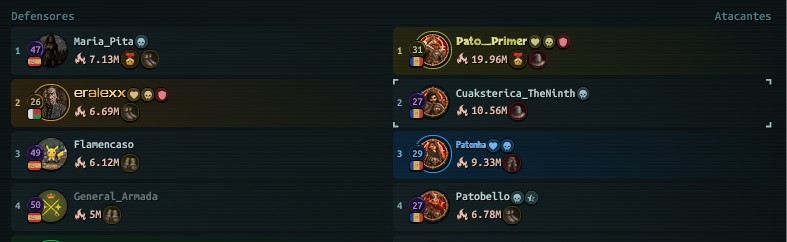
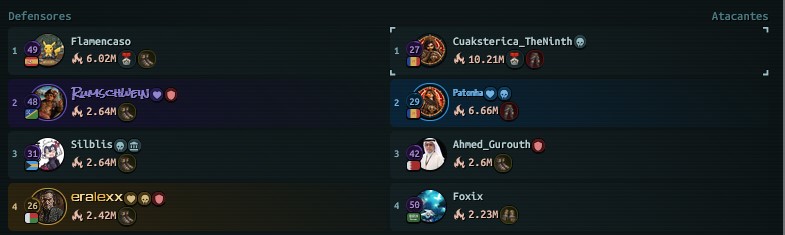
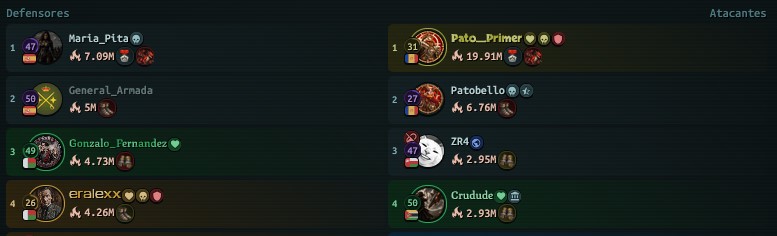
Asegurar un item rojo no es sencillo y, en muchos casos, la rentabilidad de un jugador dependerá de ello. En la primera ronda será necesario demasiado daño para el primer rojo (6,66M), pero en cambio en la R2 es más barato (4,73M). Puede que en otras batallas se pueda conseguir un mítico por poco más de 1,5M de daño. En cambio, los objetos legendarios son más baratos y será fácil conseguirlos con un TOP 20+ de batalla.
Tendremos que ver, por tanto, si es mejor coger 1 contrato de 10M a 0,15€ para que varios jugadores puedan sacar rentabilidad haciendo +- 2M de daño o ir cogiendo contratos pequeños por si hay que cambiar a otra batalla.
Esto es muy importante porque puede que una batalla muera, se abandone o haya jugadores que no puedan entrar a pegar sin perder rentabilidad. En esos casos, interesa tener contratos pequeños que se acaben rápido, para coger otros en otras batallas y que más soldados puedan pegar. Si hay mucha capacidad de burst, se podrán asumir contratos grandes porque se podrán cerrar. Si hay poca capacidad, mejor ir a contratos menores (5M, 3M, etc.) para no perder oportunidades en otros frentes.
Lo bueno de un contrato grande es que puede permitir a varios jugadores asegurar daño suficiente (con bounty) para garantizar sus objetos necesarios. Lo malo es que hasta que se cierra, que suele ser durante 1 batalla o ronda completa, otros soldados no podrán coger contratos jugosos en otros frentes.
Los contratos pequeños permiten tener capacidad de cerrarlos y entrar a otras batallas, pero se corre el riesgo de soltar 1-2M de daño en una batalla y que luego se abandone (perdiendo tu rentabilidad).
Por último,
que ya veo que empiezas a necesitar un vídeo de fondo para mantener la atención: ten en cuenta que en las batallas importantes y reñidas, al final de las rondas o de la propia batalla es cuando los países terminan de vaciar sus arcas para poder ganar los últimos ticks. A veces puede interesar esperar para entrar en una batalla porque es más fácil rascar un contrato a 0,18€ que cuando está todo recién empezado.
Sé que te dije que luego veríamos cómo calcular el daño y la rentabilidad de una build, pero me parece que eso lo vamos a dejar para otra guía (próximamente).
English guide
We're all supposed to be adults here with enough of an attention span and reading comprehension not to need hand-holding and pretty pictures to keep us from getting distracted. So, here we go.
Assessing the Day: What Battles Are Active?
Check for major power battles: Look for high-importance fights where heavy damage and major contracts are expected. Important battles usually scale heavily, feature valuable contracts, and drag on because every single tick is contested.
Check with your MU or Government: Ask if there's any scheduled battle or agreed contract. If so, everyone needs to hold their damage for that window and burn energy regenerations on raising revolt milestones or on a secondary battle.
If there's an agreed contract, it's simple: ask how much damage is contracted, the timing, and the conditions. If we can adapt, we adapt. If we can't make that battle, we look for smaller contracts or free bounties. The main goal is that once the agreed contract starts, there are no hold-ups and your MU isn't stuck waiting for another contract to wrap up.
No major battles, none expected, and nothing agreed on? Time to hunt for contracts. Let's check what battles are running (there always are) and break them down:
How many rounds are left? Keep profitability in mind: finishing the contract on time and ensuring battle loot (items included) at least covers our costs depends on this.
Battle age: A newly started battle offers better chances for contracts and hitting during your 8h pill window than a battle with only 2 hours left. You'll need to judge if jumping in is viable and worth it.
What kind of country is it? A broke country isn't the same as one sitting on €30k in the bank. Likewise, a proxy state or a country with strong alliance backing (who can drop real money) is very different from a small nation or one with only 300 players. All of this impacts their damage capacity and contract budget.
Do we know them? Usually, your MU or Government will have good relations with some countries and terrible relations with others. Always ask if hitting up their embassy for contracts is an option. Never be afraid to state your terms.
Contract culture: Tied to the above, keep in mind that countries like Germany or Portugal (with love, seriously) won't drop a contract over €0.05 even if you hold a knife to their throat, while other countries understand that good contracts mean winning the battle and keeping mercenaries off the opposing side.
Alright, cool. It's clear that the most important battle of the day will be the Sacred Mandate of Andorra against Spain to reclaim Catalonia so Orriols can keep HER MOTIVATIONS. Let's prep a checklist before we start dropping battle orders, lest we run out of paper and get slapped with a motion of no confidence.
How much damage can we offer, and how?
EVERY soldier in an MU should know daily how much damage they can deliver—at least for a €0.10 rate. So we're not going to be the exception; let's calculate it (we'll break that down in a bit).
Alright, so we know we can offer 3M in total (1.7M burst and 1.3M over 8h) and that our MU has a total capacity of 20M daily.
Based on that, we can figure out how many contracts we can take on. We can pick up contracts that fit our price and damage, pitch our own terms for a better deal, or ask if they plan to post better contracts soon.
A juicy 10M contract at €0.15? Okay, let's go! (OK, wait, no)
You see a juicy 10M contract at €0.15 and start getting an erection, but not all that glitters is gold. Keep in mind that item loot is crucial for calculating overall profitability, so not everyone in your MU should hit that contract...
As a general rule, at certain levels you'll need at least 3 legendary (yellow) items to stay profitable or even secure a mythic (red) item in a round or battle. That requires placing in the Top 5 (at least) for that round/battle, which takes around 3M damage.
Let me show you with an example:
R1
R2
BATTLE
Securing a red item isn't easy, and in many cases, a player's entire profitability depends on it. In R1, securing the first red item requires way too much damage (6.66M), but in R2 it's cheaper (4.73M). In other battles, you might snag a mythic for just over 1.5M damage. Legendary items, on the other hand, are cheaper and easily reachable with a Top 20+ finish.
Therefore, we need to evaluate whether it's better to take a single 10M contract at €0.15 so several players can profit by dropping ~2M damage each, or pick up smaller contracts in case we need to pivot to another battle.
This is extremely important: a battle might die, get abandoned, or leave players unable to hit without losing profitability. In those cases, you want small contracts that finish quickly so you can grab new ones in other battles and let more soldiers hit. If you have high burst output, you can take on large contracts because you can close them fast. If burst capacity is low, stick to smaller contracts (5M, 3M, etc.) to avoid missing out on other fronts.
Large contracts: Allow multiple players to secure enough damage (with bounty) to guarantee their needed item drops. The downside: until it closes (usually lasting a full round or battle), other soldiers can't grab juicy contracts on other fronts.
Small contracts: Let you close quickly and move to other battles, but you risk dropping 1–2M damage into a fight that gets abandoned, losing your margin.
Finally
Since I can tell you're starting to need a video running in the background to keep your focus: remember that in crucial, tightly fought battles, countries empty their treasuries right at the end of rounds or the battle itself to win the final ticks. Sometimes it pays to wait before jumping in, because it's easier to snag a €0.18 contract late in the fight than when it just started.
I know I said we'd look into how to calculate damage and build profitability later, but we'll leave that for another guide (coming soon).