Gambian-German Gourmet Gluttony - in english as requested
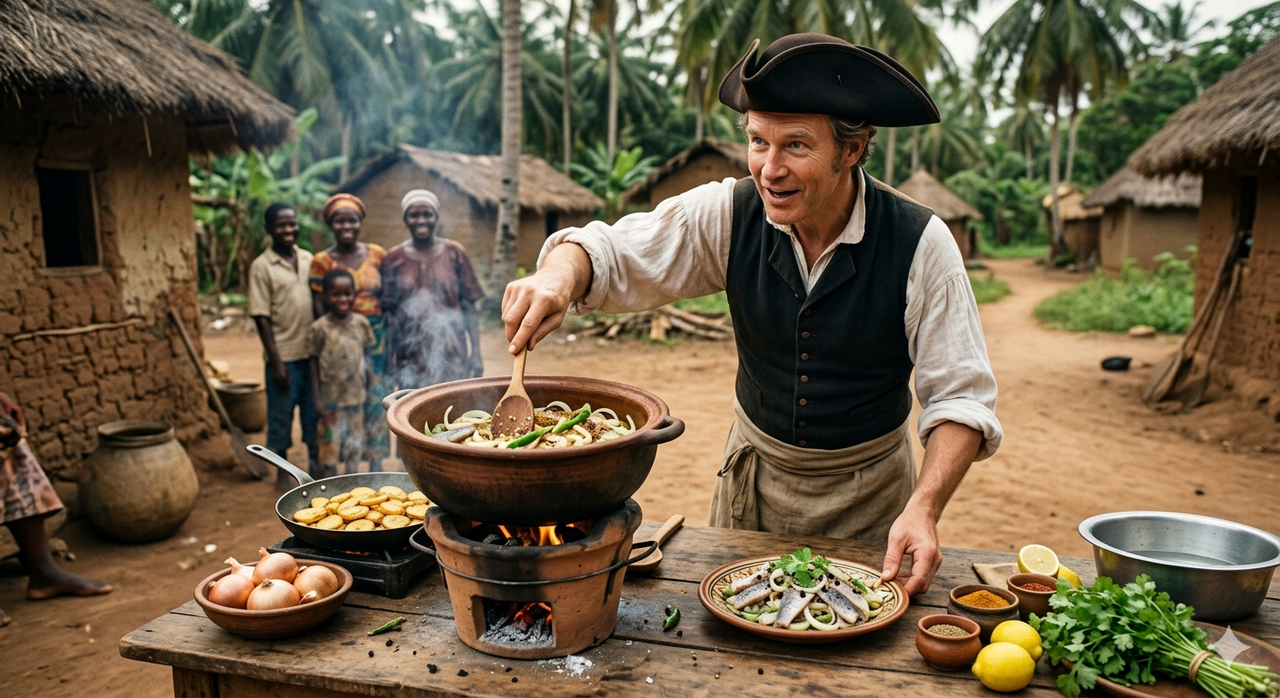
Many people ask: what do people actually eat in Gambia? We "Expat-Germans" have taken three traditional Gambian dishes and given them a touch of our homeland. It certainly represents a culinary challenge that stretches the boundaries of good taste (and perhaps reason), but I am delighted to present the results!
Here are three fusion creations that marry Gambian heartiness with German comfort food:
1. The "Black Forest Domoda Roulade"
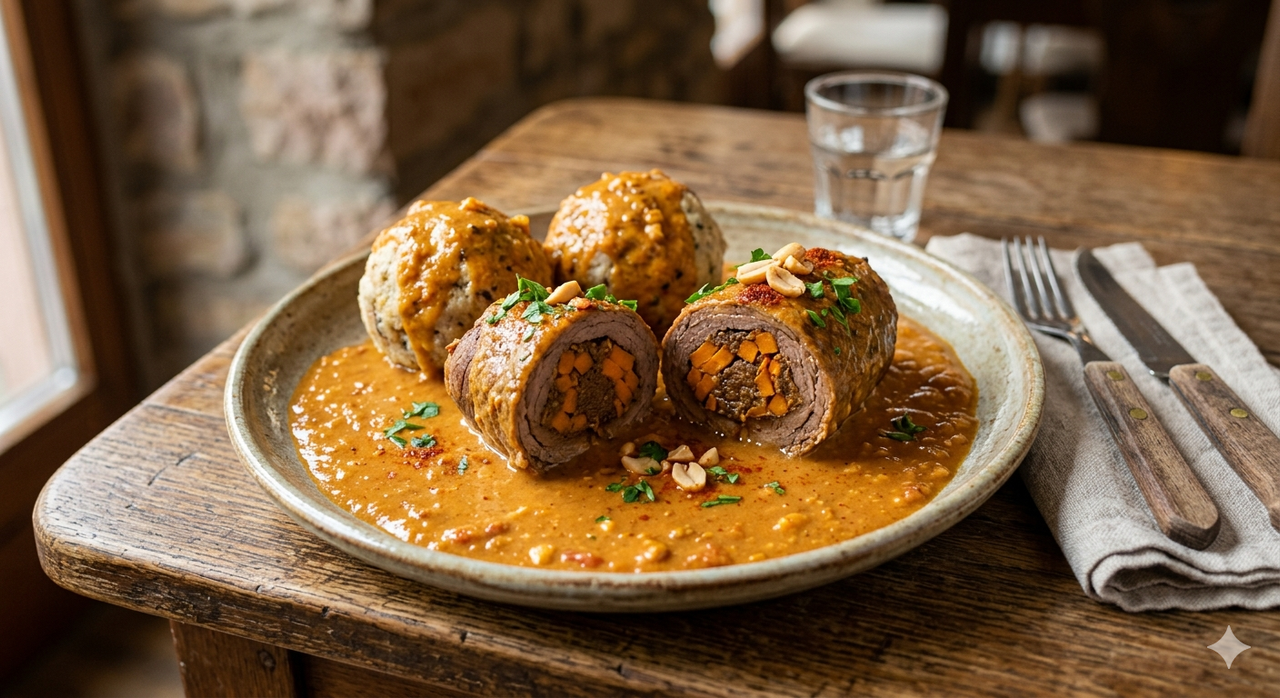
Fusion: Gambian Domoda meets German beef roulades. Instead of filling the roulade traditionally with mustard and bacon, we’re going all out:
The Filling: The beef is spread with an extremely thick, spicy peanut paste and fine sweet potato matchsticks before being rolled.
The Sauce: Instead of braising it in red wine, the meat is simmered in a creamy peanut-tomato sauce.
The Highlight: The roulade is served with Semmelknödel (bread dumplings), which soak up the peanut sauce like a sponge. A culture shock on a plate that might work surprisingly well.
2. The "Eisbein Benachin"
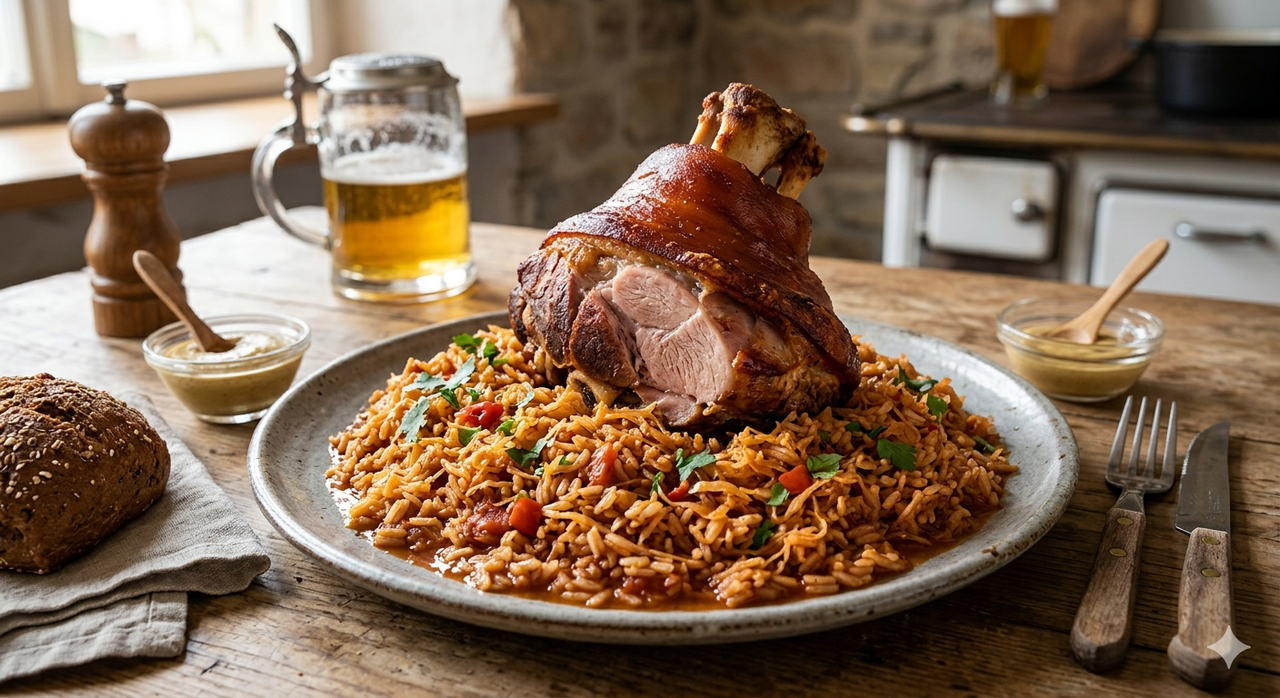
Fusion: Gambian Benachin meets Berlin-style Eisbein (pickled ham hock) with sauerkraut. Benachin is a one-pot dish, and we’re making the German ham hock the star of the show:
The Base: The rice is not cooked with the usual African vegetables, but in the savory broth of a pickled ham hock.
The Twist: Instead of garden eggs (bitter tomatoes) and eggplant, we mix sauerkraut directly into the red tomato rice. The acidity of the kraut replaces the lime, while the fatty richness of the ham hock mellows out the heat of the Scotch Bonnet habaneros.
The Look: A massive mountain of reddish sauerkraut rice with a giant, tender ham hock protruding from the center.
3. The "Matjes Yassa Salad"
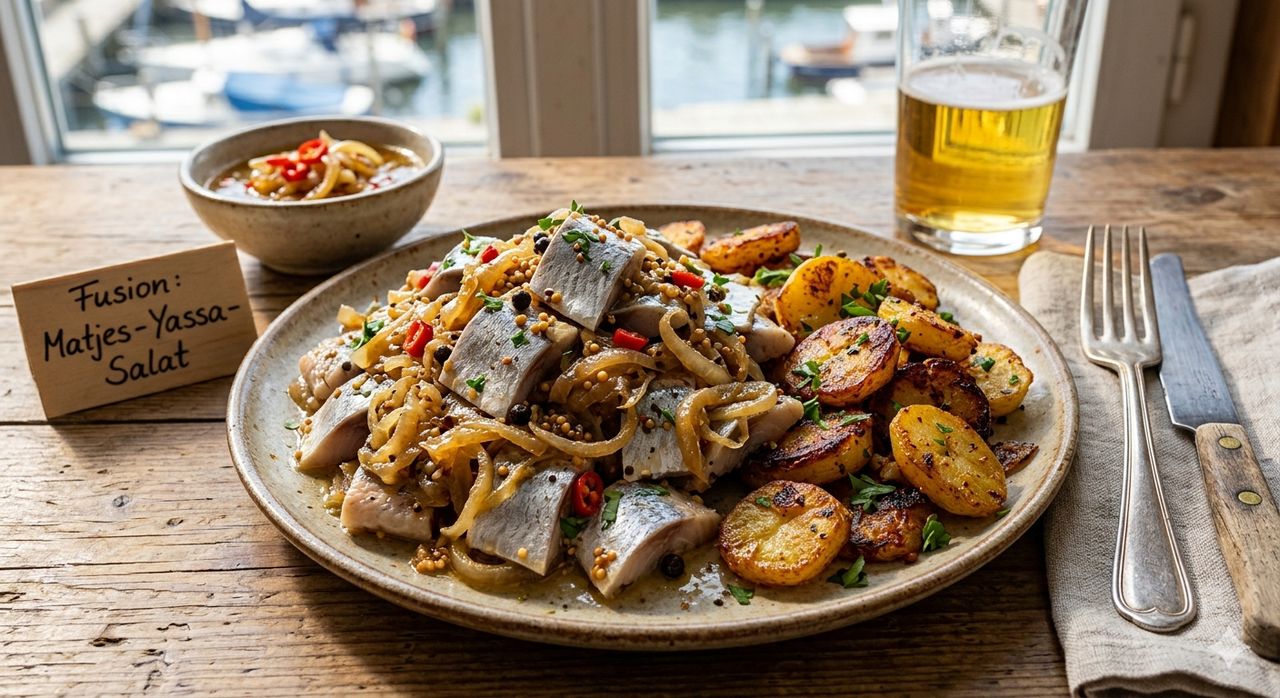
Fusion: Gambian Yassa meets North German Matjes (soused herring) "Housewife Style." Two worlds of acidity collide here:
The Marinade: We take the massive amounts of caramelized onions, mustard, and lemon juice from the Yassa recipe but let them cool down.
The Fish: Instead of grilled fish, we mix North German Matjes (raw, mildly salted herring) into the Yassa onions.
The Side: The dish is served with Bratkartoffeln (fried potatoes) that have been crisped up in peanut oil. The smoky note of the fried potatoes meets the sharp acidity of the West African onion marinade.
Bonus
4. The "Sahel Umami Breakfast" or "Maggipaya"
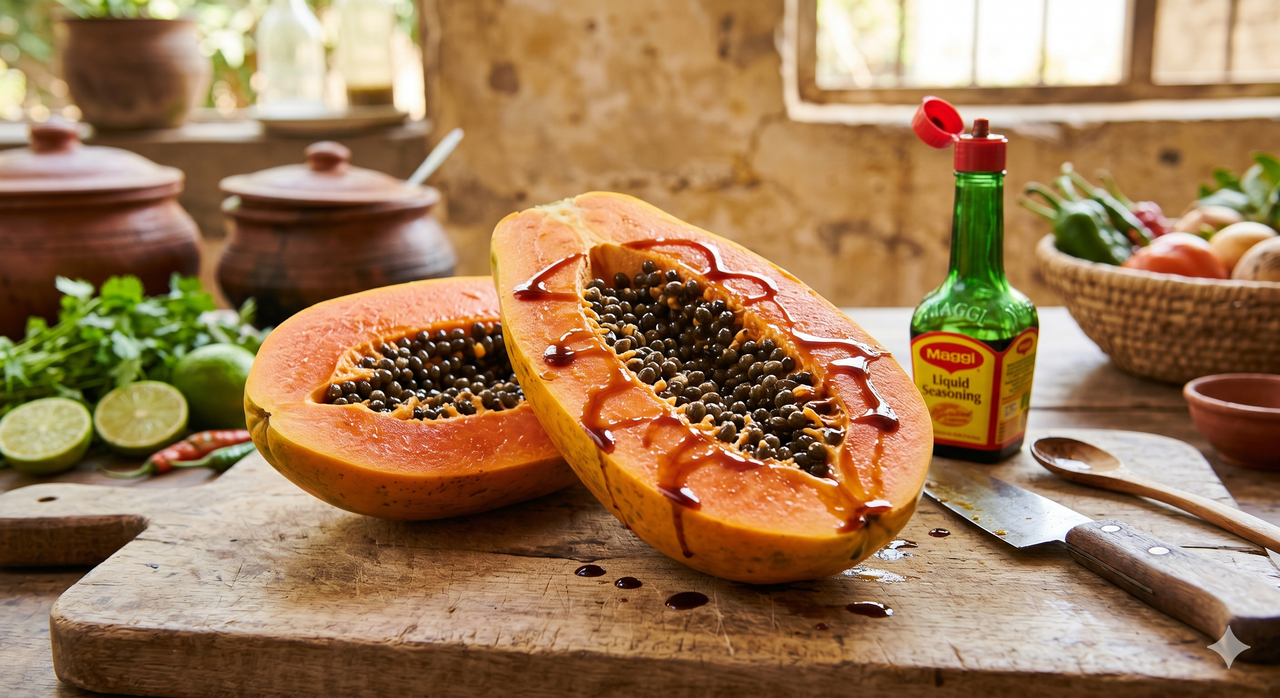
Fusion: Gambian honey-papaya meets German Maggi seasoning culture.
This dish is the ultimate experiment for the brave, pushing the play between tropical sweetness and extreme salty-savory contrasts to the absolute limit:
The Base: A sun-ripened, buttery-soft papaya from a garden in Bakau is halved lengthwise, and the black seeds (which, by the way, have a slight peppery kick) are removed.
The Twist: Instead of the usual squeeze of lime, we generously drizzle original German Maggi seasoning into the hollow of the fruit. The dark, salty lovage notes penetrate the sugary-sweet, vibrant orange flesh.
The Highlight: The papaya is eaten directly out of the skin. Here, the Maggi acts as a powerful flavor enhancer, making the tropical sweetness seem almost caramel-like while creating a savory "umami" depth reminiscent of dark malt.
Chef's Warning: These combinations are definitely not for the faint of heart (or sensitive stomachs). However, the combination of Gambia's peanut-heavy richness and the hearty textures of German classics definitely has the potential to establish a brand-new food genre.