Global War Comedy - Part 2
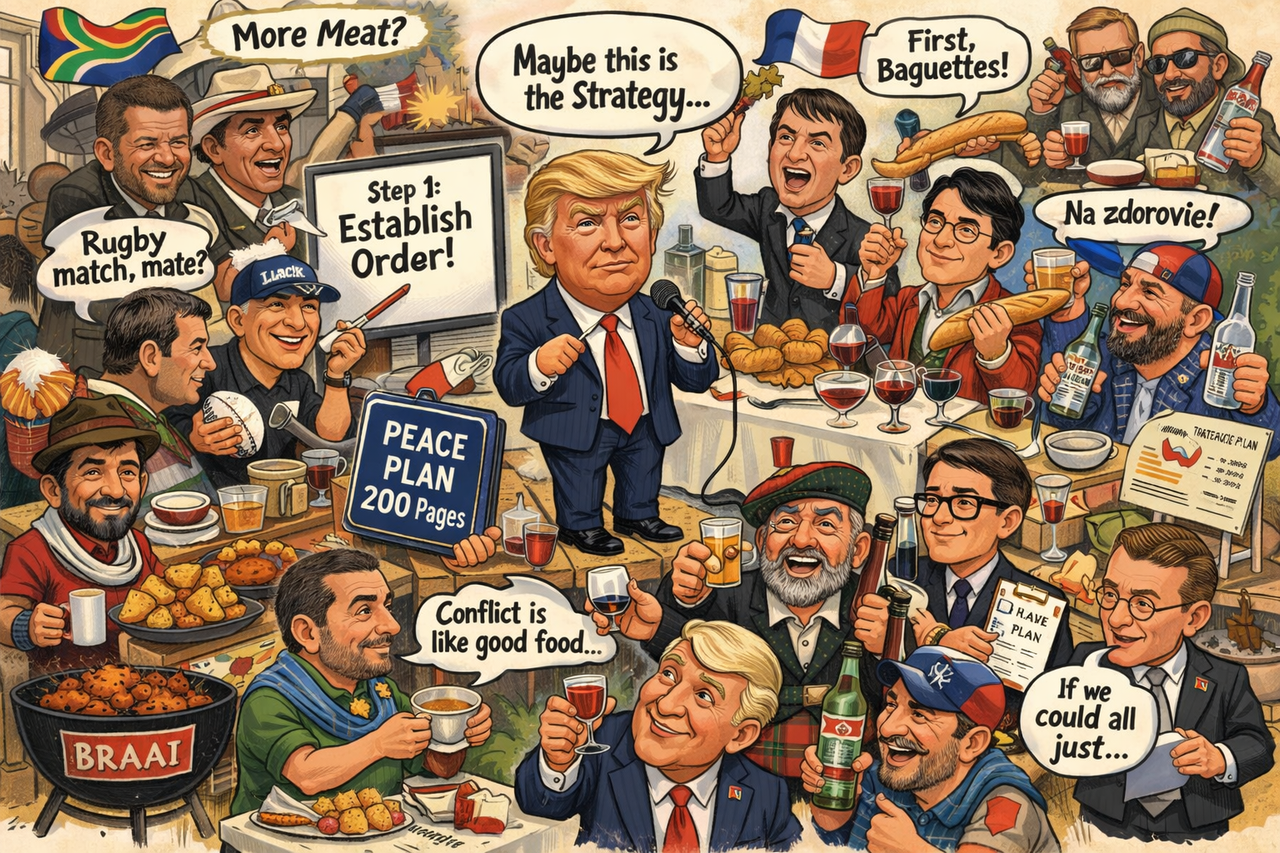
The emergency summit to resolve the Iranian conflict was, on paper, meant to be a turning point in global diplomacy. In reality… it was a continuation of the same chaos as before, just with more chairs, more microphones, and significantly more snacks.
The meeting opened with great ceremony. At the center table stood Donald Trump, tapping a microphone that wasn’t even switched on. “Ladies and gentlemen,” he began confidently, “we are here to solve everything. Quickly. Efficiently. Possibly within the next hour.”
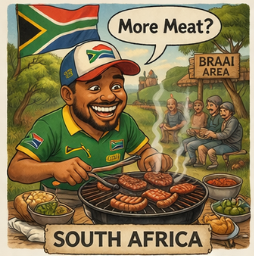
A South African voice from the back interrupted: “Before that, has everyone eaten?” Because, of course, the delegation from South Africa had not come unprepared. The braai was already going.
Smoke drifted lazily through the conference hall, setting off exactly three fire alarms and one heated debate about whether grilling indoors counted as “cultural expression” or “a safety violation.” “Peace talks go better with good food,” one South African explained, handing a plate of boerwors to a German official who looked deeply conflicted but accepted anyway.
The delegation from Germany had, naturally, come with a plan. Not just a plan — THE plan. A 200-page document titled: “Efficient Multi-Phase De-escalation Strategy with Contingency Subsections (Revised Edition 4.3)”
They began presenting it immediately. Slide 1 of 147 appeared. “Step one,” the German delegate said, laser pointer steady, “we establish order.” Behind them, an Australian had just attempted to open a window using a chair.
From India came a different approach. Half the delegation was seated at the table. The other half had already set up a full service corridor outside. “Negotiations take time,” one said calmly. “You will need refreshments and cellphone chargers.”
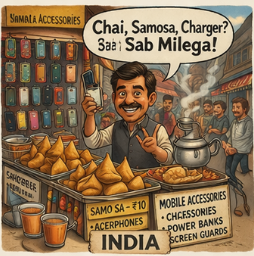
Within minutes, delegates were pausing heated debates to order chai, samosas, and custom phone accessories.
“Two samosas and a ceasefire proposal, please.”
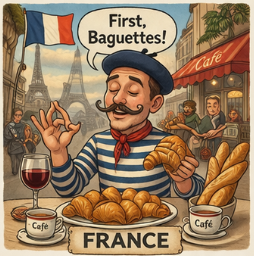
The French delegation refused to begin discussions until proper catering standards were met. Baguettes were placed on the table like ceremonial objects. Croissants were distributed with quiet authority. One French diplomat took a bite, closed his eyes, and said: “Now we may discuss war.”
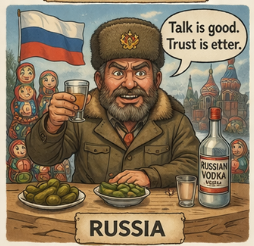
Meanwhile, the Russians leaned back in their chairs, quietly pouring vodka into small glasses. “Talk is good,” one said. “But vodka is better.” He slid a glass across the table. No one was entirely sure if accepting it was diplomacy ... or a test. Most accepted anyway.
The meeting became noticeably louder after that.
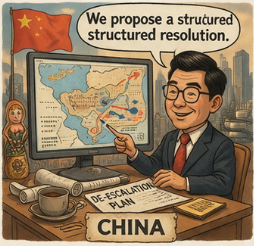
From China came calm, calculated efficiency. While others debated, they had already mapped out potential outcomes, economic impacts, and logistical frameworks for the next decade. “We suggest a structured resolution,” one official said, placing a document on the table.
It was concise. Clear. Slightly intimidating. “Also,” he added, “we have already begun preparing for all possible scenarios.”
No one asked what that meant.
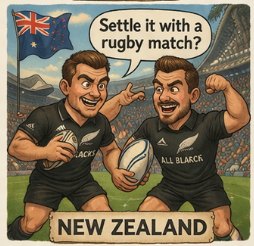
The New Zealanders raised an important point: “What if we settle this… with a rugby match?” The room went silent. One of them leaned forward. “Winner takes diplomatic control.”
A British delegate coughed politely. “I’m not sure that’s standard procedure.” “It should be,” came the reply.
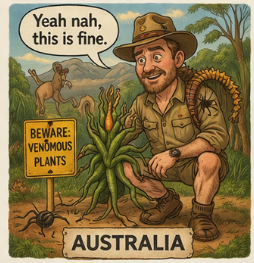
The Australians had stopped paying attention to the meeting entirely. One of them was examining a suspicious-looking plant in the corner.
“Think it’s dangerous?” someone asked. “Probably,” he shrugged. “Still less dangerous than anything back home.”
He poked it anyway. Security made a note to move the plant.
The delegation from Portugal had taken a more philosophical stance. They weren’t leading discussions, but they were deeply engaged in observing them, preferably with something to drink. “Conflict,” one said thoughtfully, “is like good food. It needs time, balance ... and the right ingredients.”
No one knew what that meant, but it sounded reassuring.
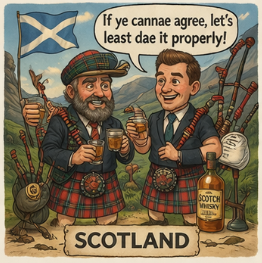
Then came the Scots. Kilts. Bagpipes. Confidence. Volume.
“If there’s going to be a disagreement,” one declared loudly, “let’s at least make it a proper one!” Another raised a glass. “Or we could just agree we’re all stubborn and call it a day.”
This received unexpected support.
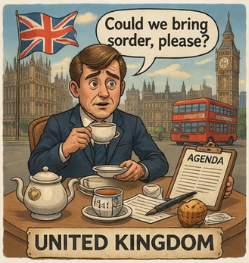
The British delegation tried, valiantly, to maintain order. “Right,” one said, standing up with a clipboard, “if we could all just —”
At that exact moment, a South African shouted: “Who wants more meat?!”
Half the room stood up.
The British delegate sat back down. “Never mind,” he sighed, whilst pouring some tea.
And somehow, through the noise, the laughter, the clinking of glasses, the smell of grilled meat and fresh pastries, something unusual began to happen.
People started talking.
Not as nations. Not as rivals.
But as humans.
A Russian and an American argued ... then laughed.
An Indian vendor offered free tea to both sides.
A Chinese planner adjusted a proposal based on a Scottish joke.
A French diplomat nodded in approval at a compromise ... and then suggested it be slightly more elegant.
Even Donald Trump paused, looking around at the chaos that somehow felt ... productive.
“Maybe,” he said slowly, “this IS the strategy.”
No official resolution was signed that day.
No grand declaration was made.
But as the summit ended, one thing was clear: The world hadn’t solved the conflict, but it had, at the very least, figured out how to sit at the same table.
Even if that table was covered in baguettes, braai meat, vodka, and someone loudly insisting rugby would’ve been faster.