Groucho's nerd corner reviews: Wargame: Red Dragon
Hello everyone, my name’s Groucho, and this is the first article of my (hopefully long) series of game reviews. In today’s article I will review a strategy game set in a hypothetical Cold War gone hot scenario. Today’s review is for Wargame: Red Dragon, the third and final game of the Wargame series, and overall an upgrade to the previous installment, Wargame: AirLand Battle (which was itself an improvement over the first game, Wargame: European Escalation).
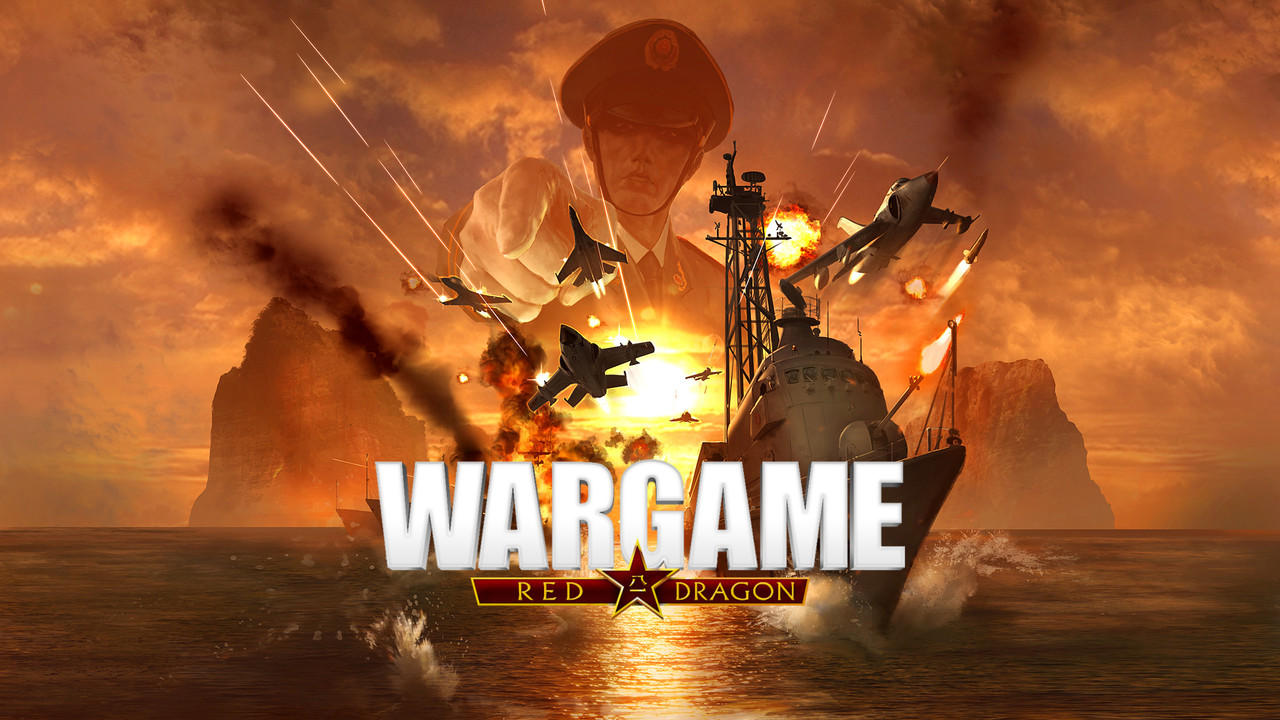
Infos:
Title: Wargame: Red Dragon
Date of release: 2014
Developed by: Eugen Systems
Publisher: Focus Home Interactive
Wargame: Red Dragon, or as it’s known by its community, WG:RD, is a Real Time Tactics game where the player takes command of a fictional NATO or Warsaw Pact battlegroup and sets off to battle. Unlike traditional RTS games, Wargame: Red Dragon does not include mechanics like construction or resource gathering. Instead, there is only one resource in the game: deployment points, earned during the match and used to call in additional troops on the map.
As stated, players control a personalized battlegroup, or better said, a deck. Wargame boasts more than 1000 units in the game. When building their personal deck, players can choose which faction to play (NATO or Warsaw Pact), a nation or coalition (essentially, a coalition is two or more nations combined into a single deck), and even specialize their deck and choose a time period (1980, 1985 periods). Players can select a wide range of units, from infantry and tanks to artillery, SAM systems, and even ships. Players also have the option to upvet units, trading quantity for higher-quality troops, with bonuses to things like precision, morale, rate of fire, and so on. Wargame also feature prototype units, that is units that could, in case of war, being pushed into production and see actual service.
The roster of available nations is generous as well. The nations currently present are:
NATO:
US
UK
West Germany
Denmark
Norway
Sweden
France
South Korea
Japan
ANZAC
Netherlands (DLC)
Israel (DLC)
South Africa (DLC)
Italy (DLC)
Warsaw Pact:
USSR
Poland
Czechoslovakia
East Germany
North Korea
China
Finland (DLC)
Yugoslavia (DLC)
Gameplay-wise, Wargame: Red Dragon is simple. Upon starting a match, the player has a brief window to deploy their starting units in the spawn zone, with the ability to call in reinforcements as the game progresses. Units in the deck are finite. For example, let’s say you’re playing as the UK: a card of Challenger 2 MBTs might equal two units. If you deploy both and lose them during the match, once that card reaches zero, you cannot call in more of that unit. This forces players to be careful with how they use their best units.
Wargame has three main game modes. Conquest, where both sides fight for control of designated zones, and the player with higher income fills the score meter. Destruction, where players earn points by destroying enemy units equal to their deployment cost (for example, destroying a Leclerc MBT worth 165 points gives you 165 points). And Economy, where players must hold zones to generate income, but calling units reduces the score (this mode is barely played). The game supports matches from 1v1 up to 10v10 lobbies.
The game also features single-player options, either in the form of classic skirmish mode or Operations, which are scenarios where players control pre-assigned battlegroups moving on a strategic map similar to Total War.
Pros, in my view: the game is very easy to run, even on lower-spec computers. It’s fairly easy to understand, as long as you have a basic grasp of Cold War technology and tactics. Deck building offers a lot of customization, allowing players to adapt to different playstyles. Additionally, the game has its own dedicated cult following, so finding multiplayer lobbies isn’t too difficult.
Cons, in my view: while there are many units, most are either copy-pastes of others or simply upgraded versions of the same unit. Lower-quality units can perform poorly, which often leads players to rely on more expensive or even “hero” units to carry games. Because of this, many decks end up looking very similar between players. Permanent losses can also be punishing, especially for newer players, as the player base is now mostly made up of veterans. The community can also be quite toxic.
So, this was my first ever review. Hope you liked it, and see you next time. If you have recommendations for games to review, just drop them in the comments and I’ll see what I can do, but I’d prefer to review games I’ve actually played.