Heart Over Gold: The Battle of Värmland
The smoke above Värmland had not yet settled when the first reports began to spread across the Nordic territories: the Dutch advance had slowed, not because of a lack of weapons or gold, but because men defending their homeland fought with something money could not purchase.
What the battles in Värmland revealed was simple and brutal. The Dutch military machine, despite its immense wealth and logistical strength, struggled against Swedish fighters defending forests, mountains, and frozen roads they had known since childhood. Modern armies can buy steel, ammunition, and mercenaries. They cannot so easily buy conviction.
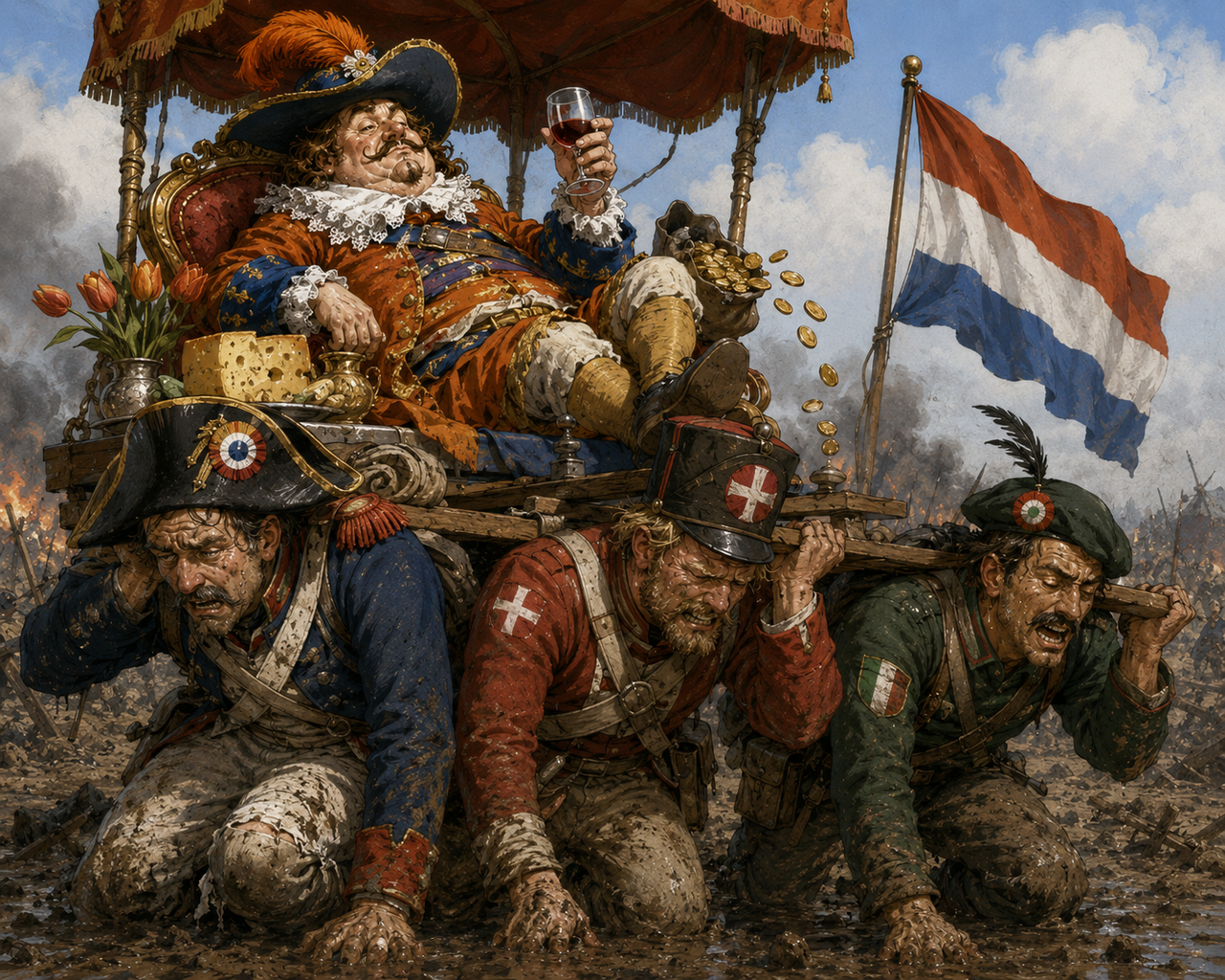
For years, the Netherlands had expanded its influence through trade agreements, economic pressure, and dependent client states. Gold opened gates where diplomacy failed. Entire battalions could be assembled with enough coin. Tens of thousands of gold pieces could raise an army in months. But in Värmland, the limits of that strategy became painfully clear.
According to military observers stationed near the western front, Dutch commanders relied heavily on auxiliary forces and contracted soldiers from allied territories to maintain pressure on Swedish defensive positions. Casualty reports remain uncertain, though witnesses describe repeated assaults against entrenched Scandinavian defenders along forested ridges and frozen supply routes.
Swedish units, heavily outnumbered in several sectors, reportedly conducted organized withdrawals rather than chaotic retreats. Officers within the High Command stated that abandoning territory was never viewed as surrender, but as preparation for the next defensive line. Bridges were destroyed behind retreating forces. Supply depots were relocated deeper into the interior. Villages emptied as civilians joined evacuation columns heading north.
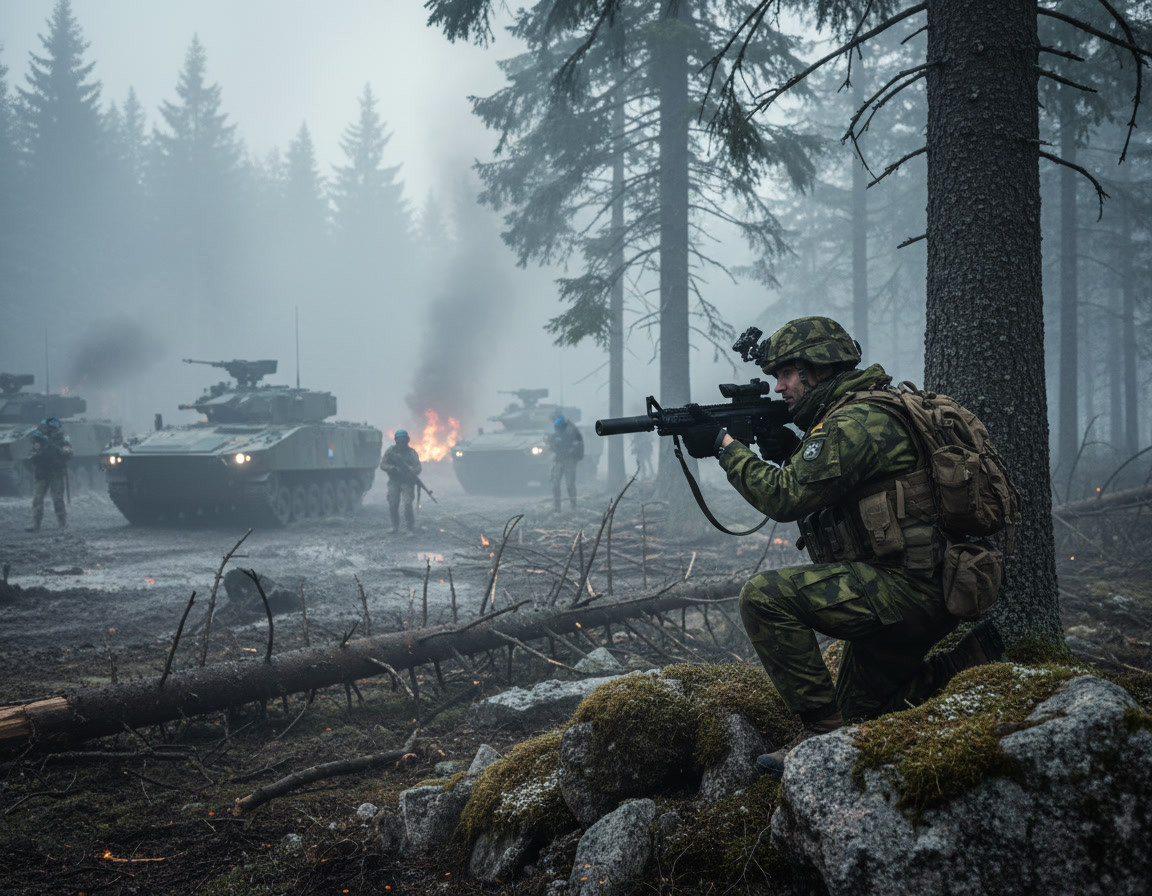
“The battle for Sweden is far from over,” one government representative declared from an undisclosed command bunker late last night. “This war will not be decided in a single province, nor in a single season.”
The Swedish government has reportedly prepared for a prolonged and costly conflict. Emergency production measures have expanded across northern industrial regions, while local militias continue to form in rural communities. Across the country, volunteers have flooded recruitment stations despite mounting fears of a wider continental war.
Yet beyond the strategy maps and military communiqués lies something more difficult to quantify. In towns blackened by artillery fire, Swedish flags still hang from shattered windows. Supply runners continue moving through snow-covered forests under the threat of bombardment. Farmers hand over food reserves to exhausted soldiers with little expectation of repayment.
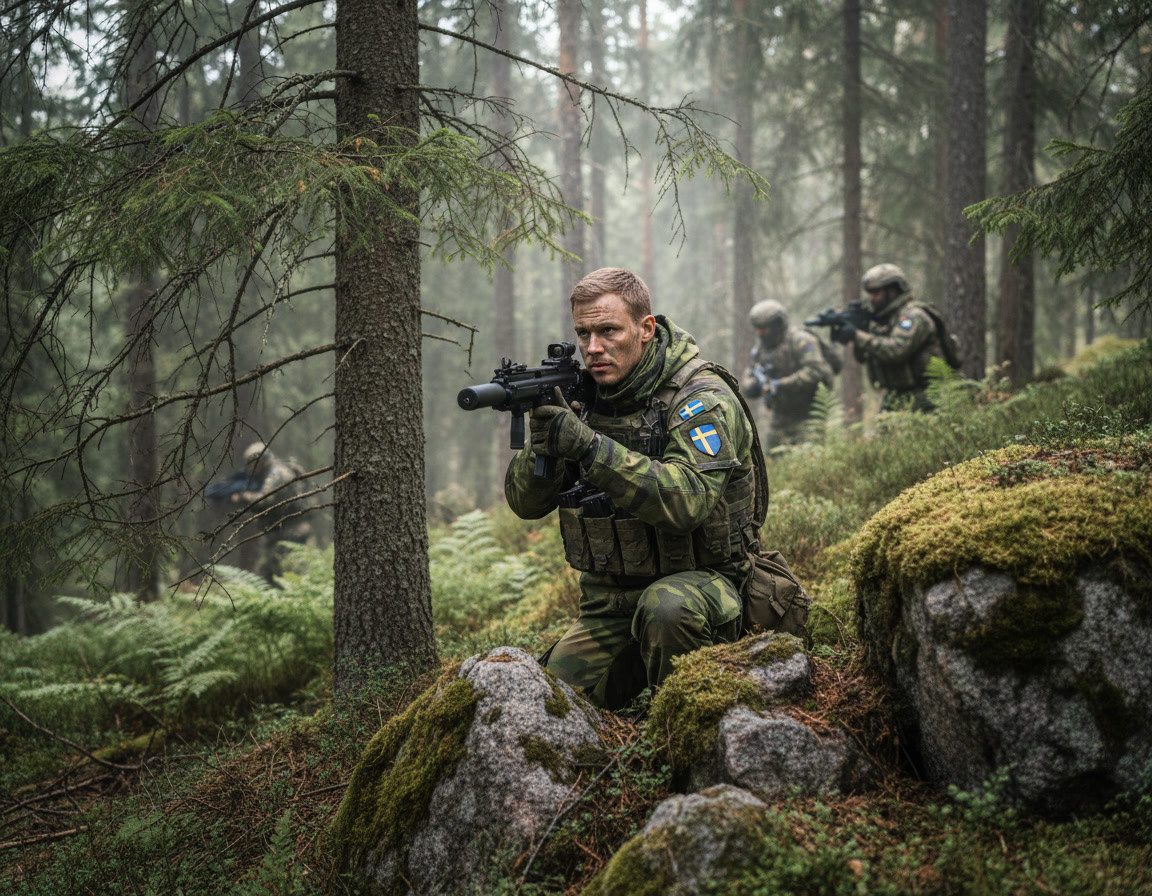
Military analysts increasingly warn that the Dutch coalition may have underestimated the cultural and historical resolve of the Scandinavian defenders. Empires built on economic dominance often expect resistance to collapse once material superiority becomes overwhelming. In Värmland, the opposite appeared to happen. The harsher the pressure became, the more determined the defenders grew.
For the Dutch leadership, this creates a dangerous dilemma. Every kilometer of captured land comes at extraordinary financial and human cost. Maintaining occupation forces across hostile Nordic terrain drains resources rapidly, especially when local resistance remains active behind advancing lines. Even victories risk becoming unsustainable.
Meanwhile, Swedish propaganda broadcasts have leaned heavily into imagery of ancient Nordic resilience, comparing modern soldiers to the warriors and settlers who once survived famine, winter, and invasion in the far north. Though symbolic, the message has clearly resonated with the population.
Honored are the soldiers who stand in the forests tonight. Honored are the people enduring hunger, cold, and uncertainty. Honored is the land that refuses to bow quietly before empire.
For Sweden. For freedom.