How One Word Defied Censorship, Centuries of Bans
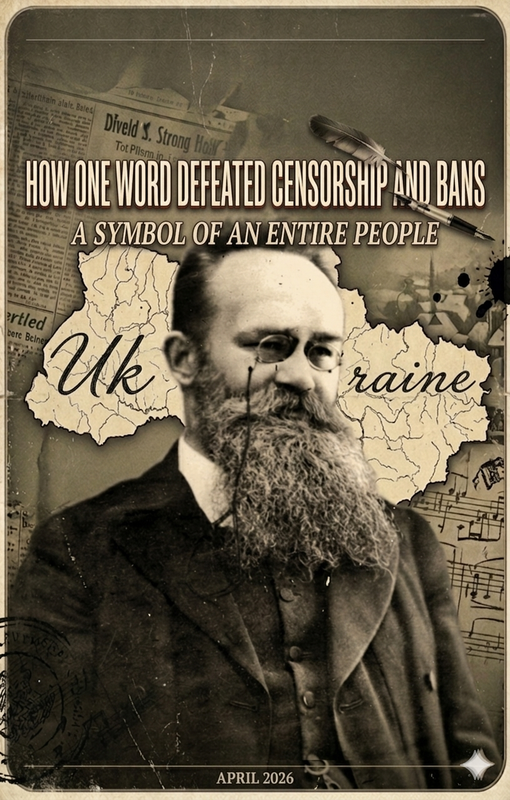
A Name Destined to Outlast Empires
Imagine the world of the 12th century: modern maps do not yet exist, and thick forests rustle where future world capitals will one day stand. It was then, in 1187, that a word echoed through the pages of a chronicle for the first time—a word destined to become a symbol of resilience: "Ukraine."
Could the ancient scribes have imagined that this short name would outlast empires, endure brutal censorship, and unite millions of people from the Carpathian Mountains to the Don River?
The First Mention
The first documentary trace of the name appeared in the Hypatian Codex in an episode filled with deep tragedy. When Prince Volodymyr Hlibovych of Pereyaslav died during a campaign against the Cumans on April 18, 1187, the chronicler recorded:
"And all of Ukraine mourned for him greatly."
— Hypatian Codex, 1187
At that time, the word did not encompass all modern lands but primarily referred to the territories of Pereyaslav, Kyiv, and Chernihiv—the heart of Rus'. Just two years later, chronicles mentioned "Halychian Ukraine," and later "Volynian Ukraine." Pereyaslav and Kyiv were the centers, never the periphery.
Key Milestones
1187: First written mention in the Hypatian Codex. The name refers to the lands of Pereyaslav and Kyiv.
1189: Chronicles record "Halychian Ukraine"—the name spreads to new territories.
1639–1648: French engineer Beauplan places "Ukraina" on detailed maps, establishing the name as a geographical fact in Europe.
18th Century: Peter I and Catherine II attempt to ban the word "Ukraine," replacing it with the artificial term "Little Russia" (Malorossiya).
1917: The rise of the Ukrainian People's Republic. The name receives official state legitimacy.
The Debate Over Origin
The origin of the name has often been a battlefield for ideologies. Some researchers see the root as "kray" meaning "border" or "outpost"—a theory actively supported by the Russian Empire to portray these lands as a mere "outskirt."
However, Ukrainian scholars—notably S. Shelukhin and V. Sklyarenko—argue for a much deeper meaning:
"Ukraine" is not a "land on the edge," but one's own land, "carved out" (vykrayana) for its people.
According to their view, the name comes from the verb "ukrayaty"—to cut off or allocate a portion from the whole to make it independent. Is this not the very essence of state-building?
The Cossack Era and the Theft of Identity
The name gained true political weight during the Cossack era, becoming a virtual synonym for the Zaporizhian Host. Hetmans called themselves "Rus' Sovereigns" and their state "Ukraine," blending ancient glory with new Cossack freedom.
While Ukraine forged its identity in battle, neighboring Muscovy carried out the largest cultural theft in history. By appropriating the name "Rus'" and transforming it into the Greek-style "Russia," the Tsars of Moscow attempted to erase the very memory of Ukrainian distinctiveness.
But can you destroy what lives in folk songs and epic poems? Even under immense pressure, Taras Shevchenko and a galaxy of 19th-century artists continued to call their land Ukraine, filling the word with sacred meaning.
Conclusion
Today, "Ukraine" is more than just borders on a map. It is the result of a thousand-year evolution of self-awareness by a people who managed to preserve their name despite every attempt to discredit it.
This name has become our talisman, proving that the right to be oneself begins with the right to be called by one's own name.
Sources: Hypatian Codex (12th century); S. Shelukhin, "The Name of Ukraine" (1936); V. Sklyarenko, Etymological Studies; G. de Beauplan, "Description d'Ukranie" (1651).