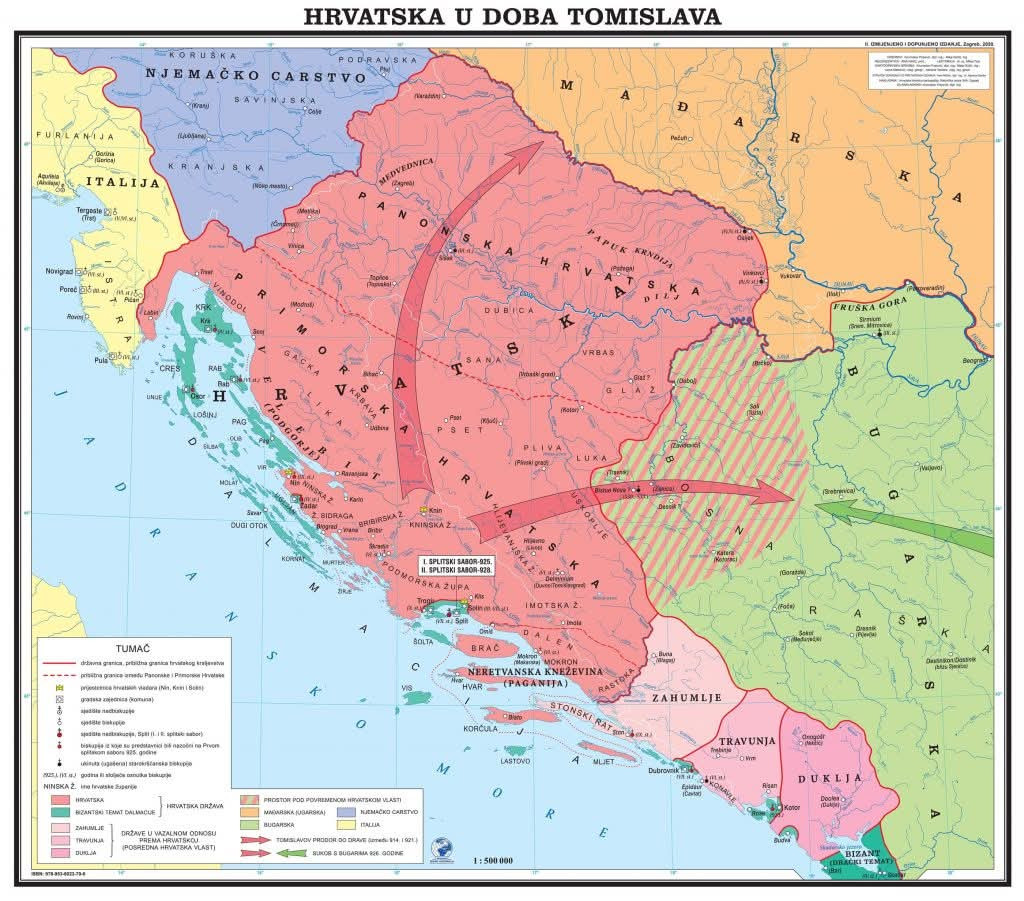
King Tomislav and war against Bulgarian Empire
Following last of historical series about early Croatian states and it's way of becoming respected Kingdom, voters voted for new series about each Croatian king and their achivements.
Among the greatest achievements of medieval Croatia, few events were as significant as King Tomislav's victory over the Bulgarian Empire in the 920s. At a time when Tsar Simeon I "the Great" had created the most powerful state in the Balkans and crushed nearly all of his rivals, Croatia stood as the final obstacle to his western expansion. Tomislav's victory not only preserved Croatian independence but also provided refuge for the surviving Serbian nobility and helped reshape the balance of power in southeastern Europe.
The Rise of Bulgarian Power
During the reign of Tsar Simeon I (893–927), Bulgaria reached the height of its medieval power. Simeon defeated Byzantine armies repeatedly, expanded his empire across much of the Balkans, and sought to establish himself as the dominant ruler of southeastern Europe.
In 924, Simeon's armies invaded Serbia. The Serbian principality was conquered, its political leadership destroyed, and many nobles were captured or deported. Prince Zaharija escaped the Bulgarian invasion and fled to the Croatian court, where King Tomislav granted him protection. Many Serbian refugees also crossed into Croatian territory seeking safety.
By sheltering the Serbian nobility, Tomislav openly challenged Bulgarian authority. Croatia became a refuge for those resisting Simeon's rule and an important ally of Byzantium. Simeon could not tolerate a neighboring kingdom that protected his enemies. The Croatian kingdom also occupied a strategic position along the Adriatic and maintained friendly relations with the Byzantine Empire.
To eliminate this threat, Simeon ordered a major military expedition against Croatia. Instead of leading the army himself, he entrusted the campaign to one of his senior commanders, traditionally identified in the sources as Alogobotur. The Bulgarian army that marched toward Croatia was experienced after decades of warfare against Byzantium and Serbia. Many historians regard it as one of the strongest military forces in Europe at the time.
Tomislav Prepares for War
King Tomislav had spent years strengthening the Croatian kingdom. Under his rule, Croatia united much of Dalmatia with the inland territories and developed an army capable of defending its borders.
The exact size of Tomislav's forces remains debated. Medieval sources often exaggerate numbers, but there is broad agreement that Croatia possessed a well-organized military composed of heavy infantry, cavalry, and local noble retinues. Contemporary Byzantine writers also praised the strength of the Croatian army and navy. The exact location of the battle remains unknown. Historians have suggested several locations, including the Bosnian highlands, the region near the Drina River, or eastern Slavonia.
The Bulgarian invasion ended in a crushing defeat. Emperor Constantine VII Porphyrogenitus later wrote that the Bulgarian army under Alogobotur was destroyed by the Croats. Other Byzantine chroniclers likewise describe a disastrous Bulgarian defeat and report that the news deeply affected Tsar Simeon. Croatian warriors successfully used the mountainous terrain to neutralize the advantages of the Bulgarian army. Fighting on familiar ground under Tomislav's leadership, they inflicted heavy casualties and forced the invaders into a complete retreat.
Saving the Serbian Nobility
Tomislav's protection of the Serbian refugees was more than an act of compassion—it was an important political decision.
By granting asylum to Prince Zaharija and other Serbian nobles, Croatia preserved the leadership of the Serbian people after Bulgaria's conquest. Although Serbia remained under Bulgarian rule for several years, the survival of its noble families later helped restore Serbian statehood after Simeon's death. Tomislav therefore became not only the defender of Croatia but also the protector of many Serbian exiles fleeing Bulgarian domination.
Afterwards crucial Croatian vicotry
The defeat in Croatia marked one of the very few major military setbacks suffered by Tsar Simeon during his long reign. Some medieval chroniclers even claimed that Simeon died shortly after learning of the destruction of his army, overwhelmed by grief. Modern historians cannot confirm that the defeat directly caused his death, but they agree that the battle occurred near the end of his reign and weakened Bulgaria's strategic position.
Following Simeon's death in 927, Bulgaria abandoned plans for further western expansion. Peace was arranged through the mediation of Pope John X, bringing an end to the conflict between Croatia and Bulgaria.
Legacy of the Victory
King Tomislav emerged as one of medieval Europe's most successful rulers. His kingdom remained independent, Croatia's prestige increased, and the victory became one of the defining achievements of his reign. While it showed Croatian full sovergnity and independence as one of the major Kingdoms during these ages confirming Croatian statehood as real and effective.
If Croatia lost this war we may never see end of Bulgarian expansion policies which would make us look at different today map of Balkan. Knowing the customs of those times historians debate that Bulgarians would most likely fully assilimate Serbs completly striping them of their identity. His acts as protector of Serbian nobles and helping them liberate their lands also helped Serbia maintain it's foundation for future statehood making Tomislav one of the best rulers of the European Middle ages.