🐎🏹 Mongolian Naadam festivities - 🇲🇳

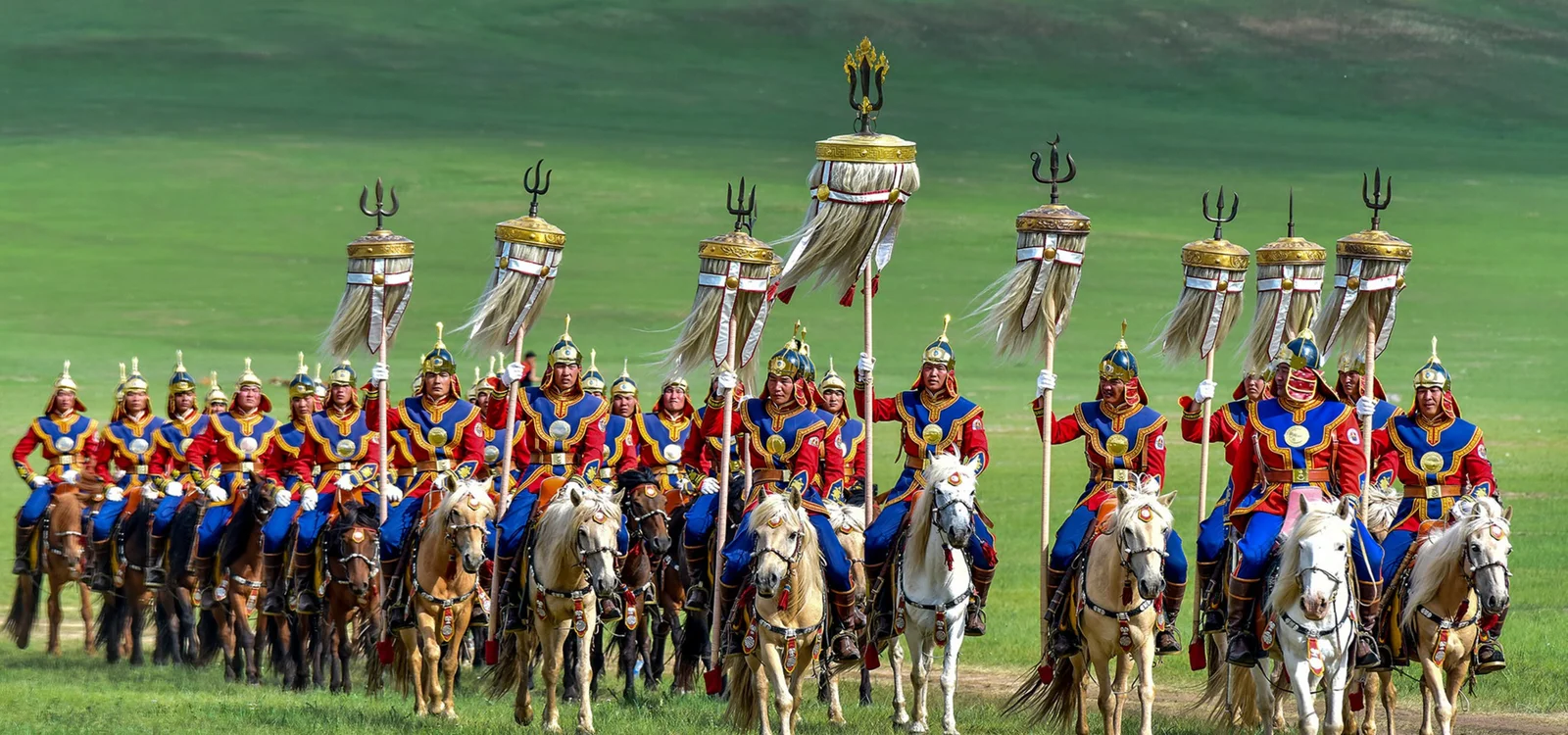
Mongolia Nine White Banners of Chinggis Khan
Hello everyone, i am just coming back to present an event in Mongolia i really wanted to share.
Starting today like every year from July 11 to 13, Mongolia celebrates Naadam, it is the country's largest national festival and public holidays for all Mongolians. You’ll see that holidays in Mongolia actually start one day before on the 10th of July for the Day of the State Flag, so yesterday, but it is not the event i wanted to present to you today !
Naadam has way more historic meaning, it commemorates two defining parts of Mongolia's history, the ancient traditions of the nomadic Mongol tribes and the birth of the modern Mongolian state that exist today after struggle for independence in the early twentieth century.
And this year is particularly important for Mongolia, as it is the 2,235th anniversary of the founding of the Mongolian state and the 820th anniversary of the creation of the Great Mongol Empire.


Ancient Origins
The word Naadam (Наадам) by itself simply means “games” or “festival” in mongolian, and its origins go back many centuries ago, long before the creation of the modern Mongolian state.
In ancient times, Naadam was not a single festival held on a fixed date like it is today, but was celebrated in summer around the time of July. Similar celebrations and events could also take place during seasonal gatherings, religious ceremonies, and diverses important events among the different nomadic tribes of the Mongolian steppe.
Those games grew out of military and survival traditions, with competitions in horsemanship, archery, and wrestling which were essential to help warriors improve their skills needed for both hunting and warfare. To the point they became during the era of Genghis Khan and the Mongol Empire an important method of training, used also for celebration of victories, and for the strengthening of unity among the culturally diverse armies of the Empire.
These traditional games became known as the "Three Manly Games" (Эрийн гурван наадам / Eriin Gurvan Naadam) :
Mongolian Wrestling (Bökh): a contest of strength, technique, and endurance with no weight classes. Wrestlers have to force an opponent’s body part other than the hands and feet to touch the ground to win, matches can last up to 3 hours maximum.
Horse Racing: unlike Western horse races, these are long-distance endurance races across the open steppe, the race's distance range between 10km and 26km depending on the horse's age.
Archery: a sport demanding patience, precision, and skill, and practiced by both men and women.
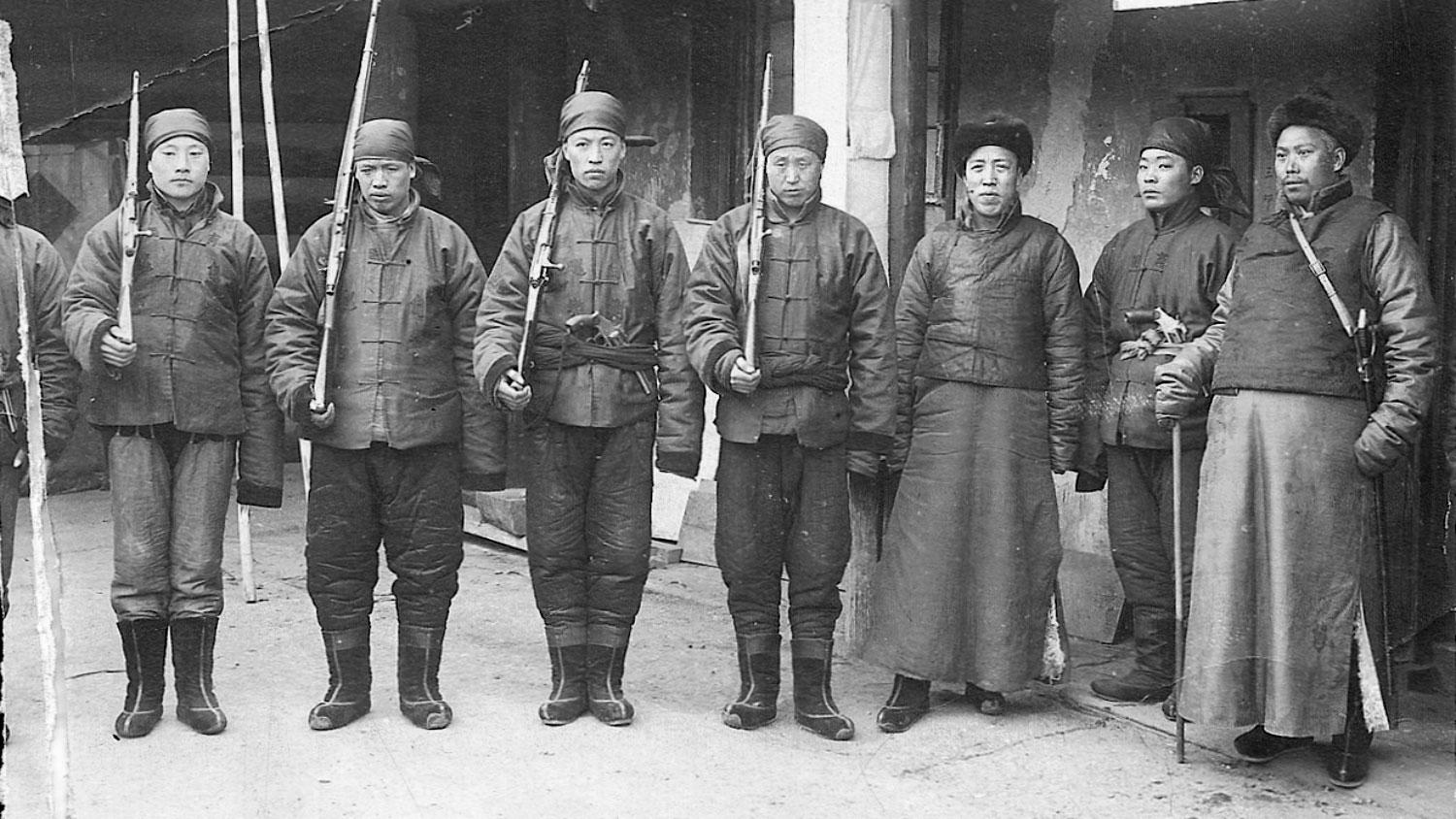
Soldiers of the Buryat-Mongolian regiment of the Asian Cavalry Division of the Russian White Army, 1921.
The Modern National Holiday
The modern National Naadam Festival that we celebrate today is closely connected to the Mongolian Revolution of July 11, 1921, which restored Mongolia's independence after years of foreign occupation by China and laid the foundations for the Mongolian People's Republic.
I’ll try to give a very quick but complete summary here, because Mongolian independence is a huge topic by itself and there would be honestly much more to say (to the point that i’m angry at myself for skipping many events), but if i were to do so everyone would be bored and stop reading before the end, so here is my summary :
For centuries, Mongolia had been under the rule of the Qing Empire of China.
When the Qing Dynasty collapsed during the Chinese Xinhai Revolution of 1911 in profit of the Republic of China, Mongolia saw an opportunity in the chaos to regain independence and declared itself independent with the support of the Russian Empire.However after the Russian Revolution and the following civil war that weakened Russian influence in the region, Chinese forces also took the opportunity to return and occupied Mongolia in 1919. Mongolian warriors together with Russian White Army groups fought against the Chinese occupation, not allowing them a complete control of the country, but the situation remained uncertain.
That changed in 1921, when Mongolian nationalist and communist revolutionaries from the Mongolian People’s Party, led by figures like Suukbaatar, and supported by the Soviet Red Army, defeated both the Chinese forces and remnants of the Russian White Army.
Proclaiming on July 11 1921 a new government for the once again independent Mongolia, the Mongolian People’s Republic, marking the beginning of modern Mongolian State.
To celebrate the victory the new government organized a grand military parade that deliberately connected itself to the ancient traditions of Naadam. And in 1925, July 11 was officially established as the date of the nationwide Naadam Festival, combining the celebration of the revolution with Mongolia’s historic summer games.
Following the end of the People’s Republic with the victory of the democratic forces in the 1990s, Naadam’s meaning expanded. The festival no longer only celebrated the 1921 revolution, but also became a celebration of Mongolia’s much older history, including the heritage of the nomadic civilizations of the steppe and the foundation of the Mongol Empire, an empire that the socialist Mongolia very rarely celebrated before.
Military parades did not completely stop in Mongolia, they now often take place on the 10th of July during the National Flag Day alongside a flag raising ceremony, which like i said at the beginning of the article was yesterday. And this year was the largest military parade in Mongolia history, with 8.500 soldiers participating in it
So, if you wish to watch yesterday parade here you can find a replay of it :
(sorry for the bad camera quality of mongolian public television)
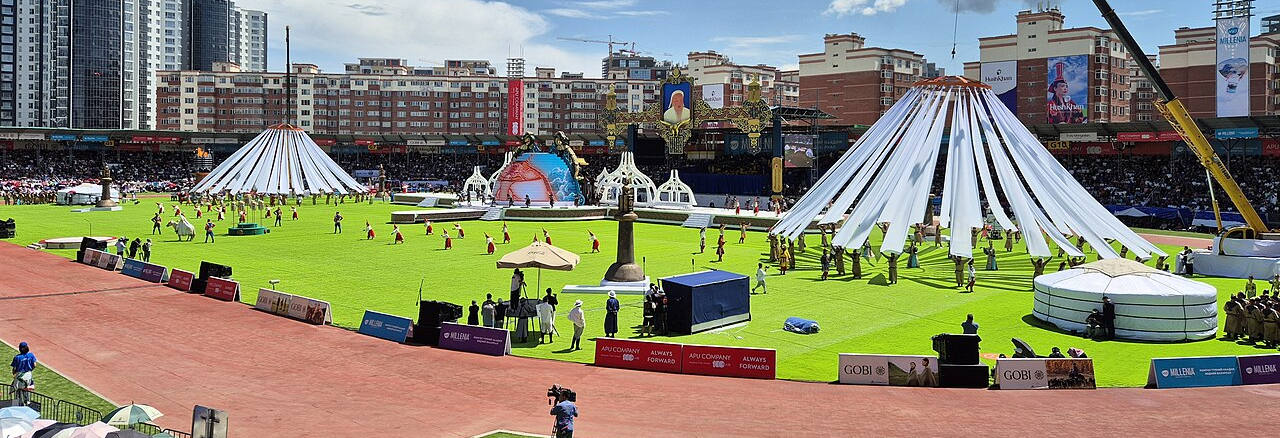
2024 National Naadam Festival opening ceremony
Today National Naadam Festival
Today, Naadam is celebrated across the entire country during summer, but the largest and most important of them is still celebrated on the 11th of July in the capital Ulaanbaatar, it is the National Naadam Festival.
The National Naadam Festival opening ceremony starts at 11:00 AM, so a few hours after this article is published.
It takes place in Ulaanbaatar National Central Stadium where the Nine White Banners, the most sacred symbols of Mongolia, you can see them in the picture opening the article, are ceremonially carried into the stadium. The ceremony feature traditional music, dance, horseback display, art performances and historical reenactments all to celebrate Mongolia’s history and culture.
Following the opening of the festival by the president of Mongolia, the games can begin !
The competitions consist of the 3 original historic manly games that i’ve already mentioned in the festival origins, mongolian wrestling, horse racing, and archery, but a fourth game has now joined the festival which is ankle-bone shooting (Shagai), which is played with knucklebones, payers having to carefully aim flicks of sheep ankle bones to hit targets.
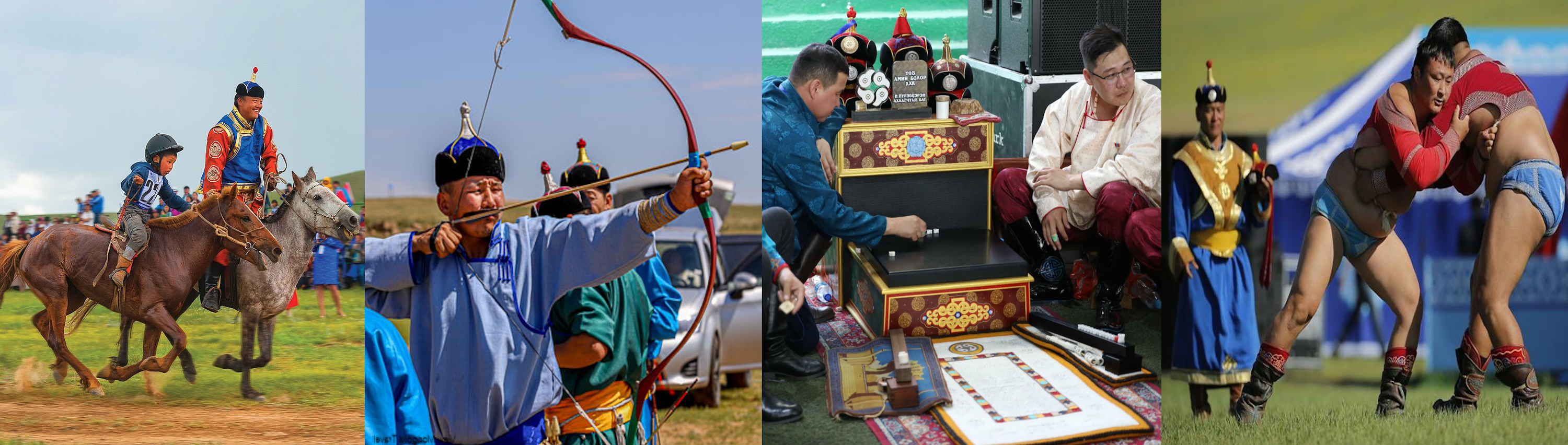
Examples of horse racing, archery, ankle bone shooting and mongolian wrestling
But celebrations don’t only take place in the capital, during July every province and many villages organize their own Naadam celebrations where entire communities gather around the same games to cheer on wrestlers, riders, and archers while sharing traditional food. And even Mongolians who have moved to other countries often rally in summer to organize their own festivals.
One of the festival's most popular dishes is khuushuur, a deep fried meat pastry enjoyed throughout the celebrations. Many families also wear a traditional deel (mongolian traditional clothing), visit relatives, sing, dance, or simply spend time together during these holidays.
In conclusion to this already too long article, today Naadam is much more than a sporting event, or an independence day, it is Mongolia's national holiday, a celebration of its history, culture, and identity. Which represents both the proud heritage of the great nomadic empires and its peoples and the nation's struggle for sovereignty and independence.
To the point it does not limit itself to Mongolia alone, as it is also celebrated by Mongolian communities outside Mongolia, particularly in Inner Mongolia (China) and the Republic of Tuva (Russia) in august, regions that share deep historical and cultural ties with the Mongolian people.
And to finish, in 2010 the UNESCO recognized Naadam importance by inscribing it on the Representative List of the Intangible Cultural Heritage of Humanity !
Thank you for reading me, and…
Happy Naadam ! Сайхан наадаарай !

Edit : Now that this year opening ceremony is over i can share it here