On Dominant Strategies
On Dominant Strategies
By Caio Romanov
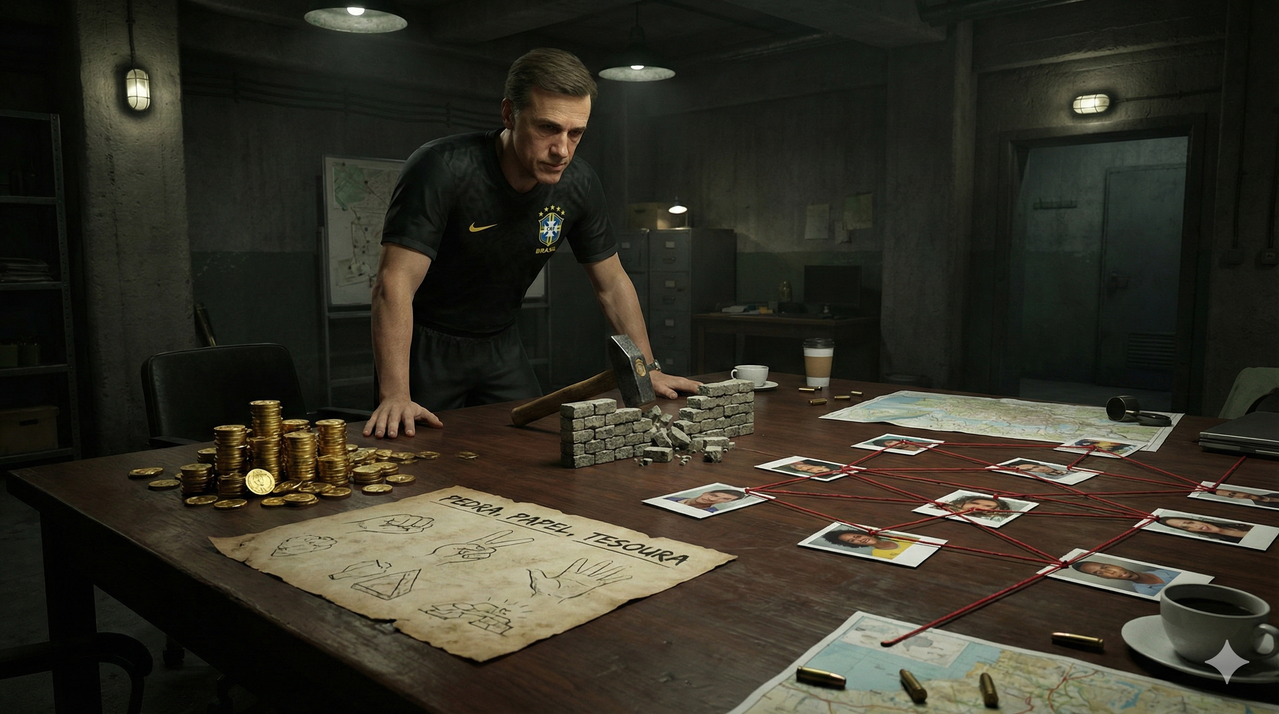
After writing about damage coordination and battle mechanics, it is worth taking a step back and reflecting more openly on dominant strategies.
There are many of them: some efficient, some simply blind replication. You already know which is which.
We learn in three ways: through pain, reflection, or imitation.
You can choose. Period.
The Dominant Strategy about Dominant Strategies
Do not have amnesia.
If it hurt you, learn through pain.
If it worked for others, learn through imitation.
If it hurt them, learn through reflection.
The real dominant strategy about dominant strategies is simple:
stop bashing your head against a wall when there is a door right next to you.
Dominant Strategies for Getting Started
The most obvious and well-known example: build your economic foundations first.
Why? Choose your answer:
a) “Whatever, they do it and it works.”
b) “Because I didn’t choose this path and now I regret it.”
c) “Because of game mechanics, costs, production efficiency, and damage economics.”
Which answer did you pick?
a = imitation
b = pain
c = reflection
Dominant Strategies on Battle Ticks
I hope this does not count as helping the enemy.
In wars, we do not fight for damage itself. We fight for ticks (points), whose value changes over time.
Although ticks are disputed every two minutes, their weight is not constant.
If you reflected properly on our previous damage coordination discussions, you probably noticed three main damage pool movements:
Overkill — “Build the wall.” A wall of damage.
Tick control — precise, continuous damage management.
Blitz — concentrated damage in decisive windows.
It is useful to think of this as a rock–paper–scissors game, because each approach counters another.
The only real exception is total damage supremacy. In that case, overperformance is unnecessary.
Dominant Strategies in Country Relationships
Everything can be simplified into shared interests and mutual friends.
But what is the difference?
When you have mutual friends, you often end up creating shared interests.
In new or isolated groups, the opposite usually happens: relationships are built because of shared interests.
This pattern explains much of the current geopolitical landscape of the game, and why some strong communities
eventually find themselves with no good options left on the board.
This outcome is often inevitable. But there is still an answer.
The Dominant Strategy on Damage Pool
Peace was never really an option. As obvious as it sounds, the ultimate engine of the game is simply
how much damage pool you are able to gather.
So ask yourself:
Are you playing the game, or being played?
Are you being used to satisfy someone else’s hunger for power?
Are you following leaders who no longer serve your interests?
What is your motivation to spend your limited human time here?
I will start: the shadows that wave my national flag, and a persistent taste for strategy games.
The current dominant strategy around damage pool relies on one assumption:
that people are not paying enough attention to notice opportunism, manipulation, or self-interest.
Try to enjoy the metagame.