Tensions Erupt in Comoros as Protests Escalate Into Violent Show of Force
Moroni, Comoros — A volatile political situation in the Comoros has intensified dramatically following the controversial election of Irish-born leader Cu Chulainn as president, sparking widespread unrest across the Comoros.
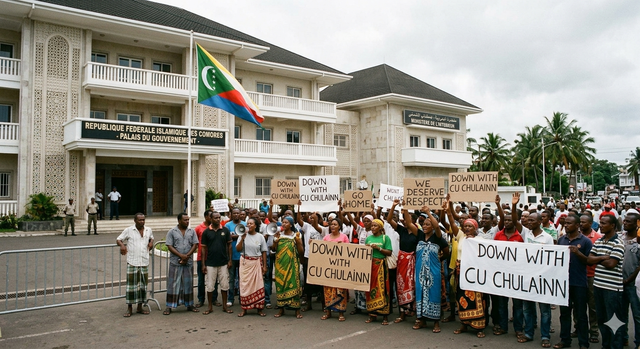
Large crowds of protesters gathered outside government buildings earlier this week, many holding placards reading “Down with Cu Chulainn” and “Go back to Ireland,” reflecting growing dissatisfaction with what critics describe as foreign influence over the island nation’s leadership.
The situation escalated further when the British Prime Minister, known publicly as HippieLovesTrees, arrived alongside a British military contingent. Official statements claimed the deployment was intended to stabilise the region and protect diplomatic interests. However, the move was met with fierce backlash from local factions, who viewed it as an act of interference.

Eyewitnesses reported the presence of pro-government demonstrators within the crowds, some believed to be aligned with British and Comorian leadership, holding signs in support of both administrations. This added to the confusion and tension on the ground, as opposing groups clashed in both message and presence.
In a dramatic and deeply troubling turn, rebel forces opposing the government reportedly enlisted the support of a mercenary group known as D12. The group, led by Marshall Mathers, allegedly moved swiftly to dismantle the British presence.

By late afternoon, scenes turned chaotic as armed members of D12 were seen detaining British personnel. In what observers are calling a shocking display, the British Prime Minister was reportedly captured and brought before a makeshift gallows erected in a public square. Rebel leaders have accused the British of “attempted invasion,” though no formal declaration or evidence has been independently verified.

International observers have condemned the escalation, urging immediate de-escalation and calling for diplomatic intervention. Human rights organisations warn that the situation risks spiralling into full-scale conflict if external actors and internal factions fail to stand down.
As of now, the fate of those detained remains unclear, and communication from within the region has become increasingly limited.
The global community watches closely as the Comoros stands on the brink of deeper instability.