The Buffel – South Africa’s Pioneer Mine-Protected Infantry Vehicle
The Buffel infantry mobility vehicle is one of the most important and influential military vehicles ever developed in South Africa. Built during the height of the South African Border War, the Buffel became a revolutionary answer to one of the deadliest threats faced by soldiers in Southern Africa: landmines.
Although simple and rugged in appearance, the Buffel fundamentally changed military vehicle design. It pioneered many of the mine-resistant concepts that later evolved into modern MRAPs (Mine-Resistant Ambush Protected vehicles) used worldwide in conflicts such as Iraq and Afghanistan.
To South African soldiers, the Buffel became more than just a transport vehicle, it was a life-saving machine capable of carrying troops safely through some of the most dangerous roads in Africa.

The name “Buffel” is Afrikaans for: Buffalo.
The name reflected the vehicle’s rugged strength, endurance, and ability to survive punishment in harsh conditions.
Origins – Why the Buffel Was Developed
During the late 1960s and 1970s, the South African Defence Force (SADF) became increasingly involved in counterinsurgency operations in:
Namibia/South West Africa
Angola
Border regions of Southern Africa
Guerrilla forces such as SWAPO increasingly relied on:
Landmines
Improvised explosive devices (IEDs)
Ambush tactics
Roadside explosives
At the time, conventional military trucks and troop carriers proved highly vulnerable to mines.
Mine explosions often caused devastating casualties because:
Flat-bottomed vehicles directed blast energy upward
Troops sat close to the floor
Standard truck designs offered little blast protection
South African engineers quickly recognised that a completely new type of vehicle was needed.
The Buffel was developed during the mid-1970s by the South African Council for Scientific and Industrial Research (CSIR), ARMSCOR, and South African military engineers working closely with operational units.
Production began around 1978.
The Buffel became one of the earliest true mine-protected troop carriers ever fielded in large numbers.
A Revolutionary Design
The Buffel introduced several revolutionary concepts that later became standard in MRAP design.
Its philosophy was simple:
Protect troops from mines
Keep the vehicle mobile
Use simple, reliable engineering
Survive harsh African conditions
Unlike traditional APCs, the Buffel prioritised blast survivability over heavy armour.
This approach proved incredibly effective in Southern African warfare.
Design and Layout
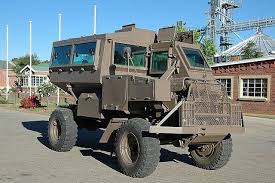
The Buffel had one of the most distinctive silhouettes of any military vehicle ever built.
The vehicle combined:
A truck-style front cab
A raised troop compartment
Large off-road wheels
A V-shaped blast-deflecting hull
The Buffel was built using commercial truck components combined with specialised military protection systems.
Most Buffels used components derived from the Mercedes-Benz Unimog truck platform.
Crew and Troop Capacity
Typical configuration:
Driver
Commander
Machine gunner (optional)
Up to 10 infantry troops
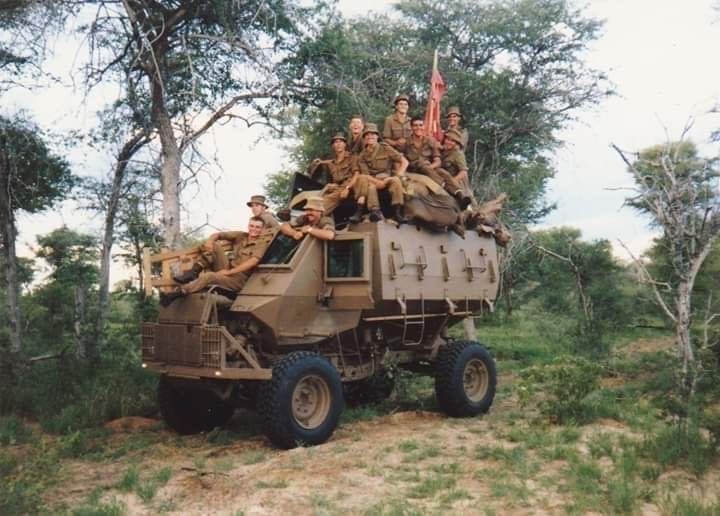
The troop compartment sat high above the ground and used outward-facing seats mounted away from the hull floor.
This reduced injuries during mine blasts.
Troops often rode exposed under a roof canopy with open sides, giving excellent visibility and situational awareness during bush operations.
The V-Shaped Hull – The Buffel’s Greatest Innovation
The defining feature of the Buffel was its V-shaped hull.
This became one of the most important breakthroughs in military vehicle survivability.
How It Worked
Traditional flat-bottom vehicles directed explosions directly upward into the crew compartment.
The Buffel’s angled hull redirected blast energy:
Outward
Away from occupants
Away from critical crew areas
Combined with:
High ground clearance
Elevated seating
Reinforced chassis
the Buffel dramatically improved troop survival rates.
This concept later became the foundation of MRAP design worldwide.

Armour and Protection
The Buffel was lightly armoured compared to tanks or IFVs, but its survivability came from intelligent engineering rather than thick steel.
Protection included:
Small-arms resistance
Shell splinter protection
Exceptional mine resistance
Elevated crew positioning
The vehicle could survive mine blasts that would completely destroy ordinary trucks.
Many soldiers owed their lives to the Buffel’s innovative design.
Engine and Mobility
The Buffel was designed for long-range African operations in extremely difficult terrain.
Typical performance included:
Drive 4×4
Top speed ~95 km/h
Operational range ~1,000 km
Crew/Troops 2 + 10
Weight ~6 tons
The Buffel’s mobility was excellent thanks to:
High suspension travel
Large off-road tyres
Light weight
Strong chassis
Excellent ground clearance
It performed well in:
Bushveld
Sand
Dirt roads
Rocky terrain
Flooded tracks
The vehicle’s simplicity also made field repairs relatively easy.
Weapons and Armament
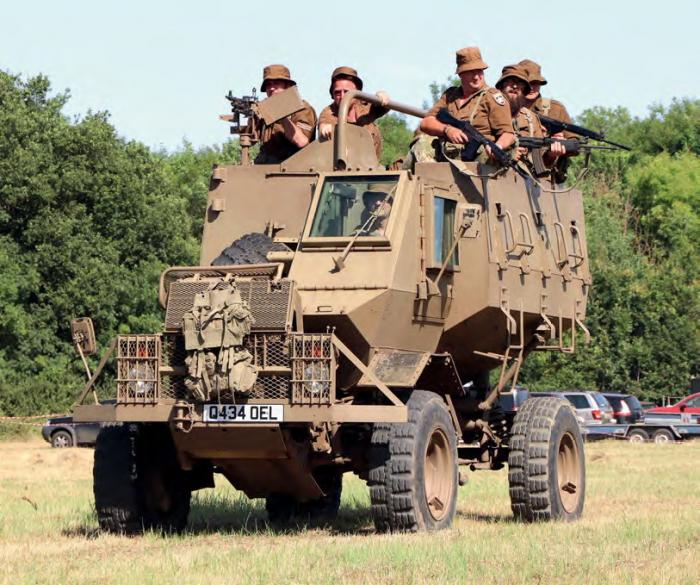
The Buffel was primarily an infantry mobility and mine-protected patrol vehicle rather than a heavily armed combat platform.
However, it could carry mounted weapons depending on operational requirements.
Common weapons included:
FN MAG 7.62 mm machine guns
Browning 12.7 mm heavy machine guns
Light machine guns mounted above the cab
Troops themselves also carried:
R4 rifles
FN FAL rifles (earlier years)
RPGs and anti-tank weapons in some operations
The Buffel’s role focused mainly on:
Troop transport
Patrol operations
Convoy protection
Counterinsurgency mobility
Combat During the Border War
The Buffel became one of the defining vehicles of the South African Border War.
It was heavily used in:
Namibia/South West Africa
Angola
Counterinsurgency operations
Border patrols
Convoy escort duties
The vehicle proved especially effective against:
Mine warfare
Guerrilla ambushes
Long-range bush operations
Before vehicles like the Buffel, mine attacks caused severe casualties.
After the Buffel entered widespread service, troop survival rates improved dramatically.
This changed how the SADF conducted mechanised patrol operations.
Why the Buffel Became Iconic
1. It Saved Lives
The Buffel became legendary primarily because it protected troops from mines.
Many crews survived blasts that would otherwise have been fatal.
This created enormous trust in the vehicle among soldiers.
2. It Helped Pioneer the MRAP Concept
Modern MRAP vehicles used around the world trace many design ideas back to vehicles like the Buffel.
South Africa became a global leader in mine-protected vehicle engineering largely because of the Buffel and its successors.
3. It Was Perfect for African Warfare
The Buffel was specifically designed for:
Long patrols
Rough roads
Bush warfare
Counterinsurgency operations
Its rugged simplicity made it extremely reliable in harsh conditions.
4. It Became a Symbol of the Border War
The Buffel’s unusual appearance made it instantly recognisable.
For many veterans, it became one of the most iconic vehicles of the SADF era.
Variants of the Buffel
Several versions of the Buffel were produced over time.
Standard Troop Carrier
The most common variant used for infantry transport and patrols.
Command Versions
Used for communications and battlefield command roles.
Logistics and Cargo Variants
Adapted for transporting supplies and equipment.
Modified Internal Security Versions
Some versions were adapted for police and security operations.
The Buffel’s Successors
The Buffel’s success directly influenced later South African mine-protected vehicles such as:
Casspir
Mamba
RG-series MRAPs
Nyala
These vehicles further refined mine-resistant concepts pioneered by the Buffel.

Interesting Facts About the Buffel
It Was One of the First True MRAP-Type Vehicles
Long before the term “MRAP” existed, the Buffel already embodied many of the same principles.
It Used Commercial Components
Using commercial truck parts simplified logistics and repairs.
This was critical during long operations far from maintenance bases.
The Open Troop Compartment Was Intentional
Although exposed, the open design:
Reduced blast pressure effects
Improved visibility
Helped troops react quickly to ambushes
It Influenced Military Vehicle Design Worldwide
South African mine-protection expertise eventually influenced military vehicle programs globally.
The Buffel played a major role in that evolution.
Many Remained in Service for Decades
Even after newer MRAPs appeared, Buffels continued serving in various African countries due to their reliability and effectiveness.
Legacy
The Buffel was more than just a military truck — it was a revolutionary battlefield survival vehicle.
Its legacy includes:
Pioneering mine-resistant troop transport
Saving countless lives
Influencing modern MRAP design
Defining Southern African counterinsurgency mobility
The Buffel demonstrated that smart engineering and battlefield experience could overcome one of warfare’s deadliest threats.
Today, military historians often regard the Buffel as one of the most important mine-protected vehicles ever developed.
In many ways, the global MRAP revolution began with the Buffel driving across the dusty roads of Southern Africa.