The Casspir MRAP – The Vehicle That Changed Mine Warfare Forever
The Casspir is one of the most influential military vehicles ever developed in Africa and one of the most important mine-resistant vehicles in modern military history. Designed in South Africa during the height of the Border War, the Casspir became famous for its extraordinary ability to survive landmine explosions and protect its occupants in some of the most dangerous combat environments imaginable.
Long before the term “MRAP” (Mine-Resistant Ambush Protected vehicle) became globally known during the wars in Iraq and Afghanistan, South Africa had already pioneered the concept through vehicles like the Casspir.
Today, the Casspir is widely regarded as one of the foundational vehicles that inspired modern MRAP doctrine across the world.
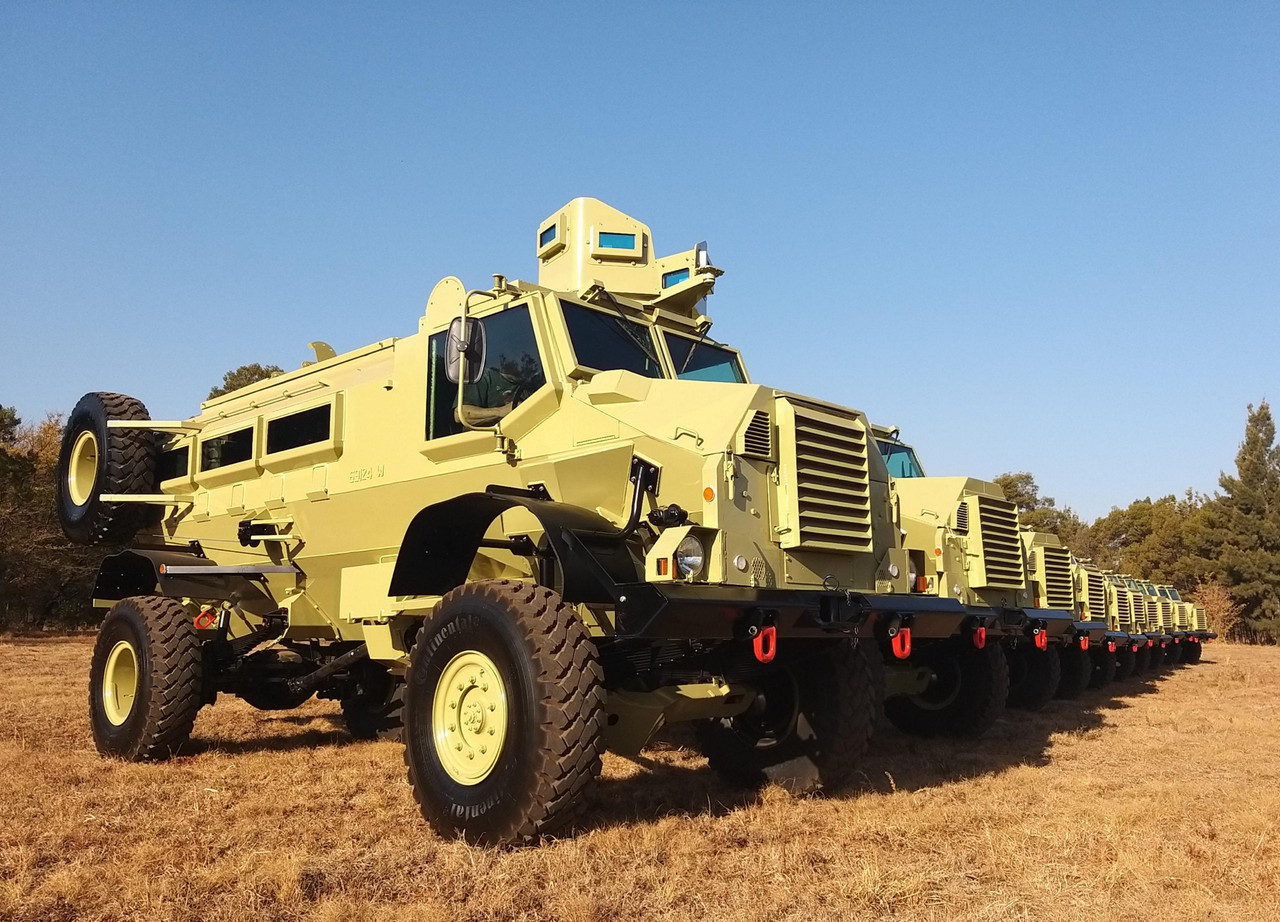
Origins – Why the Casspir Was Created
During the 1960s and 1970s, South African security forces faced a growing insurgency threat in:
Namibia/South West Africa
Angola
Rhodesia (modern day Zimbabwe)
Internal security operations within South Africa
Guerrilla forces increasingly relied on:
Anti-tank mines
Improvised explosive devices (IEDs)
Ambush tactics
Roadside explosives
Conventional military trucks and lightly armoured vehicles proved extremely vulnerable to mine blasts. Casualties from mines became one of the biggest threats to patrols and convoy operations.
South African engineers therefore focused heavily on mine-resistant vehicle design, an area where the country would become a world leader.
The Casspir emerged from this requirement during the late 1970s and early 1980s.
The name “Casspir” is a combination of:
CSIR (Council for Scientific and Industrial Research)
SAP (South African Police)
The vehicle was developed jointly for the South African Police and military forces.
Production was handled by TFM Industries and later by Reumech OMC and other South African defence companies.
The Casspir officially entered service around 1980 and quickly became one of the defining vehicles of the Border War era.
A Revolutionary Vehicle
The Casspir was revolutionary because it approached battlefield survivability differently from traditional armoured vehicles.
Instead of relying purely on thick armour, the Casspir focused on:
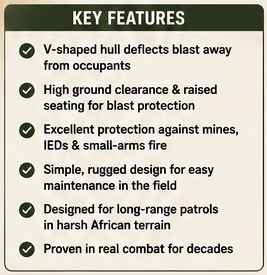
This philosophy became the basis for nearly all future MRAP vehicles around the world.
At a time when most armies still relied on vulnerable trucks and APCs, South Africa had already created a highly effective mine-protected troop carrier capable of surviving devastating explosions.
Design and Layout
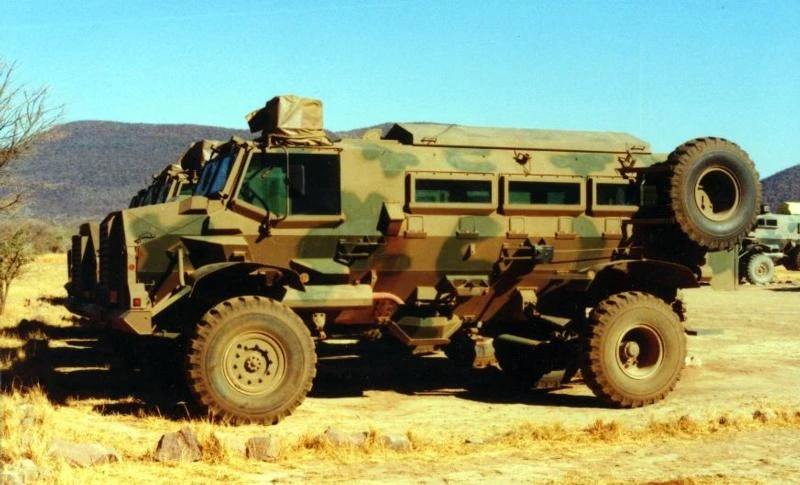
The Casspir uses a distinctive high-riding 4×4 configuration with a V-shaped hull.
This V-shaped hull became the vehicle’s defining feature.
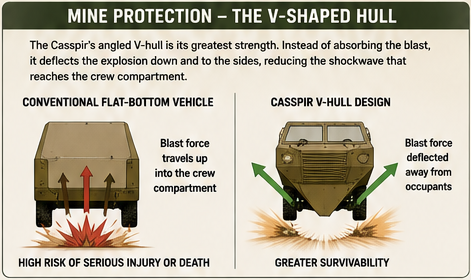
Instead of absorbing a blast directly underneath the crew compartment, the angled hull deflects explosive force away from occupants.
Crew and Troop Capacity
Typical configuration:
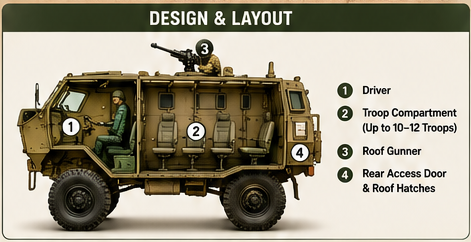
The crew compartment sat high above the ground to further reduce the impact of mine blasts.
Troops entered through rear doors and roof hatches.
Armour and Mine Protection
The Casspir’s greatest strength was survivability.
Protection included:
Resistance against small-arms fire
Blast protection against anti-tank mines
Protection from shell splinters
Elevated seating to reduce injury
The vehicle was specifically designed to survive massive mine explosions that would destroy ordinary armoured vehicles.
The V-shaped hull redirected blast energy outward rather than upward into the crew compartment.
Many crews survived explosions that would otherwise have been fatal.
This mine-resistant philosophy became one of South Africa’s most important military engineering achievements.
Engine and Mobility
The Casspir used commercial truck components wherever possible to simplify maintenance.
Performance figures varied slightly depending on version, but generally included:
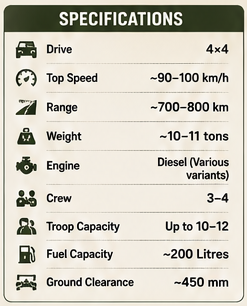
The high suspension gave the vehicle excellent ground clearance, especially useful in bush terrain and rough roads.
Despite its size, the Casspir proved surprisingly mobile in:
Desert terrain
Dirt roads
Savannah bush
Long patrol operations
Weapons and Armament
Unlike IFVs or tanks, the Casspir was primarily a protected troop carrier rather than a heavily armed assault vehicle.
However, it could be equipped with various weapons depending on mission requirements.
Common armament included:
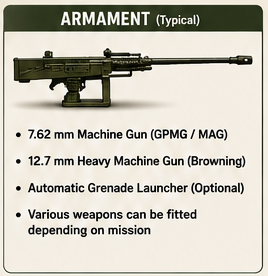
Some variants also mounted:
Automatic grenade launchers
Riot-control equipment
Searchlights and loudspeakers for police operations
The primary role of the Casspir was not offensive firepower. It was survivability and troop transport in dangerous mine-threat environments.
Combat During the Border War
The Casspir became heavily associated with:
South African Police counterinsurgency operations
South African Army convoy protection
Border patrols
Internal security duties
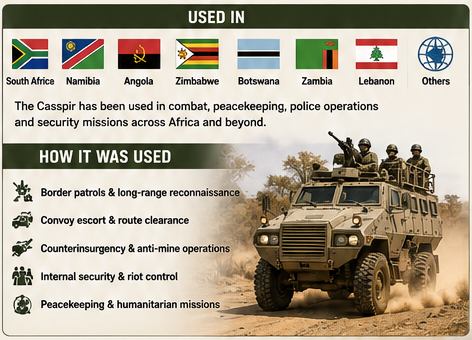
It was widely used in:
Namibia/South West Africa
Angola
South African townships during unrest
Counterinsurgency operations throughout Southern Africa
The vehicle became especially important during anti-mine patrol operations.
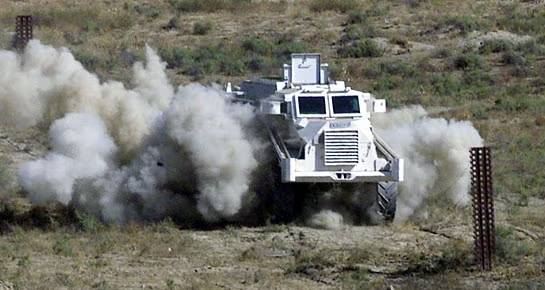
Convoys protected by Casspirs suffered dramatically lower casualties from landmines compared to conventional vehicles.
The vehicle’s reliability and survivability made it extremely popular with troops.
Why the Casspir Became Iconic
1. It Saved Thousands of Lives
This is perhaps the most important reason for the Casspir’s legendary status.
Many soldiers and police personnel survived mine blasts specifically because of the vehicle’s innovative design.
Numerous real-world incidents demonstrated the Casspir surviving explosions that completely destroyed ordinary trucks.
2. It Helped Invent the MRAP Concept
Modern MRAP vehicles used by the United States and NATO in Iraq and Afghanistan owe a major conceptual debt to South African mine-protected vehicle design.
The Casspir was decades ahead of its time.
3. It Was Perfect for African Conditions
The vehicle was built specifically for:
Long patrol distances
Rough roads
Bush warfare
Insurgency conflicts
Mine-threat environments
This made it exceptionally effective in Southern Africa.
4. It Became a Symbol of the Era
The Casspir became visually iconic during:
The Border War
Counterinsurgency operations
Internal security operations during the apartheid era
Its tall silhouette and massive wheels became instantly recognisable.
Variants of the Casspir
The Casspir family eventually expanded into multiple configurations.
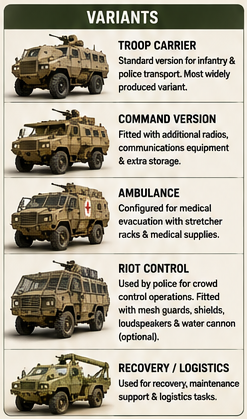
Standard Troop Carrier
The most common version used for infantry and police transport.
Command Variants
Used as mobile command posts with enhanced communications equipment.
Ambulance Variants
Configured for battlefield casualty evacuation.
Riot-Control Versions
Used extensively in internal security operations with:
Riot shields
Wire mesh protection
Loudspeaker systems
Recovery and Logistics Versions
Adapted for maintenance and support roles.
Interesting Facts About the Casspir
It Could Survive Massive Mine Blasts
The Casspir became famous for surviving explosions that launched the vehicle into the air while occupants often walked away alive.
Photographs of destroyed-but-survivable Casspirs became legendary.
It Influenced Global Military Vehicle Design
The Casspir directly influenced modern MRAP development worldwide.
American MRAP programs during the Iraq War studied South African mine-resistant vehicle concepts extensively.
It Was Used by Many Countries
The Casspir was exported internationally and used across Africa and beyond.
Several nations adopted the vehicle for:
Peacekeeping
Counterinsurgency
Police operations
Mine-threat environments
It Remains in Service Decades Later
Despite being designed during the Cold War, upgraded Casspirs remain operational in several countries today.
It Was Designed Around Real Battlefield Experience
Unlike many theoretical military designs, the Casspir evolved directly from practical combat lessons learned during years of mine warfare in Southern Africa.
Legacy
The Casspir is more than just a South African armoured vehicle. It is one of the most important mine-protected military vehicles ever built.
Its legacy includes:
Pioneering MRAP design
Revolutionising mine protection
Saving countless lives
Influencing military vehicle development worldwide
Few military vehicles changed battlefield survivability as dramatically as the Casspir.
Even today, military historians and armoured vehicle experts often describe it as one of the most successful mine-resistant vehicles ever created.
In many ways, the modern MRAP era began with the Casspir rolling through the dusty roads of Southern Africa.