The Death of the Open Labor Market

Why Cronyism is the New Currency
By Wilimey - Economic Analist & War Correspondent
TL;DR
Wage stickiness and contractual risk eliminate profitability in the open market, pushing firms toward closed, trust-based hiring systems. Labor allocation shifts away from competitive mechanisms toward social networks.

In my previous analysis of the labour market, https://app.warera.io/article/69951d60ac31a5fa71b8c135, we diagnosed the emergence of a Zombie Economy [1]. We observed how the intersection of the Fidelity Bonus and strict wage regulations created a state of Institutional Rigidity [2], rendering business owners paralyzed by the fear of losing their most productive assets, their employees.
Today, we are witnessing the terminal stage of that disease. Rational entrepreneurs have abandoned open recruitment entirely, forced into a system where Cronyism [3] and informal social networks have become the only mathematically viable paths to solvency.
The Math of Extinction: The Zero-Profit Equilibrium
To understand why the open market is dead, one must look at the brutal reality of current profit margins. Recent market data highlights a terrifying equilibrium: producing a primary good like Steel at the current "average market wage," even when factoring in the absolute maximum 10% Fidelity Bonus, Depending on the country and tax regimes, some firms may observe a meager profit of 3% or 5% per product sold, but a wage that is even only slightly high can yield a net profit of exactly 0.000.
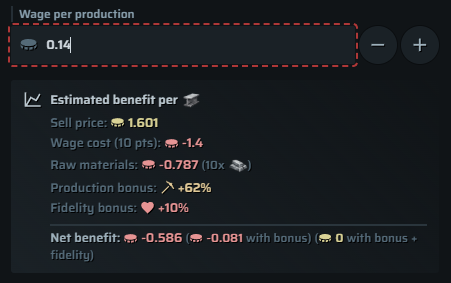
*Reference image shows a wage of the average market wages at the time of the image, 0.014 per productiion unit output
This reveals a fundamental breakdown in price signaling. The "average wage" is no longer a functional price mechanism that balances supply and demand; it is a Phantom Metric [4] kept artificially high by firms refusing to adjust to a crashing market. This leads to extreme Downward Wage Stickiness [5], where the price of labor remains frozen at "boom-time" levels while the value of the goods produced continues to fall. Because these firms refuse to fire workers and reset their productivity, they prevent Market Clearing [6], ensuring that supply remains too high and prices remain too low for any new competitor to survive.
However, these razor-thin margins do not signify a healthy market; they represent a state of "Survival of the Connected." In an environment where the average entrepreneur is fighting for mere decimals, the company owner who can bypass the public board and hire through Cronyism [3] at significantly lower wages gains an insurmountable competitive advantage. They are not merely out-competing their peers; they are operating in an entirely different economic reality where profit is guaranteed by social leverage rather than industrial efficiency.

Now If we compare the earnings of the negotiated salaries of the previous image versus the earnings of a market-rate salary, we can see:
Salary of 0.122 (negotiated): 18.1% profit margin

Salary of 0.0138 (below average market price):
2% profit margin

The Fidelity Trap: 10 Days of Active Investment
The crisis is deepened by the specific mechanics of the Fidelity Bonus (introduced in patch v0.22.0.) This bonus increases at a rate of 1% daily, but with a critical caveat: it only increases for each day the worker actually performs labor. Consequently, reaching the 10% efficiency peak is not a passive achievement of time, but a grueling ten-day requirement of active production.
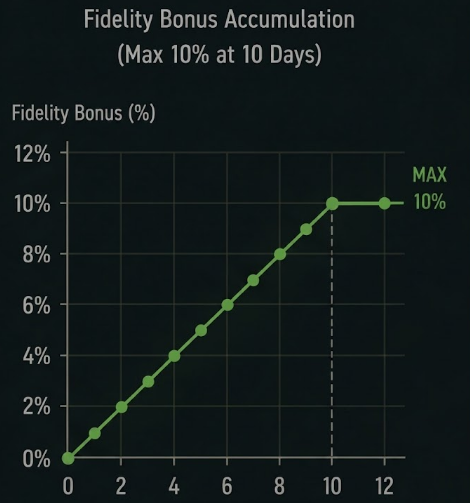
This turns a tenured worker into a piece of Specific Capital [7]. If an employer fires a 10% worker, they are not merely losing a staff member; they are destroying a ten-day active investment that cannot be recovered on the open market. In an environment where profit margins are non-existent, this 10% is the only thing keeping a company from immediate bankruptcy. The owner is effectively held hostage by the very productivity they cultivated. This are the "Golden Handcuffs"[8] introduced in the article I mentioned at the beginning of this article.

The 24-Hour Lockdown and the Risk Premium
The reluctance to hire from the public boards is further exacerbated by the Negotiated Wage Protocol and the recent 24-hour freeze. Current laws dictate that an employer can only attempt to reduce a wage 24 hours after a worker has joined the firm. Furthermore, any wage reduction requires the employee's manual consent. This what we call "Wage Stickiness" [9].
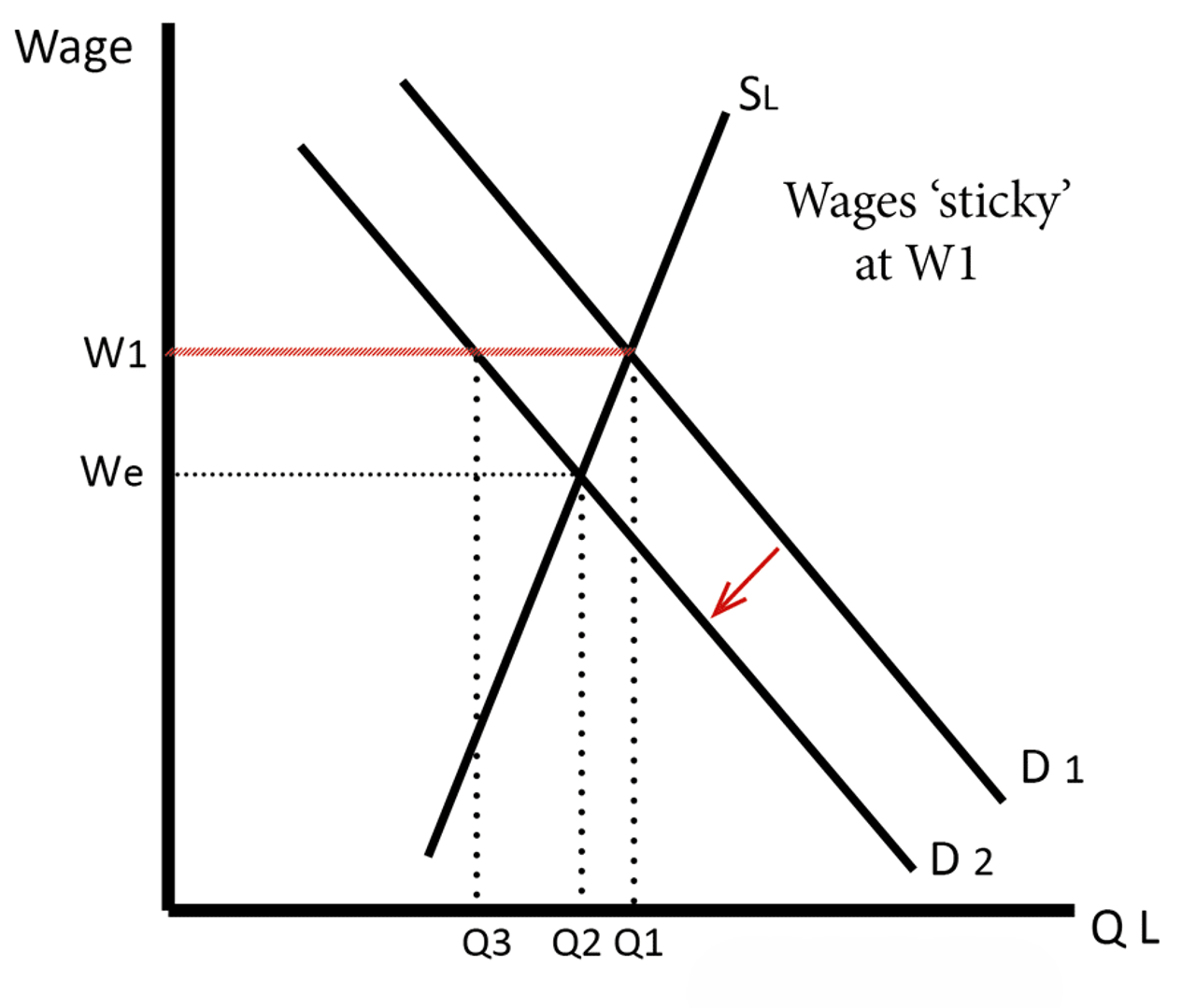
24 hours is an eternity in the current high-speed economy. Hiring an unknown worker from the open market now carries an insurmountable Risk Premium [10]. If an entrepreneur hires a stranger at the inflated average wage, they are locked into 24 hours of guaranteed financial loss. If the worker then refuses a wage correction, simply stops working or changes companies for a better wage, the entrepreneur's production lines get paralized and he loses the fidelity bonus. Faced with this, the rational actor simply stops participating in the public market.
The Shift to Cronyism: A Survival Mechanism
When formal markets become too distorted to function, human action dictates that a Shadow Market [11] will rise to replace them. This has manifested as a transition toward Cronyism [3], recruitment based strictly on personal friendships, political alliances, or Military Unit (MU) connections.

Currently, the only way to operate a profitable enterprise is to bypass the public job board and hire known individuals who agree to work for wages significantly below the artificial market average.
This is a mutual pact: the worker accepts a realistic wage, and the employer grants them a stable position in a solvent company. We have effectively replaced Financial Capital with Social Capital [12]. Your industrial capacity is no longer determined by your skills, but by the size of your social circle.
The Feudalization of the Economy
What we are witnessing the "feudalization" of the economy. When the open market fails to provide a path to profit, the "Strategic Industrialist" I have mentioned in previous articles is replaced by the "Social Lord." The economy is no longer a fluid environment where a new player can rise through merit and hard work; it has become a collection of private social spheres where entry is permitted only through personal recommendation and loyalty oaths.
The long-term implications are catastrophic for the economic growth. New players who arrive without established social connections find themselves in an economic wasteland. Public companies are either "Zombies" on the verge of collapse or private entities that do not trust outsiders. They cannot hire without facing considerable loses and the risk of going bankrupt.
Furthermore, this sclerosis will eventually bleed into the geopolitical arena. Countries that rely on open, transparent markets will find themselves outproduced by those nations where workers and owners can bypass the rigid framework through "handshake deals."
We are moving toward a world where economic power is inseparable from loyalty. Until the 24-hour hiring risks are mitigated and the "Negotiated Wage" allows for a true market-clearing bottom, the public labor market will remain a graveyard of broken companies.
Reference Glossary
[1] Zombie Economy: A market filled with firms that are technically insolvent but survive by "clinging" to tenure-based productivity at the cost of their own capital.
[2] Institutional Rigidity: Rules (such as the 24-hour wage freeze or the veto power over pay cuts) that prevent the market from adapting to new economic realities.
[3] Cronyism: The practice of hiring or favoring friends and close associates.
[4] Phantom Metric: An economic statistic (like the current average wage) that appears legitimate on paper but does not reflect a viable, market-clearing reality.
[5] Downward Wage Stickiness: The economic phenomenon where wages resist moving down despite falling demand or prices, leading to unemployment or business failure.
[6] Market Clearing: The process by which the price of labor adjusts until the number of workers seeking jobs equals the number of jobs available at a profitable rate.
[7] Specific Capital: An asset (like worker tenure) that is highly valuable within a specific relationship but loses all value if the relationship ends, as the 10-day "active work" stack resets to zero.
[8] Golden Handcuffs: Financial incentives, such as stock options, deferred bonuses, or high salaries, designed to retain key employees by making resignation (or firing) costly.
[9] Wage Stickiness (or Price Stickiness): The resistance of a nominal price to change despite changes in the broad economy (referenced here as the Negotiated Wage Protocol restrictions).
[10] Risk Premium: The extra financial cost or hesitation an employer absorbs when making a blind transaction, specifically the 24-hour guaranteed loss when hiring at current market rates.
[11] Shadow Market: An informal, relationship-based economy that operates outside the standard, public market mechanisms, usually in response to structural rigidities.
[12] Social Capital: The economic value derived from human networks and trust, which has currently replaced the open market as the primary driver of recruitment.
Signed,
Wilimey
Economic Analyst and War Correspondent,
The Global Ledger
Would you like me to speak about a specific topic?
I like to write about economics so let me know via DM or in the comments of this article :)