The french revolution: part 1 (the American independence war)
The first line
(The American independence war)
Following the end of the Seven Years' War between France and Britain, Great Britain faced a terrifying reality: it was practically bankrupt. Therefore, an urgent solution to this financial crisis had to be found. Britain saw that the ultimate fix was to shift the burdens of the war onto the Americans in the British colonies through heavy taxation, leaving virtually no product untaxed. Naturally, clashes and protests erupted in response to these severe measures, but things quickly escalated into full-scale civil disobedience. The most prominent flashpoint that pushed both sides to the brink was the infamous Boston Tea Party incident.
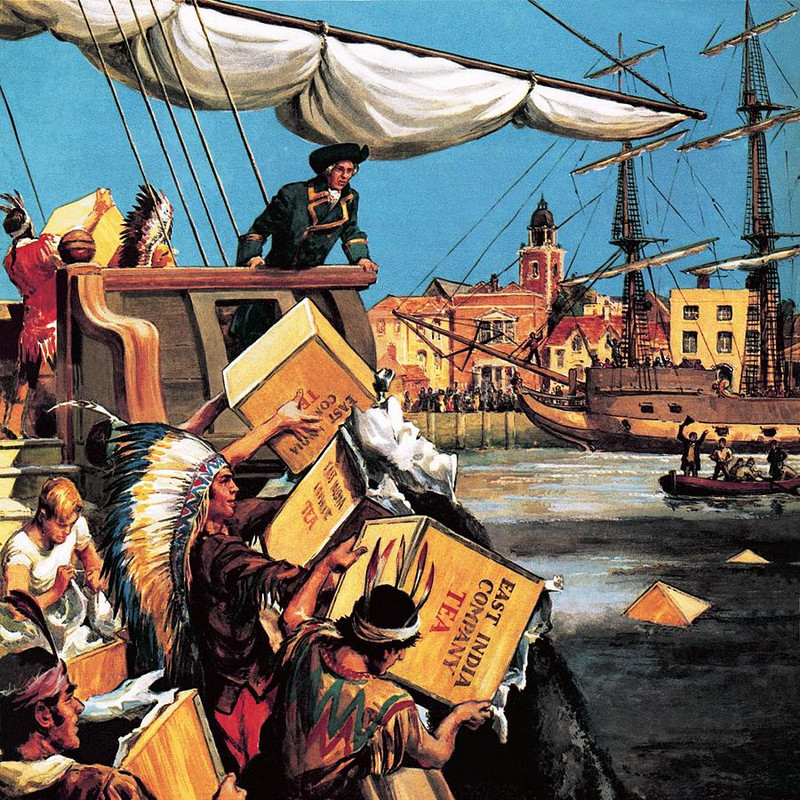
Boston tea party
The events of the Boston Tea Party began with a group of angry Americans who decided to protest British taxes and Britain's tea monopoly. They headed to the port of Boston, boarded the British ships, and began dumping chests of premium tea into the sea. A total of 342 chests were thrown overboard, inflicting massive losses on Britain, reaching millions of dollars by today's standards.
Britain's reaction was anything but lenient; it was incredibly violent. They decided to shut down the port of Boston, revoked self-governance in the state of Massachusetts, and deployed the army to suppress the population.
The American response to these British decrees was just as unyielding. Sensing that war was inevitable, the Americans began forming local armed militias and stockpiling weapons.
To put an end to this farce with a decisive blow, British General Thomas Gage issued an order on April 19, 1775, to march toward the town of Concord to confiscate the weapons.
However, before reaching Concord, they were intercepted by American militias in the town of Lexington. There, amidst extreme tension—
The commander of the forces in Lexington, Major John Pitcairn, ordered his troops to maintain order and wait. His reasoning was that if the Americans fired, it would mean war, but if they maintained their cool and restraint, they would proceed to Concord.
Amidst this intense standoff and a heavy fog that filled the air, a sudden gunshot rang out—a shot that would forever be known as "the shot heard round the world."
Massive gunfire erupted, marking the start of the clash. Once the fog cleared, the outcome was both predictable and shocking: 8 Americans were killed and 10 were wounded, compared to just a single casualty on the British side.
Following the clash at Lexington, British forces pressed on toward the town of Concord, only to be shocked that the Americans had already hidden most of the weapons. It was during the troops' retreat back to Boston that a true massacre unfolded.
Thousands of militia fighters ambushed the British forces, triggering a bloody skirmish. Although the British forces managed to survive and return to Boston, it came at the cost of losing hundreds of soldiers. It was then that the British realized they were completely besieged inside Boston.
The Battle of bunker hill
(The First Major Organized Clash)
.jpg)
Desperate to break the siege, the British launched a massive assault on the hills where the Americans were dug in. The result? A classic Pyrrhic victory—a win that felt like an absolute catastrophe.
The British technically won the battle, but they lost over 1,000 men, which was literally a third of their entire force! This gave the Americans a massive morale boost because they finally realized: Hey, we can actually stand our ground against the British empire.
But let's wind back the clock just two weeks before this battle, because something even more important happened: the leaders of the 13 colonies gathered in Philadelphia for the Second Continental Congress on May 10, 1775. That historic meeting triggered some game-changing decisions:
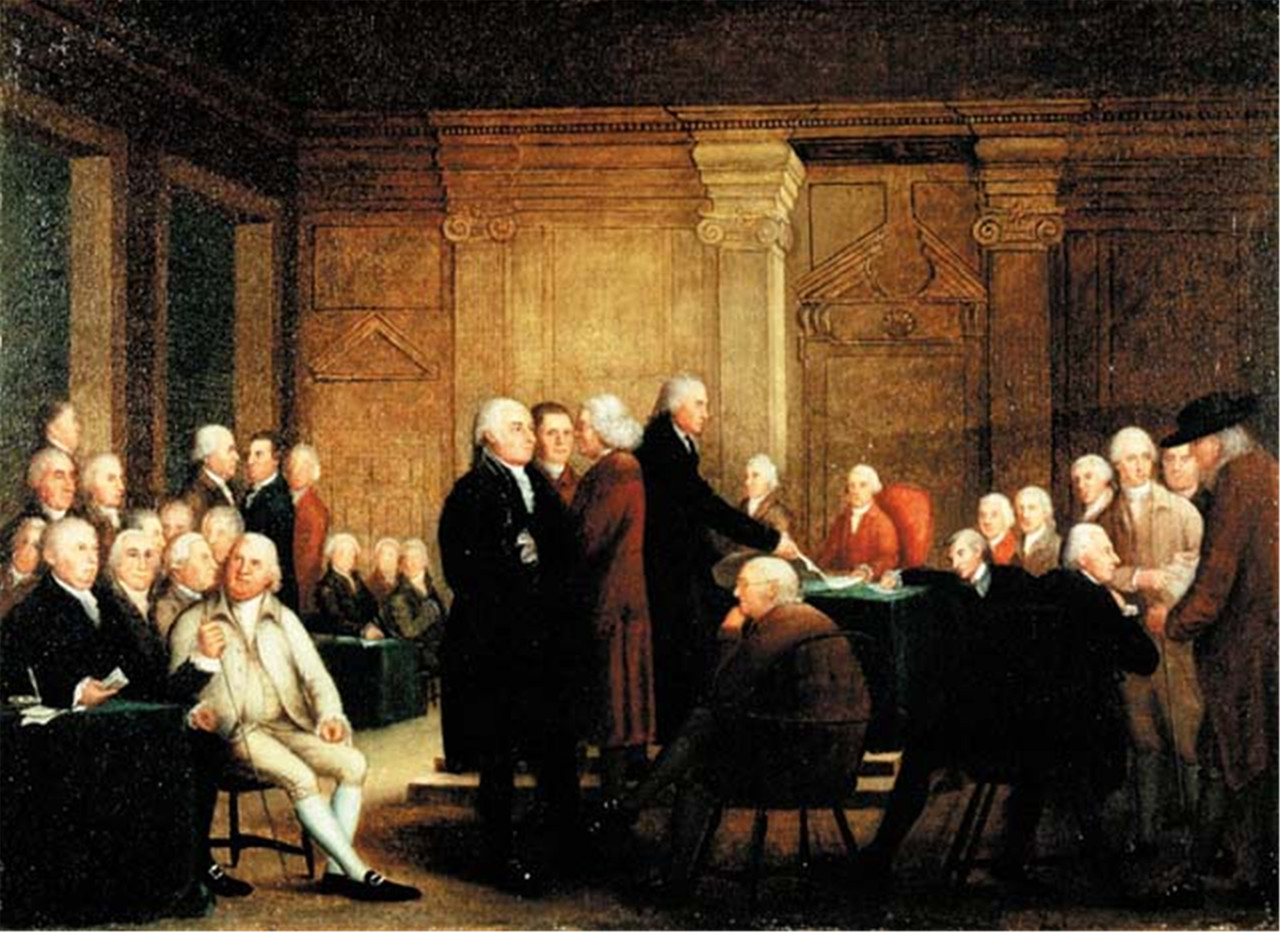
Unifying the local militias to form a single "Continental Army."
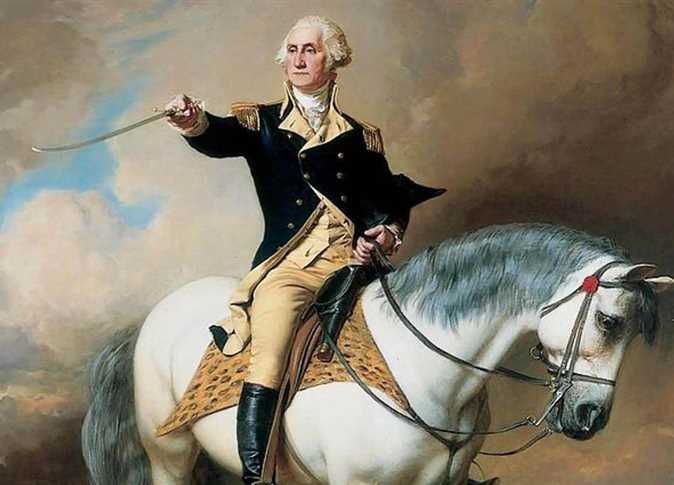
Appointing George Washington as the Commander-in-Chief of this army.
Printing a brand-new unified currency called the Continental Currency.
Establishing an American national postal system.
Opening American ports to global trade, completely breaking away from British maritime laws.
In one last-ditch effort for peace, Congress sent a letter to King George III, trying to settle things diplomatically. But the King’s response was ice-cold: he refused to even read it. Instead, he declared all colonial leaders traitors and ordered their execution, completely slamming the door on diplomacy.
After months of intense meetings, the leaders finally took the ultimate leap. On July 2, 1776, they voted on the official independence of the United States. It passed with a near-unanimous vote (with New York abstaining).
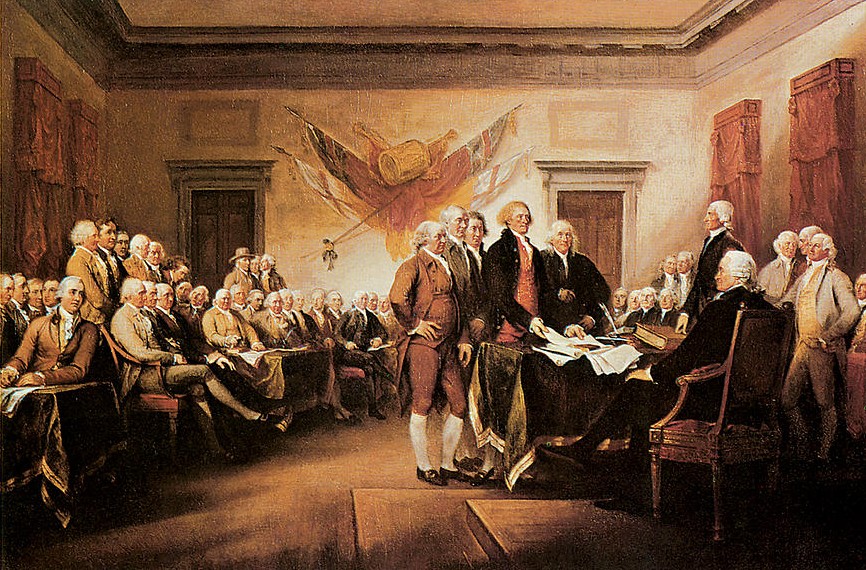
Two days later, on July 4, 1776, the American Declaration of Independence was officially proclaimed—a historic day celebrated ever since as American Independence Day!
And just like that, the American Revolutionary War officially kicked off, marking the legendary journey of the nation's leader, General George Washington.
And that wraps up the very first part of a massive series that will ultimately take us all the way to the end of the French Revolution! I originally wanted to dive straight into the French Revolution itself, but then I thought, "Why not share the full backstory in detail?" That’s exactly why I found myself diving into the American War of Independence first.
Let me know your honest thoughts on the article in the comments if you’ve made it this far, and don't forget to drop a like! 🥀