THE "PROTECTOR OF AFRICA" HAS ENTERED THE CHAT
South Africa has presented itself as a defender of African sovereignty, stability, and security.
That is a respectable ambition.
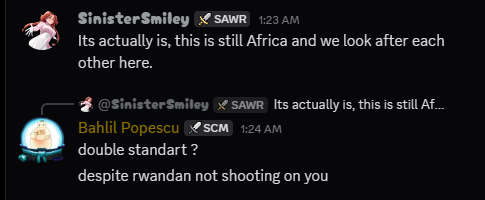
But recent events involving Rwanda raise an uncomfortable question:
Who exactly is South Africa protecting Africa from?
Because in Rwanda's case, the answer appears to be:
Rwanda itself based on an assumption.

The War That Started With “We Thought”
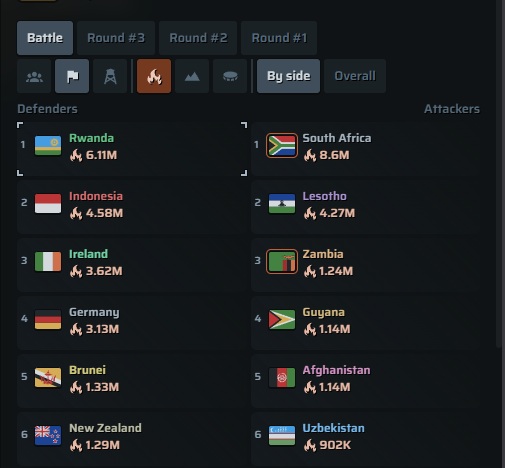
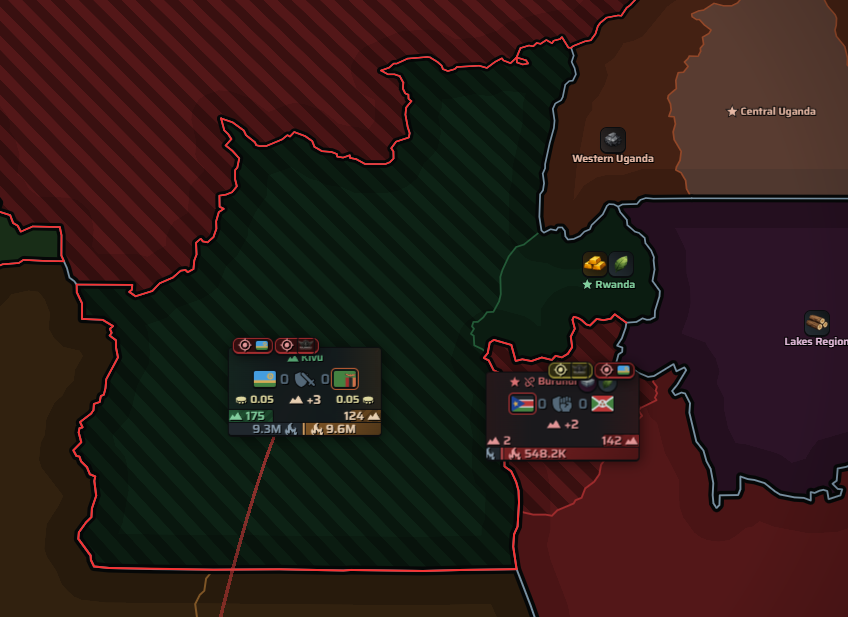
South Africa's own explanation is remarkably straightforward. They believed Rwanda remained a Romanian proxy. They believed Rwanda intended to expand into Africa. They believed Rwanda might eventually threaten Zambia.
So they attacked.
The problem is that none of those assumptions were established as facts. There was no confirmed Rwandan attack against South Africa. There was no demonstrated Rwandan declaration of war against Zambia. There was no concrete evidence presented showing an imminent Rwandan attack.
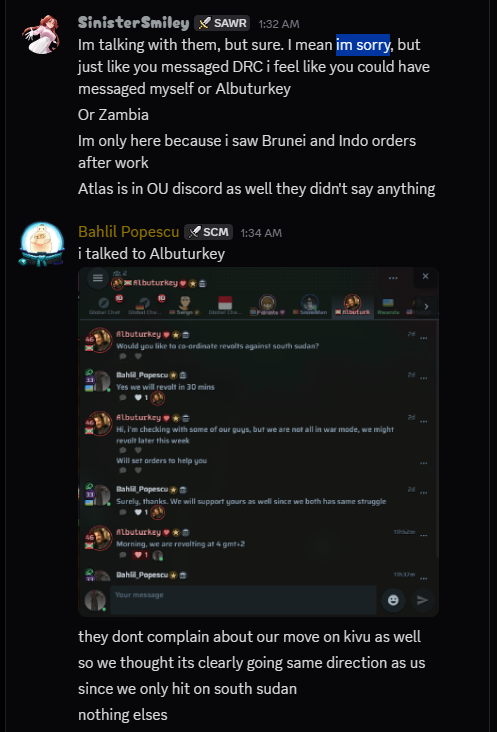
There was simply a belief that Rwanda might become a threat and apparently, that was enough.
This is a dangerous precedent.
If every country can launch a pre-emptive war whenever it becomes sufficiently suspicious of another country, international diplomacy becomes remarkably simple:
I thought you were going to attack me, so I attacked you first.
Congratulations. You have just reinvented paranoia as foreign policy.

The Romanian Ghost
The central justification repeatedly raised against Rwanda was its association with ATLAS and the presence of Romanian individuals within the Rwandan government.
But Rwanda's position was clear: it was not a Romanian proxy. Rwanda stated that its government was independently controlled and that its participation in ATLAS did not mean surrendering its sovereignty. That should not be difficult to understand.
Membership in an alliance does not automatically turn a country into someone's puppet.
Otherwise, by the same logic, every country cooperating with another state becomes its proxy.
The argument quickly becomes absurd.
One Romanian exists in the government?
Proxy.
Rwanda belongs to ATLAS?
Proxy.
Rwanda has relations with Romania?
Proxy.
At some point, intelligence analysis stops being intelligence analysis and becomes a children's game of:

“I saw a Romanian. Therefore, invasion.”
The Most Important Admission
Perhaps the most damaging part of South Africa's argument is not what Rwanda claims. It is what South Africa itself admitted.
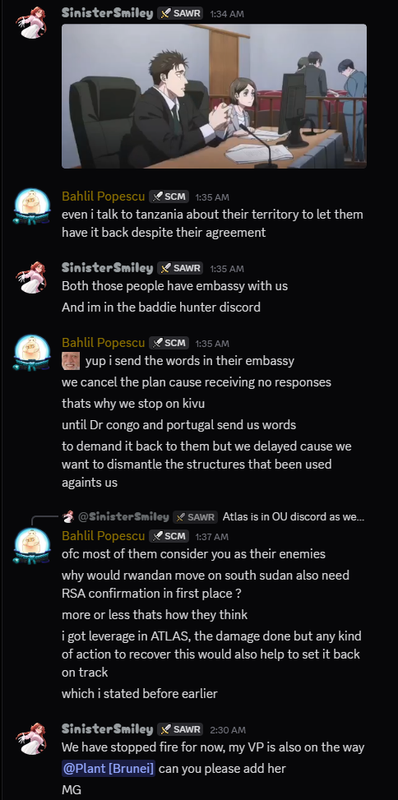
South Africa acknowledged that it attacked because it believed Rwanda was still operating as a Romanian proxy and feared what Rwanda might do next.
In other words, the justification was based on perception.
Not an actual Rwandan attack.
Not a confirmed declaration of hostile intent.
Not evidence of an imminent assault.
A perception.
That distinction matters enormously.
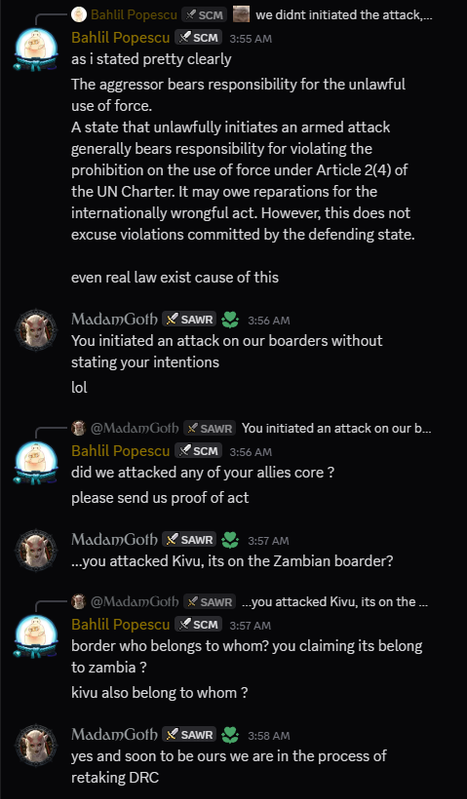
Under the general framework of the UN Charter, Article 2(4) establishes the prohibition on the threat or use of force against another state's territorial integrity or political independence. Article 51 preserves the inherent right of self-defence in the event of an armed attack.
The important question therefore becomes:
Self-defence against what?
An actual attack?
Or an assumption?
Those are not the same thing.

“We Made a Mistake, But We're Not Paying”
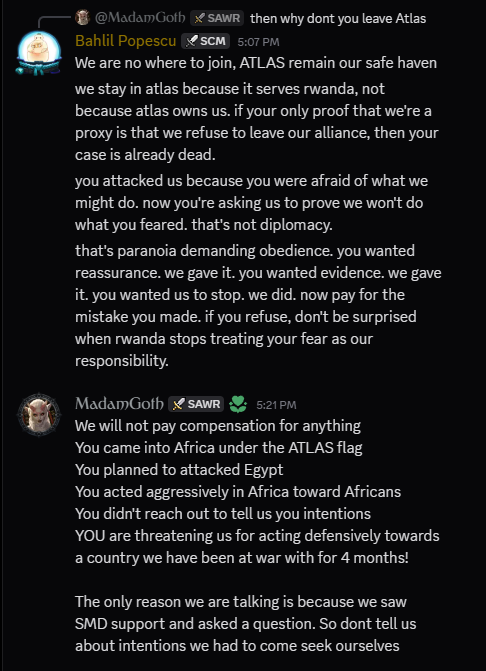
Rwanda subsequently requested compensation for the losses caused by the conflict.
South Africa's answer was effectively:
No.
This creates an extraordinary diplomatic position.
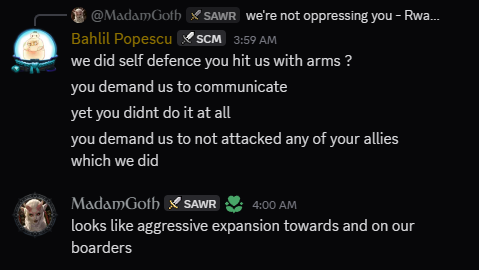
South Africa says:
“We believed you were dangerous.”
Then:
“We attacked you because of that belief.”
Then:
“We discovered the situation was not what we thought.”
And finally:
“We will not compensate you.”
That leaves Rwanda with a very reasonable question:

The most dangerous rwandan farmers here
Who exactly is supposed to pay for South Africa's intelligence failure?

Rwanda?
The players who suffered losses?
The Rwandan economy?
Or perhaps the mythical International Department of “Sorry About That, But You're Still Paying For It”?
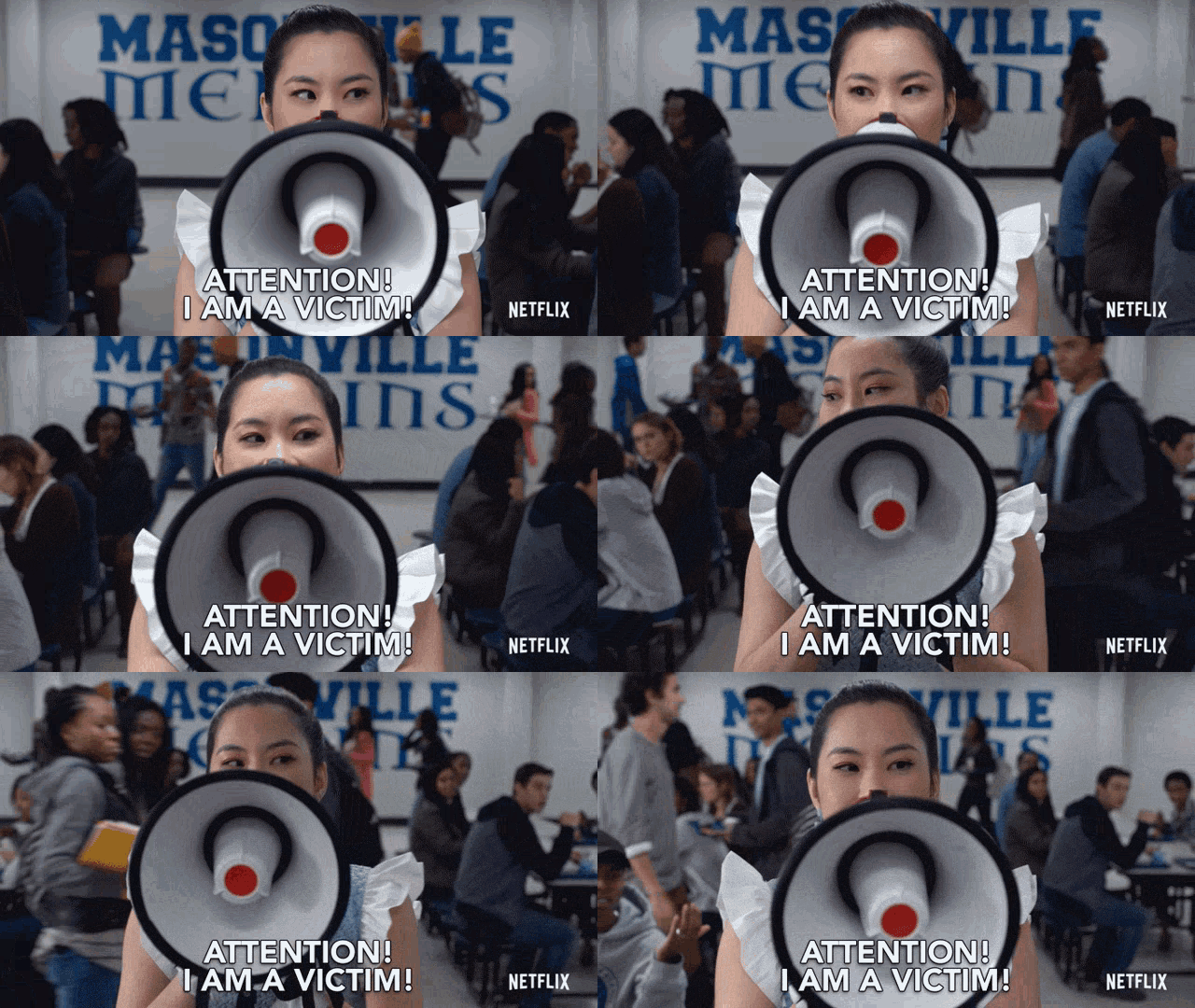
The Protector Who Needs a Protector
South Africa repeatedly presents its actions as part of a broader responsibility to defend Africa from external powers and potential aggressors.
The historical concern is understandable. Africa has indeed suffered enormously from colonialism, foreign intervention, proxy conflicts, occupation, and exploitation.
But that history cannot become a blank cheque for every future military decision.
A state cannot invoke historical trauma as permanent justification for attacking whoever it suspects might eventually become dangerous.
Otherwise, the logic becomes self-perpetuating:
We fear aggression, therefore we attack.
Our attack creates resentment, therefore we fear aggression even more.
That fear justifies another attack.
Congratulations. You've invented an infinite war subscription.
Rwanda Never Asked for a Protector
There is another uncomfortable irony. South Africa speaks of protecting Africa.
But Rwanda did not ask South Africa to protect it. Rwanda asked South Africa to stop treating it as an enemy based on outdated assumptions.
Rwanda explained its position.
Rwanda clarified its intentions.
Rwanda provided evidence.
And Rwanda offered a diplomatic route out.
The response was essentially:
“We don't trust you.”
That is fine.
Trust takes time.

But distrust does not automatically create a legal or moral entitlement to use force. If it did, every suspicious neighbour would be legally entitled to invade the other.
The world would have no diplomats. Only very nervous armies.
The only protectors i can trust

The Real Question
Nobody is arguing that South Africa should ignore genuine threats.
No responsible government should.
The question is whether South Africa's self-appointed role as a protector of Africa gives it the authority to determine, on assumption alone, which African states constitute threats.
Rwanda's answer is simple:
No.
Africa does not need another empire deciding who is dangerous.
Africa does not need another power deciding who is allowed to form alliances.
Africa does not need another government confusing suspicion with evidence.
And Africa certainly does not need a protector that refuses to accept responsibility when its protection produces the very conflict it claimed to prevent.
So Who Protects Africa From the Protectors?
South Africa wanted Rwanda to prove that it was not a threat.
Rwanda did.
South Africa wanted reassurance.
Rwanda provided it.
South Africa wanted Rwanda to reconsider its alliances.
Rwanda refused, because alliances do not erase sovereignty.
Then came the demand that Rwanda simply move on.

But peace is not the same thing as forgetting. Reconciliation is not the same thing as immunity from responsibility and “we thought you were going to attack us” is not a magic phrase that makes the consequences disappear.
South Africa may continue calling itself a protector of Africa.
That is its right.
But perhaps the continent should ask a rather uncomfortable question:
A protector protects people from war.
So what do we call someone who starts one because they were afraid the other side might?
Perhaps Rwanda has found the answer.
Not a protector.

Just another power with a gun and an assumption.