The Sentinel Afternoon Post: Why Our Moral Debates Get So Heated

If somebody says that 'It is wrong to eat meat,' or 'It is wrong to cheat on your partner,' they aren't saying that they are immoral. They aren't making an ethical statement. But according to R.M. Hare's prescriptivism, they are telling you not to eat meat. They are telling you not to cheat.
Hare was concerned with how we actually use moral words. He wasn't trying to build a grand ethical scheme, but was trying to see what actually happens when we use words like right and wrong, good and bad, immoral and moral. And so from his analysis, he argued that moral words are unique in that they have three different properties.
First, they are universalizable. When I say 'Torture is wrong,' I mean it's wrong for everyone, no matter where or when. I am legislating for all humanity.
Second, moral words are prescriptive. They are commanding someone to change their ways, or to stay true. 'You shouldn't steal' means 'Don't steal.'
Finally, moral words override all other values. If something is morally good, it beats aesthetically good, practically good, or financially good. Stealing might be good for my family, but its moral wrongness overrides that. Bacon sandwiches might taste good, but a vegetarian thinks ethics matters more.
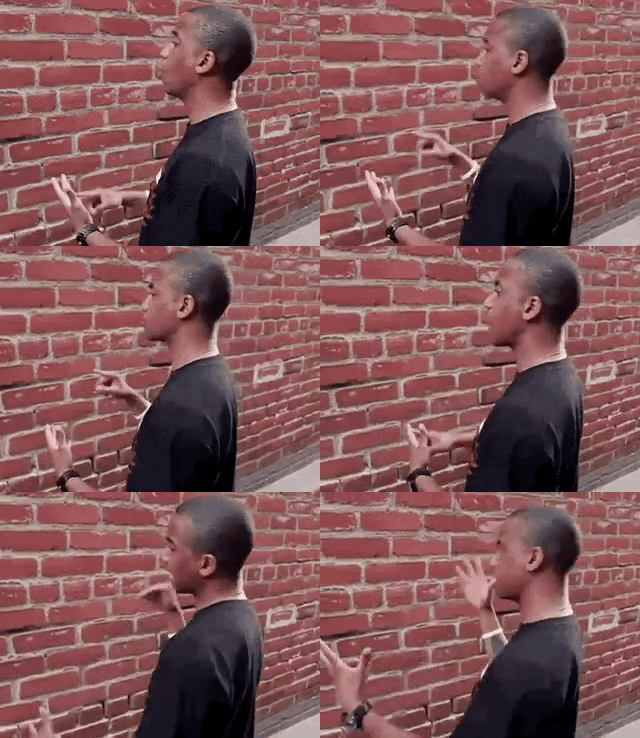
This is why so many of our ethical conversations get so heated, because each person is trying to universalize their moral statement, and get the other person to follow suit. We are each trying to establish cosmic laws, and get other people to bow to them.
Understanding this doesn't necessarily resolve these tensions, but it does allow us to be a touch more understanding. We are each trying to make the other person follow our way of thinking, and that isn't always easy.