The Sentinel Evening Post: The Mind vs. The Heart: Dostoevsky's Lesson on Rationalization

We can talk ourselves into doing things we don't actually want to do. The mind can justify what the heart cannot. But when we try to rationalise our way past our intuition, it can lead us into dark places. This is something that Dostoevsky explores in his book Crime and Punishment.
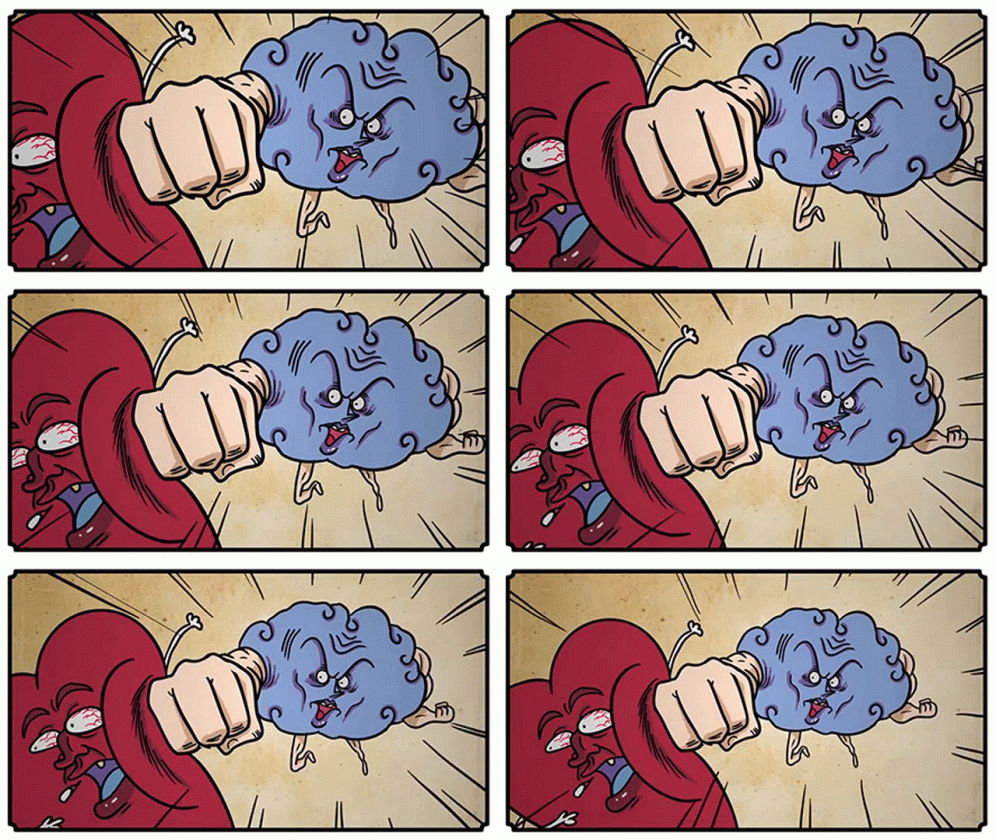
The novel centres on a young man who clearly knows his utilitarianism, which says that we can justify an action if it gives us the greatest good for the greatest number. It's all about the greater good. And so he justifies murder. He identifies a woman to kill because (in part) it'll help his family. He says that this woman is cruel and evil, and society will be better off without her. She is a parasite.
But of course, things don't go to plan. The murder is bloody, botched, and brutal, and he ends up accidentally killing the older lady's younger sister, who is also pregnant. The rest of the novel depicts Raskolnikov's descent into madness.

He is overcome by guilt and paranoia because there is a part of our being (whether you call that psyche, or conscience, or even soul) that guides us, and when we act against that, it can leave deep scars, or even trauma. Crime and Punishment is about that part of our being we actually have to live with.
Because no matter how much you might hate somebody, you will find it hard to see them suffer. No matter how much we might rationalise that somebody is bad for us, we find it hard to cut them out of our lives. Because what Dostoevsky knew is that while it might be easy to say a thing, it's a completely different matter to do it.