The Sentinel (Late) Morning Post: The Luxury Trap and the Chains of Convenience

Roman Historian Tacitus
Jill wants to quit social media. She's worried it's making her unhappy. But then how will she speak to her aunt in the UK? What will happen to her photos? And how will she organise that party? Now Jack wants to leave the country. He dislikes the government and dislikes the people. But then it does have good health care. And he does like the TV. And it does have good roads.

These are examples of what Yuval Harari calls the 'luxury trap,' but it goes back at least to the Roman Tacitus. It's the idea that civilisation and its trappings will enslave us. The Roman Empire was built on the back of military genius, but short stabbing swords alone did not subdue a people. It was the love of luxury and easy living that did that.
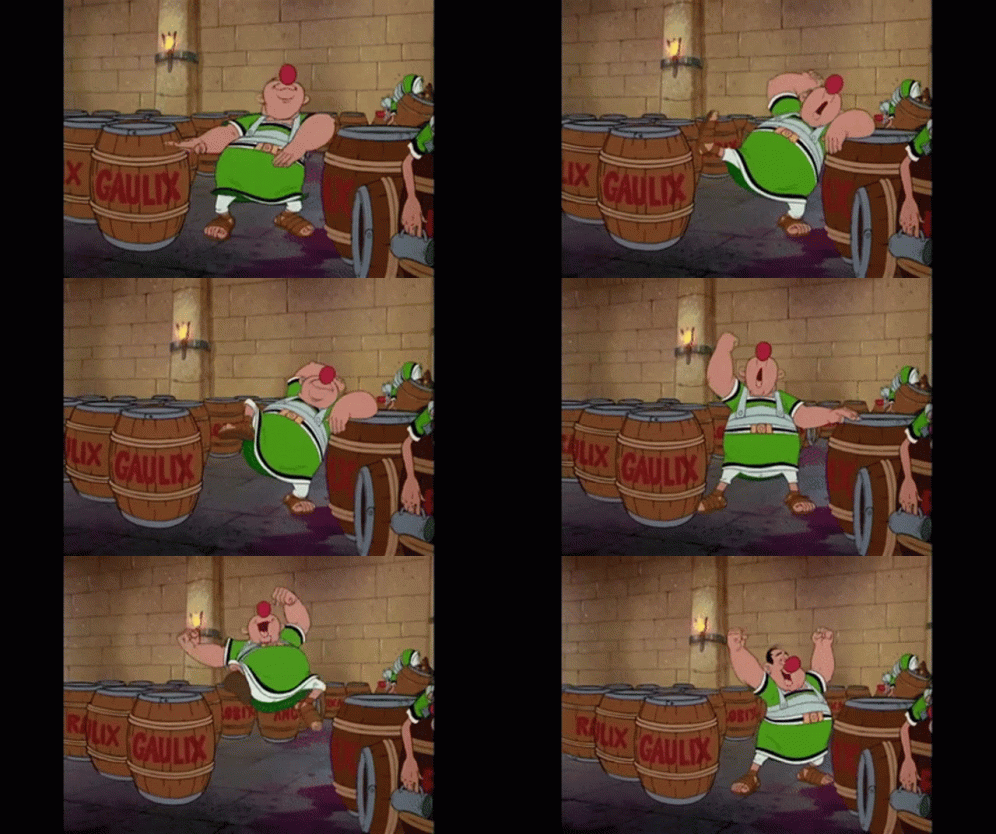
Tacitus noted that the Britons were enslaved not by chains, but by their want for good wine, warm baths and elegant dinner parties. Comfort and convenience had made a warrior nation into genteel, pacified citizens.
It's a tactic mirrored across all time. It's whenever a technology, service or luxury becomes so essential and so normalised that we can't go back to a before time. It's when what was once a want becomes a need, and when you need something or someone, you give that thing power over you. This is as true for abusive relationships as it is for late stage techno-capitalism.
But it's the job of philosophy to examine these chains for what they are, and when we do, we can decide to either go back willingly or start the long, hard journey to throw them off.