The Sentinel Morning Post: The Tinkerbell effect

John Searle
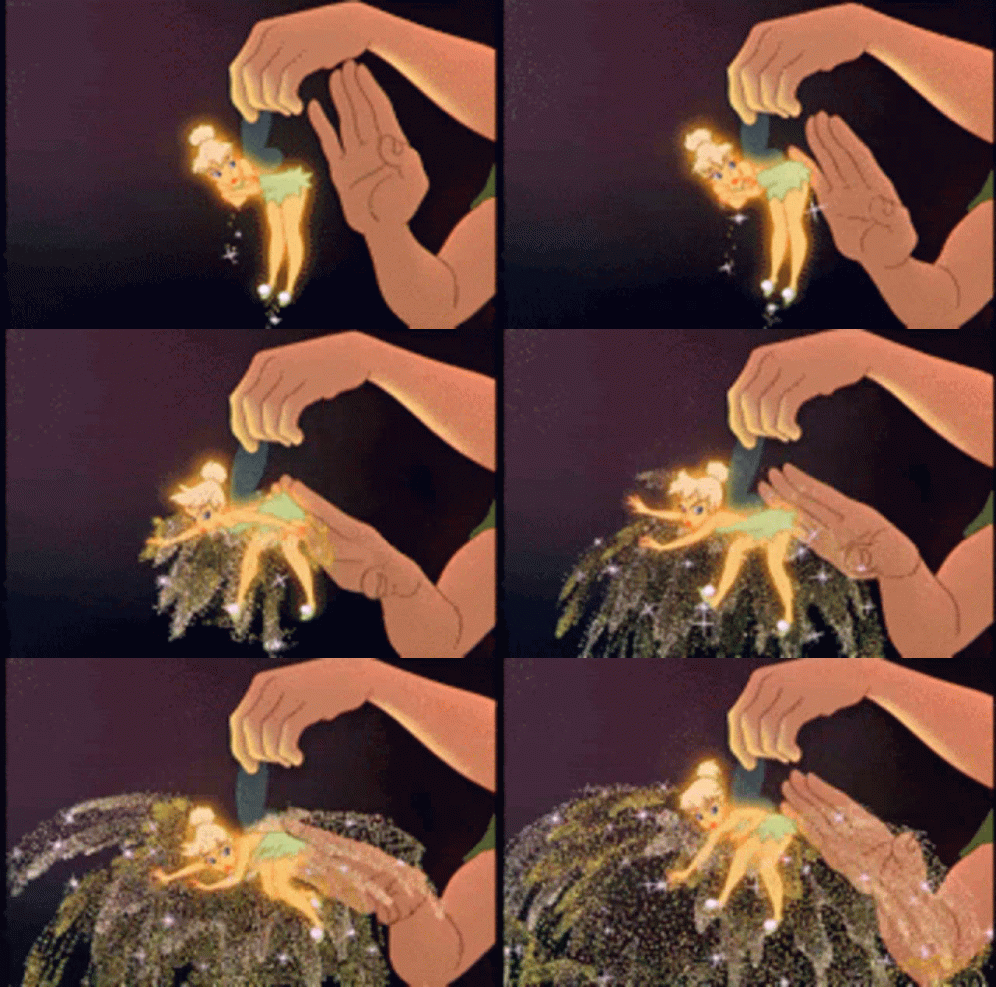
The Tinkerbell effect is when something is made true because people believe it to be true. For example, money. A banknote is just a piece of grubby paper, but it has value because we all collectively agree it has. The second we stop agreeing, then it becomes worthless.
The same is true for borders, for laws, for stock prices, and for so many of the institutions that we treat as solid. In 1651, the philosopher Thomas Hobbes says that this also applies to any political authority. The king has power only because his subjects believe he does. The moment they stop believing, the throne just becomes a fancy chair. Government, for Hobbes, is a story that we tell, and the moment we stop telling it, the government will fall apart.

In the 20th century, the philosopher John Searle applied this to what he called 'institutional facts.' These are facts that exist because humans agree that they exist. For example, the borders between countries are not a physical line. A marriage is not a chemical bond. And a university degree is only as good as the system that issued it. Searle argued that any facts that exist on a social level are made up. They are not fake, but they are made up.
And what both Hobbes and Searle understood is that this is one of humanity's greatest skills. But the problem comes when this collective belief fades, because then our institutions can collapse. Society depends upon faith and confidence, but it breaks down, for better or worse, when somebody first says, 'why are we actually doing things this way?'