The Shield of an Empire: How Spain Pioneered Human Rights through the Laws of the Indies
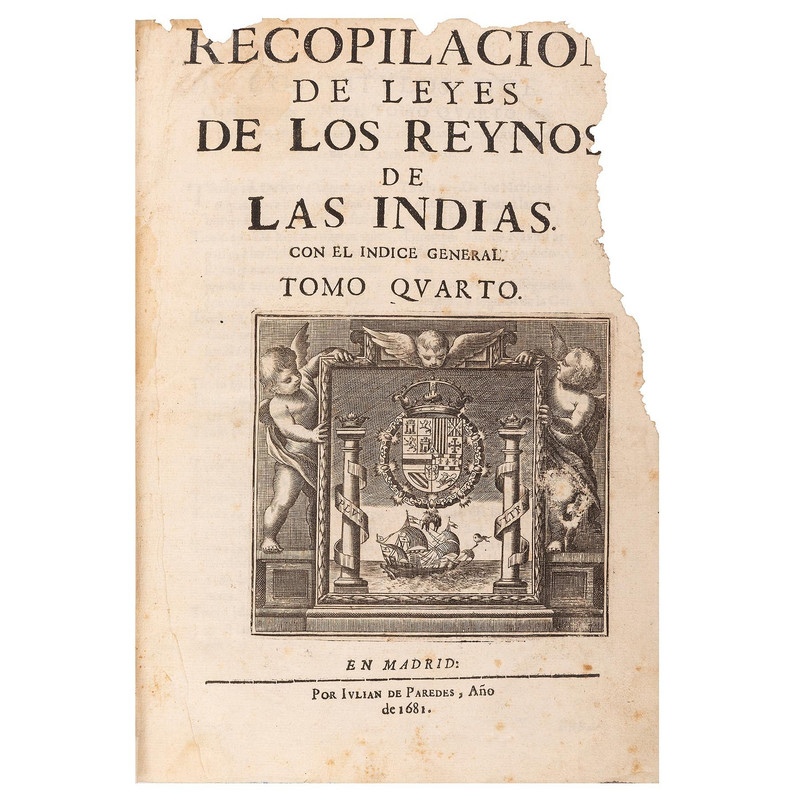
In the heat of War Era, we often measure success by conquered territories or extracted resources. However, the true greatness of an empire is not measured by what it takes, but by what it builds and how it protects those who become part of it. While other colonial models were based on exclusion and economic pragmatism, Spain erected an unprecedented legal system: The Laws of the Indies.
Today, we will analyze why this legal body marked the abysmal difference between Hispanic America and Anglo-Saxon America.
1. The Revolution of Conscience: The School of Salamanca
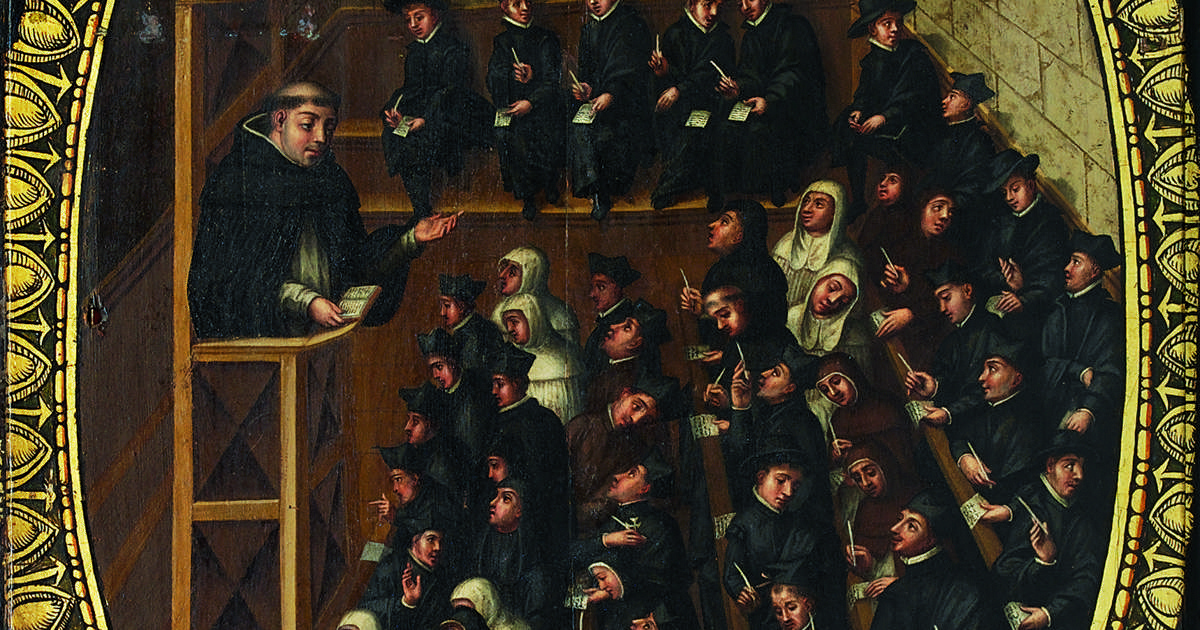
To understand the Laws of the Indies, we must understand that Spain was the only empire that questioned its own right to rule. In the mid-16th century, while the rest of Europe saw the New World as mere loot, in the halls of the University of Salamanca, minds like Francisco de Vitoria were laying the foundations of modern International Law.
Spain did not just advance; it stopped to debate. The Junta de Valladolid was a historical milestone where the question of whether indigenous people had souls and rights was argued. The result was revolutionary: the Indians were not inferior beings, but rational humans, children of God, and therefore, free vassals of the Crown of Castile. This concept is non-existent in the English model, where the native was never considered a subject, but rather an alien element to the colonizer's legal system.
2. From Burgos (1512) to the New Laws (1542): The Evolution of Law
The Spanish legal corpus was not static. It was a constant struggle by the State against the abuses of individuals on the ground.
Laws of Burgos (1512): The first labor code in history for the New World. They established mandatory rest, adequate food, and a prohibition on pregnant women performing heavy labor.
New Laws of 1542: Driven by figures like Bartolomé de las Casas and the will of King Charles I, these laws sought to abolish the "encomienda" system. The King even risked the stability of his overseas domains to ensure that the Indian was a free man working for a fair wage.
3. The Spanish Model vs. The English Model: A Radical Contrast
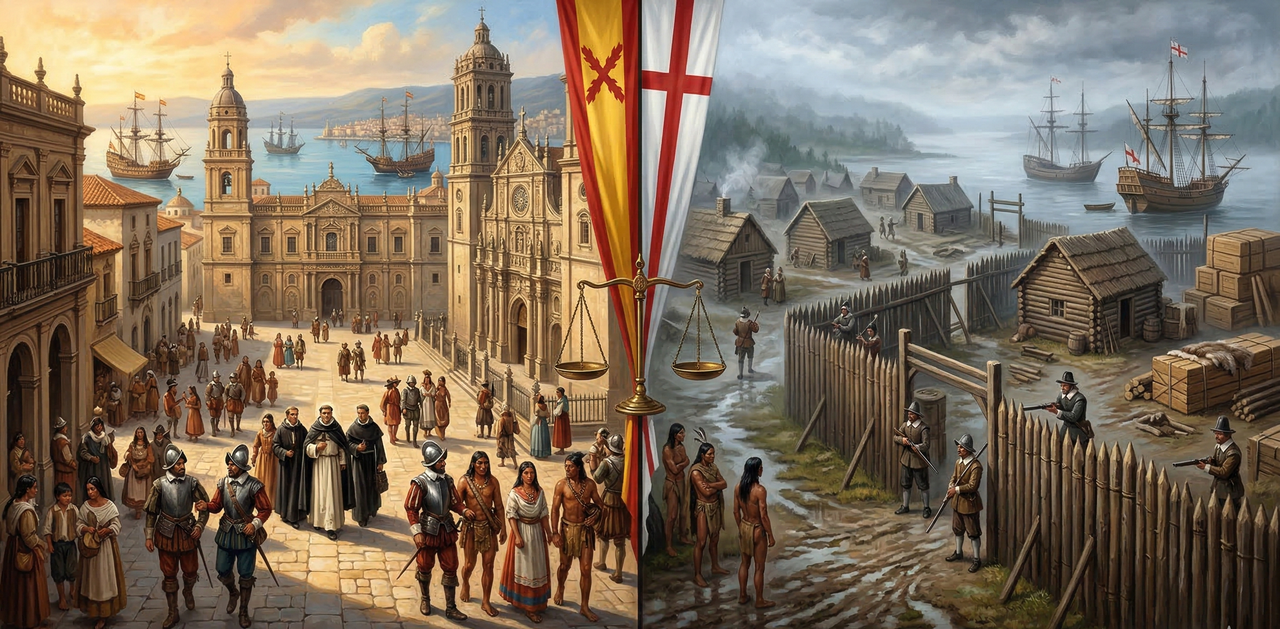
For the readers of War Era to understand the magnitude of this difference, let’s observe this comparative breakdown of the expansion models:
COMPARISON OF IMPERIAL MODELS
1. STATUS OF THE NATIVE
Spanish Model (Generator Empire): Considered a free vassal of the Crown with legal rights protected by the Laws of the Indies.
English Model (Predatory Empire): An outsider to the system, with no citizenship rights and existing outside the colonizer's law.
2. MESTIZAJE (MISCEGENATION)
Spanish Model: Encouraged, valued, and legalized by royal decree since 1514. Creation of a new cultural synthesis.
English Model: Socially prohibited, legally prosecuted, and viewed with stigma. Absolute racial segregation.
3. LAND OWNERSHIP
Spanish Model: Legal recognition and protection of indigenous communal lands (Resguardos).
English Model: Terra Nullius Doctrine: the land is considered "nobody's" if there are no European-style fences or crops, justifying expropriation.
4. FINAL OBJECTIVE
Spanish Model: Integration of territories, evangelization, and the expansion of Hispanic civilization.
English Model: Expulsion or elimination of natives to allow for exclusive settler settlement.
5. INFRASTRUCTURE AND LEGACY
Spanish Model: Construction of a network of cities, universities, hospitals, and cathedrals (internal development).
English Model: Creation of commercial trading posts, extraction ports, and segregated farms (external development).
4. The "Republic of Indians": Autonomy and Protection
Unlike the English model, which pushed tribes westward (the beginning of reservations), Spain created the Republics of Indians. These were political entities where natives maintained their own authorities (curacas or caciques), their communal lands, and their customary laws, provided they did not contradict the Christian faith.
Spain protected indigenous property. While in the Anglo-Saxon North, the Indian lost his land simply because the settler wanted to farm it, in Spanish America, an indigenous person could sue a Spaniard before the Royal Audience... and win! Thousands of historical files document lawsuits where Spanish justice ruled in favor of indigenous communities against the abuses of local landowners.
5. The Biological and Cultural Legacy: The Irrefutable Proof
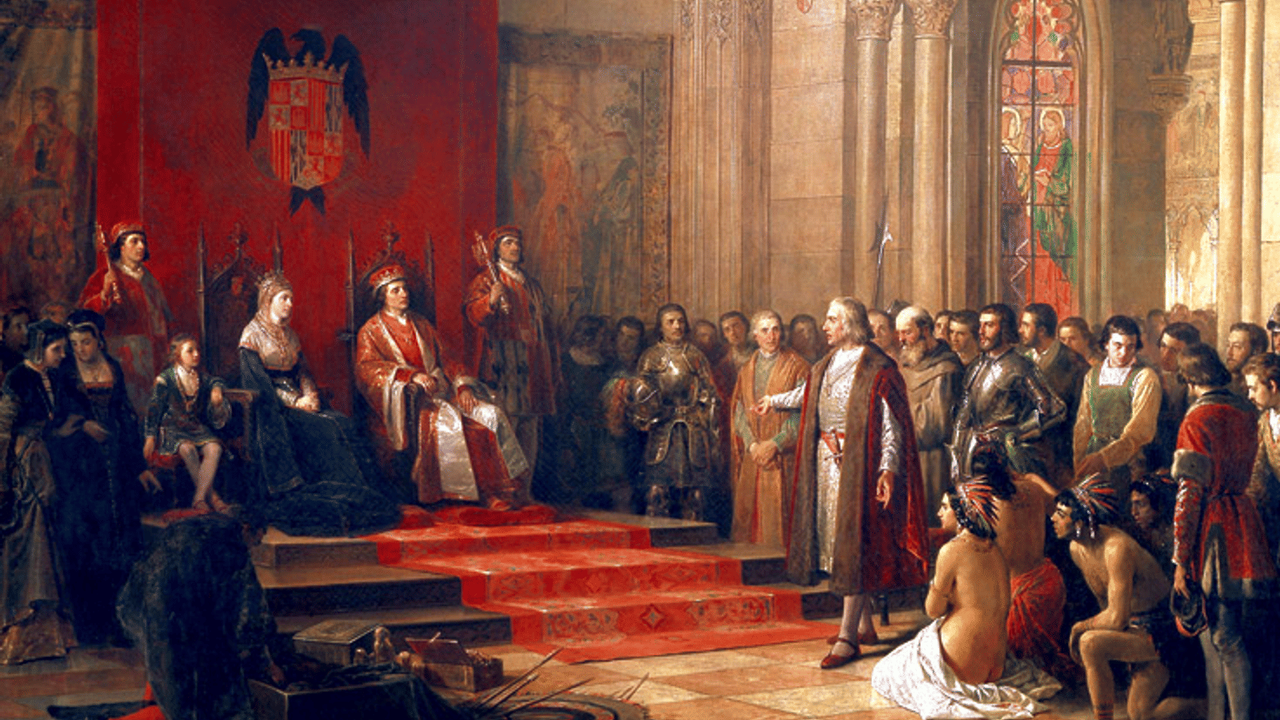
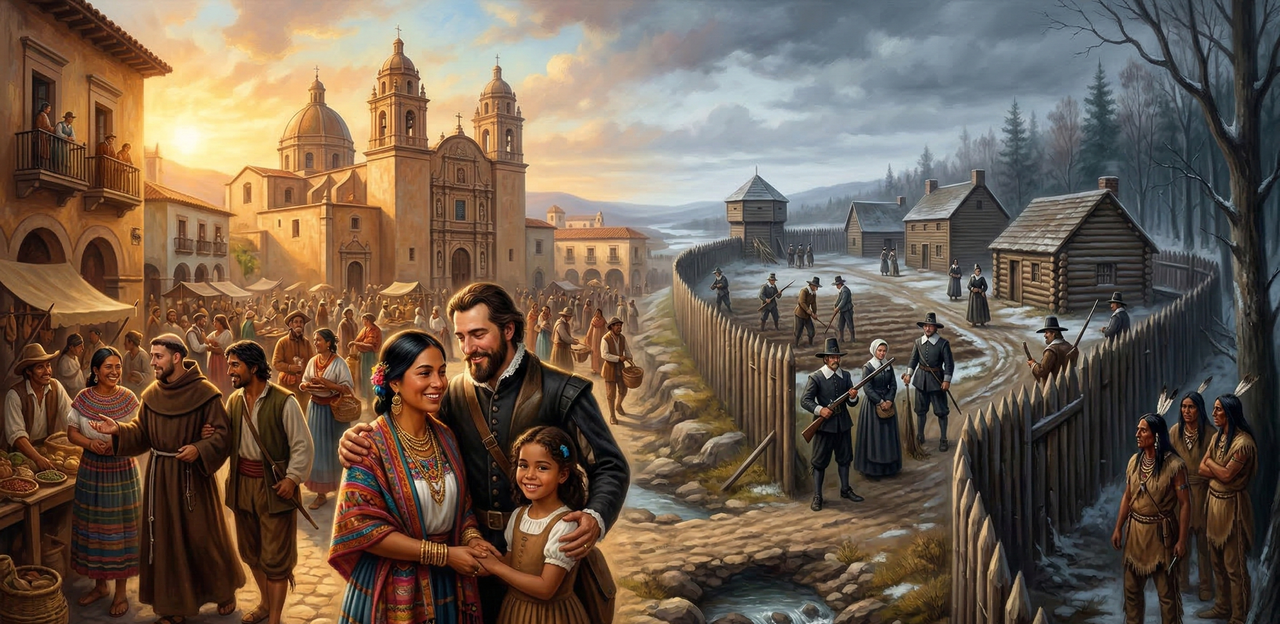
Often, propaganda (the "Black Legend") tries to erase facts with rhetoric. But facts are persistent. If you travel today to Mexico, Peru, or Ecuador, you will see a population that is the direct heir of pre-Hispanic civilizations, fused with Hispanic culture. The face of Hispanic America is mestizo because the Laws of the Indies allowed that population to survive, integrate, and thrive.
In contrast, if you look at the map of the United States or Canada, the native population was decimated and confined to marginal spaces. The English model did not want native subjects; it wanted the space they occupied. Spain, on the other hand, wanted the natives to be Spaniards of the overseas provinces.
6. Conclusion: A Truth That Reclaims Its Place
The Laws of the Indies were not perfect, and their application in territories thousands of miles from the metropolis was often difficult and plagued with shadows. But the legislative intent and the structure of the Spanish State were unique in human history. No other nation at the height of its military power stopped to legislate in favor of the conquered.
As players and strategists in War Era, we must recognize that Spain's greatest conquest was not that of arms, but that of law and faith. The Spanish model created nations; the English model created frontiers.
If this analysis has helped you better understand our shared past, feel free to support this newspaper with your tip! Let’s make historical truth the most read news of the day!