The Story of South Africa’s Military Transformation : From Regional Powerhouse to Uncertain Future
In the dry heat of the northern frontier during the 1970s and 1980s, the men of the South African Defence Force (SADF) stood watch along a border few outside the region truly understood. It was the era of the Cold War. Angola burned. Namibia—then South West Africa—was a battleground. And South Africa, isolated by sanctions and condemned for apartheid, built one of the most formidable militaries on the African continent.
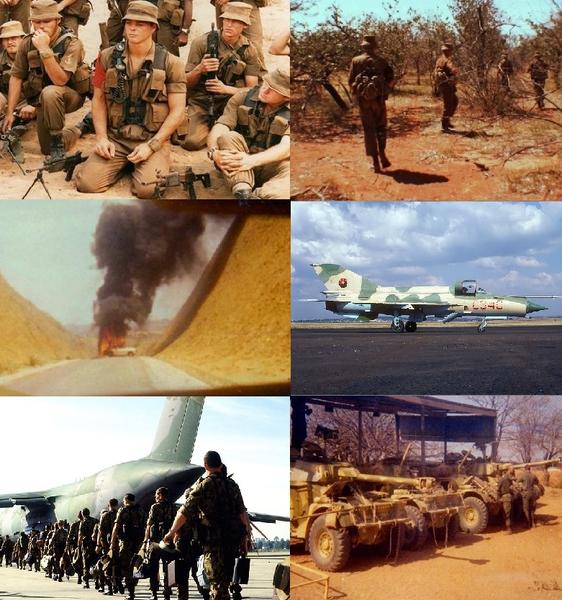
South African Border War Montage
By the late 1980s, the SADF was battle-hardened. It had fought in what became known as the Border War against SWAPO, clashed with Angolan forces backed by Cuba and the Soviet Union, and engaged Cuban troops directly in battles such as Cuito Cuanavale. Whatever one’s political view of the era, militarily the SADF was respected—sometimes feared.
Sanctions forced South Africa to innovate. Cut off from traditional arms suppliers, the country developed its own weapons industry through Armscor. Out of necessity came ingenuity: the Ratel infantry fighting vehicle, the G5 and G6 artillery systems—considered among the best long-range guns of their time—and advanced electronic warfare capabilities. The South African Air Force flew Mirage F1s upgraded locally; its pilots were well-trained and combat experienced.
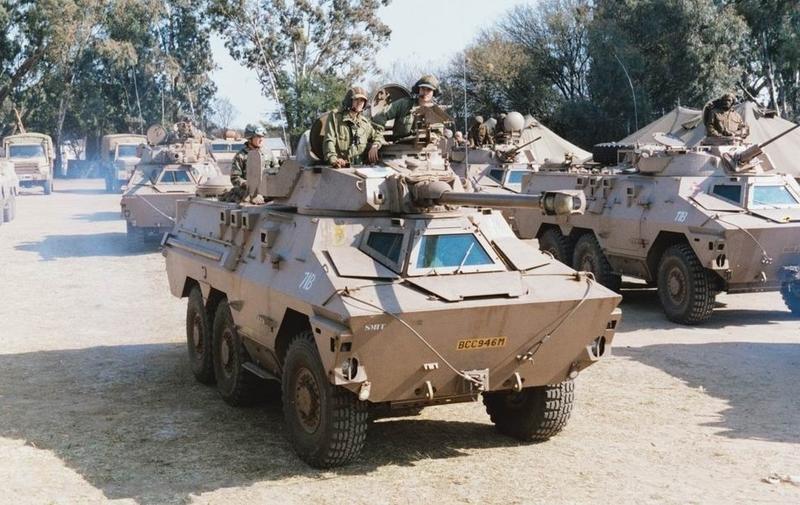
South African Defence Force - Ratel 90 IFV (Infantry Fighting Vehicle)
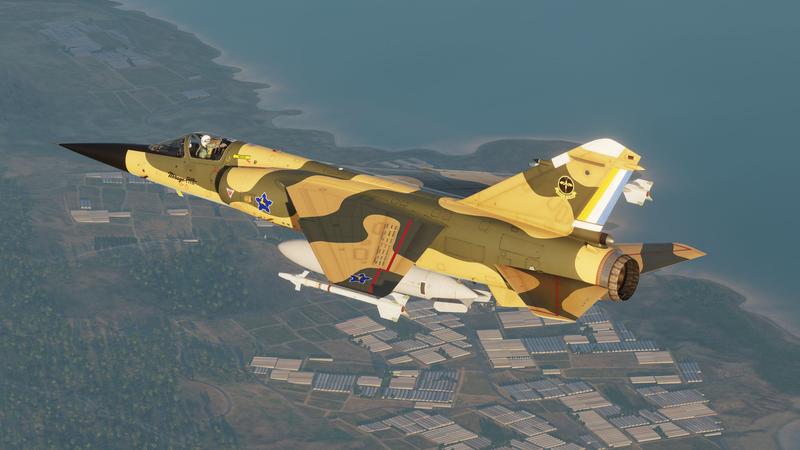
South African Air Force - Dassault Mirage F1 Fighter Jet
Regionally, the SADF stood as arguably the most capable conventional force in sub-Saharan Africa. Globally, it was not a superpower—but in terms of battlefield effectiveness, mobility, and combined-arms doctrine, it punched above its weight. Western military observers studied its bush warfare tactics. Soviet planners respected its artillery.
Yet this strength came at a cost. The SADF was built to defend a state internationally isolated and internally divided. Conscription shaped white South African society. Military power existed alongside political repression. The army was both shield and symbol of the apartheid state.
Then came 1994.
The old order dissolved. The SADF did not simply rebrand—it merged. Former adversaries were integrated into a new force: the South African National Defence Force (SANDF). Soldiers from the SADF stood in formation beside members of Umkhonto we Sizwe (MK), the armed wing of the ANC, and other liberation movements. It was one of the most ambitious military integrations in modern history.
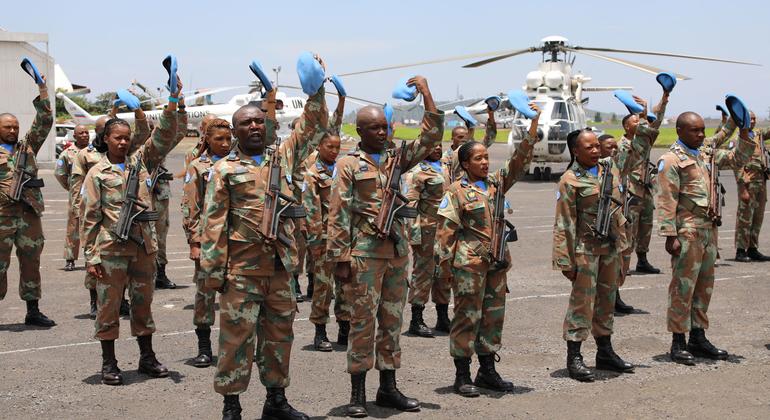
South African National Defence Force (SANDF)
The mission changed. No longer focused on cross-border raids and counterinsurgency campaigns, the SANDF turned toward peacekeeping. South African troops deployed to the Democratic Republic of Congo, Burundi, Sudan, and elsewhere under African Union and United Nations mandates. The military that once fought regional wars now sought to stabilize the continent.
For a time, there was cautious optimism. South Africa still possessed sophisticated equipment—the Rooivalk attack helicopter, the German-built MEKO frigates, Gripen fighter jets. On paper, it remained one of Africa’s most advanced militaries.
But slowly, another story began to unfold.
Defence budgets shrank as national priorities shifted to housing, healthcare, and social development. Equipment aged. Maintenance was deferred. Skilled personnel left for private industry or emigrated. Reports emerged of grounded aircraft, docked ships unable to sail, and armored vehicles awaiting parts.
Where the SADF had once invested heavily in research and development under sanctions, the SANDF struggled with funding shortfalls and procurement controversies. Training hours decreased. Operational readiness suffered.
Internationally, South Africa’s military influence became more diplomatic than dominant. It still plays a significant peacekeeping role, and its officers are respected in multilateral missions. Yet it is no longer viewed as a regional military heavyweight in the way it was during the 1980s.
Today, analysts often describe the SANDF as capable but constrained—rich in history, stretched in resources. Its challenge is not battlefield experience but sustainability. The question is not whether South Africa can field a modern military—it once did—but whether it can consistently maintain one in an era of economic strain.
And so the story of South Africa’s armed forces becomes a mirror of the nation itself.
Before 1995, the military stood powerful, controversial, and isolated—technically impressive, politically burdened. After 1994, it became inclusive, internationally engaged, and morally repositioned—but increasingly underfunded and overstretched.
In the quiet of old military museums and along the rusting hulks of once-proud equipment, one can sense the weight of that transformation. The uniforms have changed. The flag has changed. The mission has changed.
What remains is the enduring question of identity: not just what South Africa’s military once was, but what it chooses to become.