Why Hiring is Now a Financial Trap.

Why The New Labor Laws are Freezing Economic Progress
By Wilimey - Economic Analist & War Correspondent
In my previous analysis, we explored how the "Estimated Benefits" tool acted as a beacon of light, cutting through the "informational fog" of the marketplace. We predicted that by making the math of production public, the game would move toward a system of hyper-efficient optimization and an Efficient Equilibrium.
However, as the dust settles on the latest patches, a new problem has emerged. While the "math" is now transparent, the mechanics of the labor market have become rigid. The interaction between the Fidelity Bonus (introduced in v0.22.0) and the recently implemented Negotiated Wage Protocol has introduced a state of Institutional Rigidity [1].
We are no longer witnessing a fluid, free-market evolution. If we mentioned that the "Estimated Benefits" tool would bring profits down, we are now seeing something that could be worse, the "sclerosis" of the economy: a hardening of the economic arteries that prevents the very market clearing we anticipated.
The "Golden Handcuffs" and Specific Capital

The Fidelity Bonus, introduced in update v0.22.0 , grants a company a 1% production boost per worker per day, capping at 10%. In theory, this mechanic was designed to reward the "Strategic Industrialist" by fostering a stable, high-value workforce capable of pivoting alongside the owner's vision, shifting production from Steel to Oil, for example, without sacrificing efficiency. Because a Tenured worker [2] is universally more productive, they command a "stability premium," incentivizing owners to maintain long-term relationships rather than treating labor as a disposable commodity.
However, the reality is that this bonus creates a form of Specific Capital [3] that is incredibly "sticky." A worker with a full 10-day stack becomes a "Golden Goose," making the entrepreneur pathologically afraid of losing them to the open market. This introduces massive Economic Friction [4], where the cost of labor mobility is effectively the total destruction of a productivity asset.
This dynamic has led to Institutional Labor Paralysis [5]: entrepreneurs remain trapped with high-cost staff in
sub-optimal industries because the productivity "reset" of hiring a new worker is a cost they cannot afford. This structural rigidity is a primary driver behind the aggressive wage spikes observed in recent weeks.
The Negotiated Lockdown: Total Wage Stickiness
The structural crisis reached its tipping point when this "Fidelity Fear" collided with the Negotiated Wage Protocol. Under current regulations, an entrepreneur is stripped of the power to unilaterally adjust their own balance sheet; any reduction in a worker's salary, regardless of how minor, requires the explicit, manual consent of the employee. While this was likely designed as a humanitarian shield to prevent predatory wage cuts, it has instead introduced a state of extreme Downward Wage Stickiness [6]. In this environment, the price of labor remains frozen at "boom-time" levels even when the market value of the goods being produced has completely collapsed.
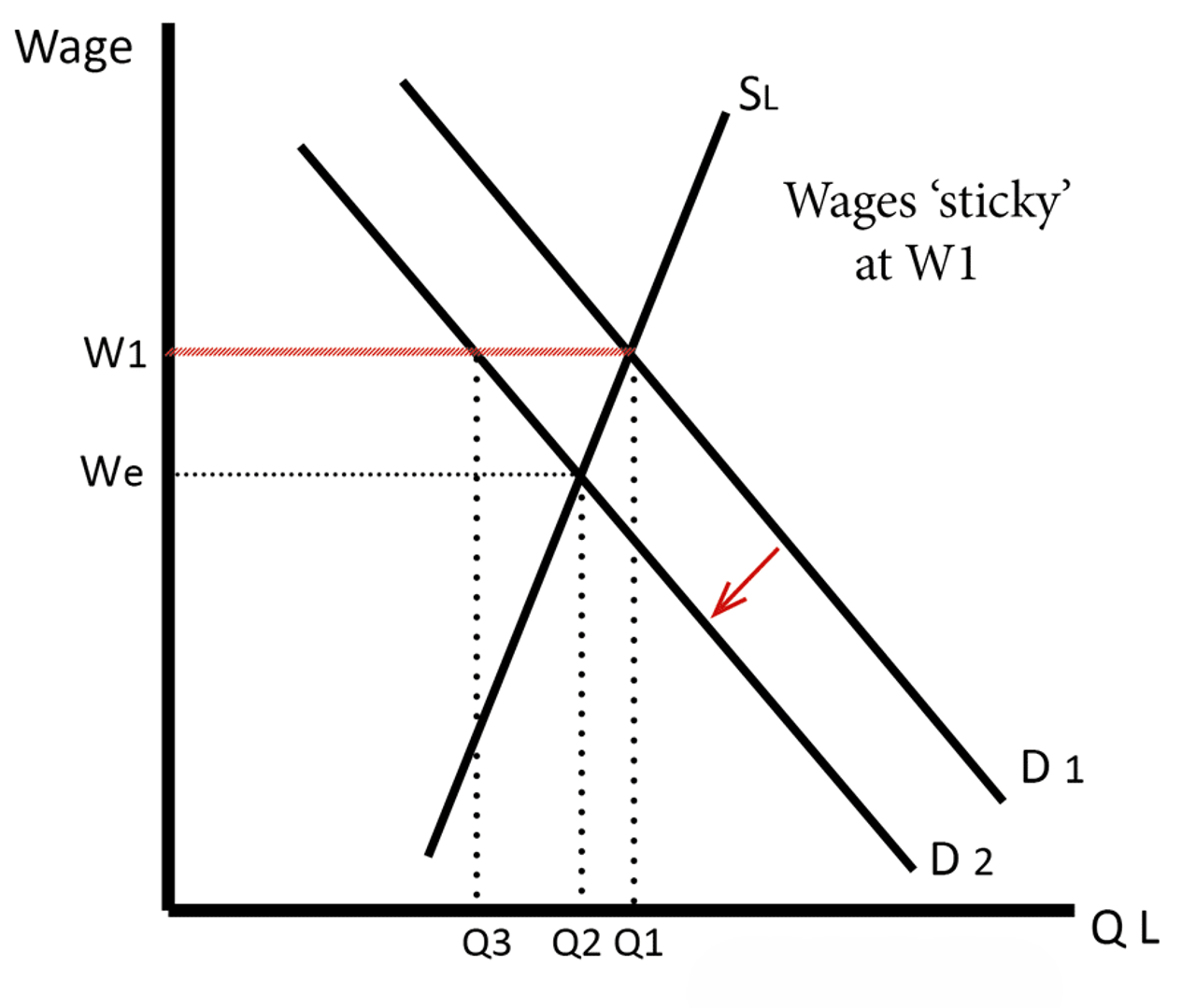
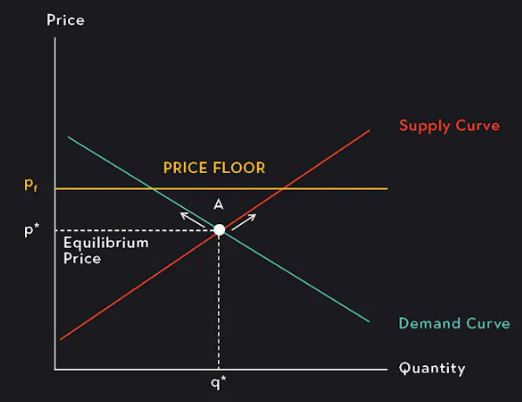
This creates a "Strategic Lockdown" for the entrepreneur. When a sector like Steel crashes, a business owner should logically lower wages to reflect the new market reality or pivot production to stay solvent. However, because the worker holds an absolute veto and shoulders none of the firm's operational losses, they have no rational incentive to accept a pay cut. The owner is then faced with a binary choice: fire the worker and instantly destroy the 10% Fidelity Bonus, a universal productivity asset that took ten days to cultivate, or continue to pay an unsustainable wage. Most choose to "bleed" their capital rather than suffer the catastrophic productivity reset of a new hire, creating an Artificial Price Floor [7] that prevents the labor market from ever reaching a true equilibrium.
An example: The Steel Market Collapse
Using the Steel market as our example once again, the data provided by the "Estimated Benefits" tool confirms this hypothesis proposed in my last articlem and it captures this stalemate in real-time. We have now tracked the Steel market across three distinct phases: the Sunday "Gold Rush," the midweek "Crash," and today's fragile "Recovery.":

Why did it take 3 days to balance? In a healthy, flexible market, the correction seen between "Monday Benefit" and "Tuesday Benefit" should have happened in hours. Instead, it took three full days. This lag is the direct result of the Zombie Economy [8].
For 72 hours, producers who were losing money (the -0.011 cohort) refused to exit the market or fire staff because they were terrified of losing their Fidelity Stacks. They continued to overproduce Steel at a loss, keeping supply artificially high and prices suppressed. Only after three days of financial bleeding did enough "weak hands" finally capitulate, allowing supply to drop and prices to rise enough to offer a meager +0.072 profit. The market didn't clear; it just exhausted the players' bank accounts.
Why Negotiation Is a Trap For The Employees
At first glance, a worker’s veto power over their wage seems like the ultimate safety net. In reality, it is a dangerous mirage that forces the market to clear at a glacial pace. In a flexible economy, a crash resets both wages and prices, allowing the industry to find a "bottom" and recover. In this new economy, the veto keeps "Zombie Companies" on life support, flooding the market with supply at a loss because they are too terrified to fire tenured staff. This persistent oversupply prevents product prices from rebounding to healthy levels, effectively stalling the entire sector's recovery.

This paralysis directly hits the worker’s wallet through a "Risk Discount." Because owners know they can never lower a wage once set, they have become increasingly hesitant to offer competitive starting rates, even during booms. If an owner cannot adjust costs during a crisis, they simply will not raise them during a peak. Furthermore, since labor costs remain "stuck" at peak levels, the prices of essential goods like Bread and Steel stay artificially high. The worker is left with a stagnant salary in an inflated market, chained to a sinking ship that is legally prohibited from throwing off weight to stay afloat.
Conclusion
The economy has transitioned from an era of "informational fog" to one of "institutional paralysis." We are no longer governed by the "Strategic Industrialist" who pivots with the market, but by a Zombie Economy filled with firms that are technically insolvent yet survive by clinging to tenure-based productivity stacks at the cost of their own capital. Until the benefits of loyalty are balanced against the absolute necessity of wage flexibility, the market will remain frozen. The math of the "Estimated Benefits" tool is clear, but the players are no longer free to act on it. In this new world, the 10% bonus is not a reward but rather it is a leash.
Reference Glossary
[1] Institutional Rigidity: Formal rules (like the inability to lower wages unilaterally) that prevent market adaptation.
[2] Tenured worker: an employee with significant experience, generally defined as having served for five or more years in the same organization.
[3] Specific Capital: An asset (worker tenure) that is highly valuable to the current owner but loses all value if the relationship ends.
[4] Economic Friction: Factors that slow down market adjustments, such as the 24-hour firing cooldown and the penalty of resetting the bonus.
[5] Institutional Labor Paralysis: A state where entrepreneurs cannot afford to fire or hire, freezing the labor market.
[6] Downward Wage Stickiness: The economic phenomenon where wages resist moving down despite falling demand or prices.
[7] Artificial Price Floor: A situation where the price of labor cannot fall to its natural market level due to external restrictions.
[8] Zombie Economy: A market filled with firms that should be bankrupt but survive by "clinging" to tenure-based productivity at the cost of their own capital.
Relevant Concepts:
Golden HandCuffs: They are financial incentives, such as stock options, deferred bonuses, or high salaries, designed to retain key employees by making resignation costly
Signed,
Wilimey
Economy Analist and War Correspondent, The Global Ledger
P.D.: I wanted to add graphs to show the correlation but there is no data track of the historic value of Salaries. :(
*I will travel soon, so next articles may take more time to be published.